
Thursday, August 27, 2026
Francesco Bianconi, Esecutori di Metallo su Carta: Pinocchio!
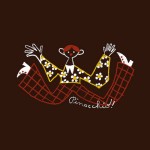
Artist: Francesco Bianconi, Esecutori di Metallo su Carta
Title: Pinocchio!
Format: CD
Label: 19m40s
Title: Pinocchio!
Format: CD
Label: 19m40s
I am old enough to remember books on record. These are especially popular with children's books. The narrator would read a piece of the story, and then there would be a musical accompaniment. Enrico Gabrielli has created a similar approach here with the story of Pinocchio. I speak very little Italian, so I can't really speak much to the story itself but the music itself is a typical classical piece. These are snippets of sound that go from about 2 to 3 minutes punctuated by readings from the story of Pinocchio.
The music itself is fine; it's chamber orchestra fare with flute, piccolo, recorder, clarinet, organ, piano, cello, bass, piano, along with guitar and accordion to give it a kind of sentimental, old world feel. The music itself is well constructed and does a good job of evoking a kind of emotion throughout the piece, so even if you don't understand the words if you're familiar with the general story of Pinocchio you can get a sense of what's happening at a particular time.
What I found myself wondering was why it was sent to Chain D.L.K., which mainly focuses on experimental music. This would be quite a home in anyone's classical music library. This piece is part of the 19'40" subscription service, which they describe as "revolving around the same area of interest: notated music and it's multifaceted performance practices, with no prejudice of period or genre. Whether music transliteration, sabotage or mold, 19'40" is an essential collection of (anti)classical music."
I recognize that you can use classical music as a way to experiment, as evidenced by such labels as Public Eyesore and Tzadik. However, I didn't find that this really pushed the envelope much. In short, if you're looking for an interesting take on the story of Pinocchio with a musical accompaniment this might be up your alley.
The music itself is fine; it's chamber orchestra fare with flute, piccolo, recorder, clarinet, organ, piano, cello, bass, piano, along with guitar and accordion to give it a kind of sentimental, old world feel. The music itself is well constructed and does a good job of evoking a kind of emotion throughout the piece, so even if you don't understand the words if you're familiar with the general story of Pinocchio you can get a sense of what's happening at a particular time.
What I found myself wondering was why it was sent to Chain D.L.K., which mainly focuses on experimental music. This would be quite a home in anyone's classical music library. This piece is part of the 19'40" subscription service, which they describe as "revolving around the same area of interest: notated music and it's multifaceted performance practices, with no prejudice of period or genre. Whether music transliteration, sabotage or mold, 19'40" is an essential collection of (anti)classical music."
I recognize that you can use classical music as a way to experiment, as evidenced by such labels as Public Eyesore and Tzadik. However, I didn't find that this really pushed the envelope much. In short, if you're looking for an interesting take on the story of Pinocchio with a musical accompaniment this might be up your alley.
Comments
Stream
Browse by Genre
Industrial Music / Industrial Metal / Aggro Industrial / Electro Metal
Industrial Noise / Power Noise / Harsh Noise
Synth Pop / Electro Pop / Synth-Electronica
Techno / Trance / Goa / Drum'n'Bass / Jungle / Tribal / Trip-Hop
Ambient / Electronica / Ethereal / Dub / Soundscapes / Abstract
Experimental / Avantgarde / Weird & Wired / Glitch / Noise / Field Recording
Dark / Gothic / Wave / New Wave / Dark Wave / Industrial Gothic
New Music / Downtown / Avantgarde Jazz / New Classical / World