
Tuesday, November 17, 2026
Anouck Genthon & David Meier: l'A Neuve
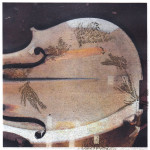


"l'A Neuve" by Anouck Genthon and David Meier is a masterclass in avant-garde improvisation. This album, released by Wide Ear Records, presents a meticulous dialogue between Genthon's violin and Meier's percussive bass drum. Each of the eight tracks offers a different exploration of the sound pouring of this interaction, balancing tension and release with a minimalist approach.
Technically, the album excels in capturing the intricate dynamics between the instruments. Genthon's violin fluctuates between melodic fragments and atonal textures, while Meier's drumming ranges from subtle, almost imperceptible touches to powerful rhythmic statements. The precision of their interplay highlights the importance of space and silence in their compositions, creating an expansive auditory experience despite the minimal instrumentation.
Analyzing tracks like "Tsamodet" (the opening track setting the tone for the album, with Genthon and Meier weaving a tapestry of sound that feels both sparse and rich, an interplay between the staccato violin and the subtle percussive elements that creates a compelling tension) and "Deuve" (where the violin takes on a more melodic role, while the bass drum provides a steady, almost meditative pulse), one can appreciate the deliberate pacing and the thoughtful construction of each piece. The musicians’ ability to listen and respond to each other in real time is a testament to their deep musical understanding and technical prowess.
Philosophically, "l'A Neuve" challenges the listener to reconsider the essence of music and the relationship between sound and silence. The album’s ironic stance lies in its use of minimal elements to create rich, complex sonic landscapes. It’s a meditative journey that requires active engagement, offering rewards through its subtle nuances and the intricate interplay of its components.
Overall, "l'A Neuve" is a compelling addition to the field of experimental music, showcasing the profound potential of minimalist improvisation and the depth of expression achievable with just two instruments.
Comments
Stream
Browse by Genre
Industrial Music / Industrial Metal / Aggro Industrial / Electro Metal
Industrial Noise / Power Noise / Harsh Noise
Synth Pop / Electro Pop / Synth-Electronica
Techno / Trance / Goa / Drum'n'Bass / Jungle / Tribal / Trip-Hop
Ambient / Electronica / Ethereal / Dub / Soundscapes / Abstract
Experimental / Avantgarde / Weird & Wired / Glitch / Noise / Field Recording
Dark / Gothic / Wave / New Wave / Dark Wave / Industrial Gothic
New Music / Downtown / Avantgarde Jazz / New Classical / World