
Valentin Ceccaldi: Ossos
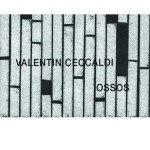


In the often esoteric world of improv/free-jazzy cello performance, Valentin Ceccaldi's "Ossos" - another duusty finding under piles of records and forgotten boxes of ever uncompleted relocations - stands out like a rare gem in a field of pebbles. Let’s dive into this record with an ear that's both slightly ironic and ever so discerning, because, honestly, this isn’t an album for the impatient listener.
From the get-go, it’s clear Ceccaldi isn’t interested in pandering to those looking for traditional cello virtuosity. Instead, he invites us into a deeply personal soundscape, one where raw material and refined expression dance a complex, often challenging tango. "Ossos" (Portuguese for "bones") might sound like an ominous title for a solo cello album, but in Ceccaldi’s hands, it’s more of a culinary exploration — think of a rich stew where each bone is simmered to extract every last ounce of flavor.
Recorded over two days in May 2017 at Centro Norton de Matos in Coimbra, this album shows up how Ceccaldi is able to create a self-contained universe with just his cello. Much like masters of solo performance such as Evan Parker or Steve Lacy, Ceccaldi proves that virtuosity isn’t about speed or complexity alone, but about emotional depth and narrative clarity.
The album opens with "Enclume" (Anvil), a 15-minute exploration that feels less like a performance and more like an invocation. Here, Ceccaldi’s cello doesn’t just sing — it speaks, murmurs, and occasionally growls. The sound isn’t merely produced; it’s coaxed, drawn out in long, meditative overtones that invite the listener to contemplate rather than merely consume. If you’re the kind of listener who needs immediate gratification, "Enclume" might feel like a test of patience. But give it time, and you’ll find yourself sinking into its hypnotic rhythms and subtle textures.
Next up is "Marteau" (Hammer), another 15-minute journey that shifts from the meditative to the percussive. Ceccaldi’s approach here is less about melody and more about exploring the sonic possibilities of his instrument. The hammering motifs are not literal but evocative, suggesting a craftsman at work, chipping away at the rough edges to reveal something profound and beautiful beneath. It’s a piece that requires active listening, demanding your attention as it oscillates between tension and release, dissonance and harmony.
The album closes with the brief but intense "Étrier" (Stirrup). At just under four minutes, it’s a concentrated burst of energy, a distilled essence of Ceccaldi’s musical philosophy. Here, he strips his technique down to its bare bones, delivering a performance that’s both stark and richly textured. It’s a fitting end to an album that’s all about the interplay between raw material and refined expression.
Comparing Ceccaldi to his contemporaries, it’s tempting to draw parallels to artists like Okkyung Lee or even the more experimental works of cellists like Zoë Keating. But Ceccaldi’s voice is distinctly his own. Where Lee might delve into the visceral, for instance, Ceccaldi finds his niche in the contemplative, the elemental.
"Ossos" isn’t an easy listen, nor is it meant to be. It’s an album that challenges the listener to engage deeply, to listen actively, and to appreciate the subtlety and nuance of Ceccaldi’s artistry, a record that eschews flash for substance and complexity for depth. It’s a reminder that true artistry lies not in what is played, but in how it’s played — and in the case of "Ossos", it’s played with a touch of wit.
From the get-go, it’s clear Ceccaldi isn’t interested in pandering to those looking for traditional cello virtuosity. Instead, he invites us into a deeply personal soundscape, one where raw material and refined expression dance a complex, often challenging tango. "Ossos" (Portuguese for "bones") might sound like an ominous title for a solo cello album, but in Ceccaldi’s hands, it’s more of a culinary exploration — think of a rich stew where each bone is simmered to extract every last ounce of flavor.
Recorded over two days in May 2017 at Centro Norton de Matos in Coimbra, this album shows up how Ceccaldi is able to create a self-contained universe with just his cello. Much like masters of solo performance such as Evan Parker or Steve Lacy, Ceccaldi proves that virtuosity isn’t about speed or complexity alone, but about emotional depth and narrative clarity.
The album opens with "Enclume" (Anvil), a 15-minute exploration that feels less like a performance and more like an invocation. Here, Ceccaldi’s cello doesn’t just sing — it speaks, murmurs, and occasionally growls. The sound isn’t merely produced; it’s coaxed, drawn out in long, meditative overtones that invite the listener to contemplate rather than merely consume. If you’re the kind of listener who needs immediate gratification, "Enclume" might feel like a test of patience. But give it time, and you’ll find yourself sinking into its hypnotic rhythms and subtle textures.
Next up is "Marteau" (Hammer), another 15-minute journey that shifts from the meditative to the percussive. Ceccaldi’s approach here is less about melody and more about exploring the sonic possibilities of his instrument. The hammering motifs are not literal but evocative, suggesting a craftsman at work, chipping away at the rough edges to reveal something profound and beautiful beneath. It’s a piece that requires active listening, demanding your attention as it oscillates between tension and release, dissonance and harmony.
The album closes with the brief but intense "Étrier" (Stirrup). At just under four minutes, it’s a concentrated burst of energy, a distilled essence of Ceccaldi’s musical philosophy. Here, he strips his technique down to its bare bones, delivering a performance that’s both stark and richly textured. It’s a fitting end to an album that’s all about the interplay between raw material and refined expression.
Comparing Ceccaldi to his contemporaries, it’s tempting to draw parallels to artists like Okkyung Lee or even the more experimental works of cellists like Zoë Keating. But Ceccaldi’s voice is distinctly his own. Where Lee might delve into the visceral, for instance, Ceccaldi finds his niche in the contemplative, the elemental.
"Ossos" isn’t an easy listen, nor is it meant to be. It’s an album that challenges the listener to engage deeply, to listen actively, and to appreciate the subtlety and nuance of Ceccaldi’s artistry, a record that eschews flash for substance and complexity for depth. It’s a reminder that true artistry lies not in what is played, but in how it’s played — and in the case of "Ossos", it’s played with a touch of wit.
Comments
Stream
Browse by Genre
Industrial Music / Industrial Metal / Aggro Industrial / Electro Metal
Industrial Noise / Power Noise / Harsh Noise
Synth Pop / Electro Pop / Synth-Electronica
Techno / Trance / Goa / Drum'n'Bass / Jungle / Tribal / Trip-Hop
Ambient / Electronica / Ethereal / Dub / Soundscapes / Abstract
Experimental / Avantgarde / Weird & Wired / Glitch / Noise / Field Recording
Dark / Gothic / Wave / New Wave / Dark Wave / Industrial Gothic
New Music / Downtown / Avantgarde Jazz / New Classical / World