
The Big Tusk: It's Alive
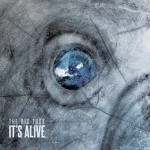
Artist: The Big Tusk (@)
Title: It's Alive
Format: 12" + Download
Label: Jazz-O-Tech Records (@)
Rated:


Title: It's Alive
Format: 12" + Download
Label: Jazz-O-Tech Records (@)
Rated:
The BIG TUSK’s debut album, "IT’S ALIVE", enters the European nu-jazz scene with a blend of ambition and caution. After six years since their initial EP, the band offers a full-length project that mixes jazz, electronic, and rock elements—though not always seamlessly.
The album opens with "Bad Mammuth", where Shems Bendali’s trumpet work stands out as a clear focal point amidst a backdrop of techno beats. The trumpet adds warmth to an otherwise cold, mechanical atmosphere, but it doesn’t quite manage to carry the track on its own. There’s an audible attempt to fuse styles here, yet the effort feels more labored than natural, as if the band is more concerned with genre-blending than allowing the music to unfold organically.
Throughout "IT’S ALIVE", the BIG TUSK tries to push boundaries but struggles to find an effective way to do so. Tracks like "Tulpamancer" and "Cardia" dabble in drum ’n’ bass and trap, yet these influences come off more as genre exercises than fully developed statements. The trumpet, which might serve as an anchor in these tracks, often gets lost in the mix of electronic sounds.
Despite the band's claim of drawing inspiration from figures like Aphex Twin, Mr. Oizo, and Kurt Cobain, these influences are barely discernible in the album’s final form. What you hear instead is a band trying to inject a bit of everything into their sound, but not necessarily capturing the essence of these iconic artists. There’s a faint echo of Aphex Twin’s glitchy chaos in the electronic textures, but it’s diluted, lacking the distinct edge that makes such influences so impactful.
On "Cardia", there’s an attempt to blend trap beats with more traditional jazz elements, but the result is disjointed rather than harmonious. The track seems to aim for deep emotional resonance but doesn’t quite land, leaving the listener unsure of what mood it’s trying to convey. Similarly, "Catechism" and "Morse Code" show off the band’s prog-rock leanings, but the arrangements feel stiff, as if the improvisational spirit that jazz thrives on has been stifled in favor of a more calculated approach.
The BIG TUSK has spoken about music as an escape and a connection to something larger, but "IT’S ALIVE" only occasionally touches on that potential. The album is strongest when the human element is allowed to shine, particularly in Bendali’s trumpet lines, which cut through the electronic and rock-heavy sections with clarity. Yet too often, these moments are overshadowed by a focus on genre fusion that feels more experimental than experiential.
In the end, "IT’S ALIVE" is a mixed bag of ideas and influences, but those ideas don’t always coalesce into something greater. The BIG TUSK clearly has the talent and vision, but this debut album feels more like a rough draft than a finished product. For listeners curious about the intersections of jazz, rock, and electronic music, "IT’S ALIVE" offers some intriguing moments, but it ultimately falls short of being a cohesive or compelling work. The echoes of Aphex Twin, Mr. Oizo, and Kurt Cobain - maybe they shouldn't have mentioned them to avoid rising excessively high expectations - remain just that, echoes, barely audible in the midst of an album still searching for its own distinct voice, that I'm sure they will find in the near future.
The album opens with "Bad Mammuth", where Shems Bendali’s trumpet work stands out as a clear focal point amidst a backdrop of techno beats. The trumpet adds warmth to an otherwise cold, mechanical atmosphere, but it doesn’t quite manage to carry the track on its own. There’s an audible attempt to fuse styles here, yet the effort feels more labored than natural, as if the band is more concerned with genre-blending than allowing the music to unfold organically.
Throughout "IT’S ALIVE", the BIG TUSK tries to push boundaries but struggles to find an effective way to do so. Tracks like "Tulpamancer" and "Cardia" dabble in drum ’n’ bass and trap, yet these influences come off more as genre exercises than fully developed statements. The trumpet, which might serve as an anchor in these tracks, often gets lost in the mix of electronic sounds.
Despite the band's claim of drawing inspiration from figures like Aphex Twin, Mr. Oizo, and Kurt Cobain, these influences are barely discernible in the album’s final form. What you hear instead is a band trying to inject a bit of everything into their sound, but not necessarily capturing the essence of these iconic artists. There’s a faint echo of Aphex Twin’s glitchy chaos in the electronic textures, but it’s diluted, lacking the distinct edge that makes such influences so impactful.
On "Cardia", there’s an attempt to blend trap beats with more traditional jazz elements, but the result is disjointed rather than harmonious. The track seems to aim for deep emotional resonance but doesn’t quite land, leaving the listener unsure of what mood it’s trying to convey. Similarly, "Catechism" and "Morse Code" show off the band’s prog-rock leanings, but the arrangements feel stiff, as if the improvisational spirit that jazz thrives on has been stifled in favor of a more calculated approach.
The BIG TUSK has spoken about music as an escape and a connection to something larger, but "IT’S ALIVE" only occasionally touches on that potential. The album is strongest when the human element is allowed to shine, particularly in Bendali’s trumpet lines, which cut through the electronic and rock-heavy sections with clarity. Yet too often, these moments are overshadowed by a focus on genre fusion that feels more experimental than experiential.
In the end, "IT’S ALIVE" is a mixed bag of ideas and influences, but those ideas don’t always coalesce into something greater. The BIG TUSK clearly has the talent and vision, but this debut album feels more like a rough draft than a finished product. For listeners curious about the intersections of jazz, rock, and electronic music, "IT’S ALIVE" offers some intriguing moments, but it ultimately falls short of being a cohesive or compelling work. The echoes of Aphex Twin, Mr. Oizo, and Kurt Cobain - maybe they shouldn't have mentioned them to avoid rising excessively high expectations - remain just that, echoes, barely audible in the midst of an album still searching for its own distinct voice, that I'm sure they will find in the near future.
Comments
Stream
Browse by Genre
Industrial Music / Industrial Metal / Aggro Industrial / Electro Metal
Industrial Noise / Power Noise / Harsh Noise
Synth Pop / Electro Pop / Synth-Electronica
Techno / Trance / Goa / Drum'n'Bass / Jungle / Tribal / Trip-Hop
Ambient / Electronica / Ethereal / Dub / Soundscapes / Abstract
Experimental / Avantgarde / Weird & Wired / Glitch / Noise / Field Recording
Dark / Gothic / Wave / New Wave / Dark Wave / Industrial Gothic
New Music / Downtown / Avantgarde Jazz / New Classical / World