
Sunday, October 25, 2026
Keiji Haino: Black Blues
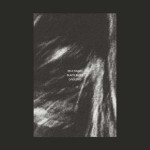


Keiji Haino’s "Black Blues" is a double-edged sword, a record that slices through the extremes of human emotion and sonic expression. This re-release, 20 years after its initial impact, remains a potent reminder of why Haino is a singular force in experimental music. The album is a masterclass in contrasts, offering two versions of the same six songs — one labeled "Violent" and the other "Soft" — each a mirror image distorted in profoundly different ways.
The "Violent" versions (they managed to scare my cat while I was listening to them...) are everything you might expect from Haino: ferocious, unyielding, and deeply immersive. The album opens with “Black Petal”, where Haino’s voice seems to emanate from some primal abyss, raw and unfiltered. His guitar work, simultaneously rhythmic and discordant, serves as both the scalpel and the wound. “Black Eyes” follows, stretching nearly ten minutes, where the intensity builds to a point that’s almost unbearable, yet you find yourself unable to turn away. It’s like being caught in a sonic vortex, where every note and every breath is a testament to the sheer force of Haino’s presence. Tracks like “Town In Black Fog” and “Drifting” are sprawling landscapes of sound that seem to consume everything in their path, leaving only the echo of Haino’s voice and the jagged edges of his guitar. The closing piece, “See That My Grave Is Kept Clean”, feels less like a cover and more like an exorcism, where the familiar blues standard is stripped down to its bones, only to be rebuilt in Haino’s image.
Then, there’s the "Soft" side, where the same songs are reimagined through a different lens. If the "Violent" versions are like standing in the midst of a storm, the "Soft" versions are the calm after—though not without a sense of lingering unease. Haino’s guitar work here is drenched in reverb, creating vast, shimmering soundscapes that seem to float just out of reach. His voice, while gentler, is still imbued with a deep sense of yearning and melancholy. “Black Petal (Soft)” takes on a lullaby-like quality, though it’s one that might keep you awake rather than put you to sleep. The reverb-heavy guitar in “Town In Black Fog (Soft)” diffuses the tension of its violent counterpart, yet there’s an undercurrent of sadness that’s impossible to ignore. Even “See That My Grave Is Kept Clean (Soft)”, stretched to over 14 minutes, feels less like a plea for peace and more like a meditation on inevitable loss.
What makes "Black Blues" so compelling is not just the duality of its presentations, but the way Haino navigates these extremes with such finesse. The "Violent" versions are brutal, yes, but never gratuitously so; they’re intense because they need to be, because they are an honest reflection of the emotions they seek to convey. The "Soft" versions, on the other hand, aren’t simply subdued; they’re contemplative, introspective, and just as emotionally charged as their counterparts, albeit in a more subtle, lingering way.
"Black Blues" is a portrait of an artist who understands that music is not just sound, but an extension of the human experience. Haino’s voice and guitar are merely the vehicles through which he channels something much deeper, something that exists in the space between rage and resignation, between destruction and creation. It’s an album that demands attention, that requires you to sit with it, to let it wash over you and seep into your bones. And whether you find yourself gravitating towards the stormy violence or the eerie calm, one thing is certain: "Black Blues" is an album that stays with you long after the final note has faded.
Keiji Haino has always been an artist who exists on the fringes, who pushes boundaries not for the sake of provocation, but because he’s compelled to explore the edges of what music can be. "Black Blues" is a testament to that restless creativity, to an artist who continues to delve deeper into the abyss, and who invites us to follow him, if we dare.
The "Violent" versions (they managed to scare my cat while I was listening to them...) are everything you might expect from Haino: ferocious, unyielding, and deeply immersive. The album opens with “Black Petal”, where Haino’s voice seems to emanate from some primal abyss, raw and unfiltered. His guitar work, simultaneously rhythmic and discordant, serves as both the scalpel and the wound. “Black Eyes” follows, stretching nearly ten minutes, where the intensity builds to a point that’s almost unbearable, yet you find yourself unable to turn away. It’s like being caught in a sonic vortex, where every note and every breath is a testament to the sheer force of Haino’s presence. Tracks like “Town In Black Fog” and “Drifting” are sprawling landscapes of sound that seem to consume everything in their path, leaving only the echo of Haino’s voice and the jagged edges of his guitar. The closing piece, “See That My Grave Is Kept Clean”, feels less like a cover and more like an exorcism, where the familiar blues standard is stripped down to its bones, only to be rebuilt in Haino’s image.
Then, there’s the "Soft" side, where the same songs are reimagined through a different lens. If the "Violent" versions are like standing in the midst of a storm, the "Soft" versions are the calm after—though not without a sense of lingering unease. Haino’s guitar work here is drenched in reverb, creating vast, shimmering soundscapes that seem to float just out of reach. His voice, while gentler, is still imbued with a deep sense of yearning and melancholy. “Black Petal (Soft)” takes on a lullaby-like quality, though it’s one that might keep you awake rather than put you to sleep. The reverb-heavy guitar in “Town In Black Fog (Soft)” diffuses the tension of its violent counterpart, yet there’s an undercurrent of sadness that’s impossible to ignore. Even “See That My Grave Is Kept Clean (Soft)”, stretched to over 14 minutes, feels less like a plea for peace and more like a meditation on inevitable loss.
What makes "Black Blues" so compelling is not just the duality of its presentations, but the way Haino navigates these extremes with such finesse. The "Violent" versions are brutal, yes, but never gratuitously so; they’re intense because they need to be, because they are an honest reflection of the emotions they seek to convey. The "Soft" versions, on the other hand, aren’t simply subdued; they’re contemplative, introspective, and just as emotionally charged as their counterparts, albeit in a more subtle, lingering way.
"Black Blues" is a portrait of an artist who understands that music is not just sound, but an extension of the human experience. Haino’s voice and guitar are merely the vehicles through which he channels something much deeper, something that exists in the space between rage and resignation, between destruction and creation. It’s an album that demands attention, that requires you to sit with it, to let it wash over you and seep into your bones. And whether you find yourself gravitating towards the stormy violence or the eerie calm, one thing is certain: "Black Blues" is an album that stays with you long after the final note has faded.
Keiji Haino has always been an artist who exists on the fringes, who pushes boundaries not for the sake of provocation, but because he’s compelled to explore the edges of what music can be. "Black Blues" is a testament to that restless creativity, to an artist who continues to delve deeper into the abyss, and who invites us to follow him, if we dare.
Comments
Stream
Browse by Genre
Industrial Music / Industrial Metal / Aggro Industrial / Electro Metal
Industrial Noise / Power Noise / Harsh Noise
Synth Pop / Electro Pop / Synth-Electronica
Techno / Trance / Goa / Drum'n'Bass / Jungle / Tribal / Trip-Hop
Ambient / Electronica / Ethereal / Dub / Soundscapes / Abstract
Experimental / Avantgarde / Weird & Wired / Glitch / Noise / Field Recording
Dark / Gothic / Wave / New Wave / Dark Wave / Industrial Gothic
New Music / Downtown / Avantgarde Jazz / New Classical / World