
Saturday, August 29, 2026
S?bastien Gu?rive: Obscure Clarity
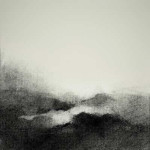


"Obscure Clarity" by Sébastien Guérive is the kind of album that makes you wish you had a better sound system—or perhaps just a more introspective soul. For those familiar with Guérive’s work, the album is both a continuation and a departure, diving deeper into the neoclassical-electronic fusion that he’s become known for while also venturing into more spiritual and cinematic territories.
Right from the opening track, "On the inside", Guérive sets the tone with a meticulous blend of electronic acoustics and intimate piano melodies. The piece feels like the soundtrack to a film that’s never been made, full of tension and release, light and shadow. The choral-like elements and onomatopoeic synching between electronic clicks and puffed synths that weave through the album lend it a certain sacredness, as if we’re eavesdropping on a conversation between the divine and the damned. It’s music that demands to be listened to with the lights off and the volume up, preferably while contemplating life’s bigger questions—or at least pretending to.
"Prana" and "Devi" continue this journey, with Guérive layering sound textures that feel both organic and otherworldly. There’s a pulse to these tracks, an undercurrent that hints at something darker lurking beneath the surface. Yet, just when you think you’ve got the album figured out, Guérive pulls a fast one with "Daydream", a track that lives up to its name with its ethereal tones, softened synth brass and well synched rhythmical pattern. It’s like floating in a hazy half-sleep, caught between consciousness and dream — beautiful, but with an unsettling edge.
The album’s centerpiece, "Obscure Clarity I", is a masterclass in juxtaposition. Co-arranged by Romain Pangaud, it takes you on a rollercoaster of emotions, balancing moments of serene beauty with sudden, jarring shifts into darker, more chaotic territory. It’s as if Guérive is playing with the very concept of clarity, blurring the lines between what’s obvious and what’s hidden, between light and dark. The subsequent parts of the "Obscure Clarity" suite continue this exploration, each track adding new layers and textures to the album’s sonic tapestry.
There’s a sense of narrative throughout "Obscure Clarity" — not in a linear, storytelling way, but in the way that each track feels like a chapter in a larger, existential novel. "Deva" and "Dukkha" are brief yet powerful interludes, providing moments of reflection before the album plunges back into its deep, introspective waters. The final track, "Shanti", is a fitting conclusion, offering a semblance of peace after the emotional tumult of the preceding tracks. But even here, Guérive doesn’t let you off easy. There’s a melancholy to the piece, a sense that peace is hard-won and fragile.
Comparisons to artists like Nils Frahm or Ólafur Arnalds are inevitable, but Guérive’s work stands apart in its willingness to embrace discomfort and contradiction. "Obscure Clarity" isn’t afraid to mix the sacred with the profane, the serene with the unsettling. It’s an album that challenges the listener, asking them to sit with their discomfort and to find beauty in the dissonance.
If there’s a flaw to be found in "Obscure Clarity", it’s that it demands a lot from its listeners. This isn’t background music or something to be played casually while doing chores. It’s an album that requires — and rewards — attention and introspection. For some, that might be a bit too much. But for those willing to dive in, to really listen, "Obscure Clarity" offers an experience that’s as haunting as it is beautiful.
"Obscure Clarity" is an album that manages to defy easy categorization. It’s neoclassical, it’s electronic, it’s cinematic, it’s spiritual — yet it’s also something more, something that transcends genres and speaks to the human experience in a way that’s both universal and deeply personal. Guérive has crafted an album that lingers long after the final notes have faded, leaving you with more questions than answers. And perhaps, in our increasingly chaotic world, that’s exactly what we need.
Right from the opening track, "On the inside", Guérive sets the tone with a meticulous blend of electronic acoustics and intimate piano melodies. The piece feels like the soundtrack to a film that’s never been made, full of tension and release, light and shadow. The choral-like elements and onomatopoeic synching between electronic clicks and puffed synths that weave through the album lend it a certain sacredness, as if we’re eavesdropping on a conversation between the divine and the damned. It’s music that demands to be listened to with the lights off and the volume up, preferably while contemplating life’s bigger questions—or at least pretending to.
"Prana" and "Devi" continue this journey, with Guérive layering sound textures that feel both organic and otherworldly. There’s a pulse to these tracks, an undercurrent that hints at something darker lurking beneath the surface. Yet, just when you think you’ve got the album figured out, Guérive pulls a fast one with "Daydream", a track that lives up to its name with its ethereal tones, softened synth brass and well synched rhythmical pattern. It’s like floating in a hazy half-sleep, caught between consciousness and dream — beautiful, but with an unsettling edge.
The album’s centerpiece, "Obscure Clarity I", is a masterclass in juxtaposition. Co-arranged by Romain Pangaud, it takes you on a rollercoaster of emotions, balancing moments of serene beauty with sudden, jarring shifts into darker, more chaotic territory. It’s as if Guérive is playing with the very concept of clarity, blurring the lines between what’s obvious and what’s hidden, between light and dark. The subsequent parts of the "Obscure Clarity" suite continue this exploration, each track adding new layers and textures to the album’s sonic tapestry.
There’s a sense of narrative throughout "Obscure Clarity" — not in a linear, storytelling way, but in the way that each track feels like a chapter in a larger, existential novel. "Deva" and "Dukkha" are brief yet powerful interludes, providing moments of reflection before the album plunges back into its deep, introspective waters. The final track, "Shanti", is a fitting conclusion, offering a semblance of peace after the emotional tumult of the preceding tracks. But even here, Guérive doesn’t let you off easy. There’s a melancholy to the piece, a sense that peace is hard-won and fragile.
Comparisons to artists like Nils Frahm or Ólafur Arnalds are inevitable, but Guérive’s work stands apart in its willingness to embrace discomfort and contradiction. "Obscure Clarity" isn’t afraid to mix the sacred with the profane, the serene with the unsettling. It’s an album that challenges the listener, asking them to sit with their discomfort and to find beauty in the dissonance.
If there’s a flaw to be found in "Obscure Clarity", it’s that it demands a lot from its listeners. This isn’t background music or something to be played casually while doing chores. It’s an album that requires — and rewards — attention and introspection. For some, that might be a bit too much. But for those willing to dive in, to really listen, "Obscure Clarity" offers an experience that’s as haunting as it is beautiful.
"Obscure Clarity" is an album that manages to defy easy categorization. It’s neoclassical, it’s electronic, it’s cinematic, it’s spiritual — yet it’s also something more, something that transcends genres and speaks to the human experience in a way that’s both universal and deeply personal. Guérive has crafted an album that lingers long after the final notes have faded, leaving you with more questions than answers. And perhaps, in our increasingly chaotic world, that’s exactly what we need.
Comments
Stream
Browse by Genre
Industrial Music / Industrial Metal / Aggro Industrial / Electro Metal
Industrial Noise / Power Noise / Harsh Noise
Synth Pop / Electro Pop / Synth-Electronica
Techno / Trance / Goa / Drum'n'Bass / Jungle / Tribal / Trip-Hop
Ambient / Electronica / Ethereal / Dub / Soundscapes / Abstract
Experimental / Avantgarde / Weird & Wired / Glitch / Noise / Field Recording
Dark / Gothic / Wave / New Wave / Dark Wave / Industrial Gothic
New Music / Downtown / Avantgarde Jazz / New Classical / World