
Saturday, August 29, 2026
Yorkshire Modular Society: Fiery the Angels Fell
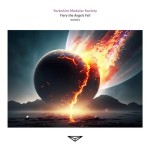
Artist: Yorkshire Modular Society
Title: Fiery the Angels Fell
Format: Download Only (MP3 + Lossless)
Label: Dragon's Eye Recordings (@)
Rated:

Title: Fiery the Angels Fell
Format: Download Only (MP3 + Lossless)
Label: Dragon's Eye Recordings (@)
Rated:
In the vast and often overcrowded galaxy of ambient music, where every droning synth pad risks becoming as forgettable as the next, Yorkshire Modular Society’s "Fiery the Angels Fell" lands like a meteor, searing through the dark with a defiant glow. Clocking in at just over an hour, this longform ambient piece is more than just a soundtrack for your existential dread — it’s a full-blown immersion into a neon-lit dystopia, drawing inspiration from the shadowy, rain-soaked worlds of "Blade Runner" and "Akira". But don’t let the references fool you; this isn’t just another homage to cyberpunk aesthetics. No, this album has a heartbeat, one that pulses with the deep, melancholic echoes of the human condition.
Let’s start with the title, "Fiery the Angels Fell". It’s not just a dramatic phrase plucked from "Blade Runner"'s Roy Batty; it’s a portent, a declaration that what you’re about to experience is more than just a piece of music — it’s a descent into the core of something hauntingly beautiful and deeply human. The piece unfurls slowly, like smoke curling from a dying fire, its textures layered with a patience that’s both frustrating and mesmerizing. And here lies the irony: in a genre that often prides itself on minimalism, "Fiery the Angels Fell" dares to be maximalist in its emotional scope.
As the piece begins, you might be tempted to think, “Oh, another ambient drone track, let me just settle in and zone out”. But hold on. This is not background music for your daily meditation or a sound bath for your chakras. Yorkshire Modular Society demands more from you. The slow-building oscillations are like whispers from a forgotten world, beckoning you deeper into a maze of sound. It’s as if the modular synths are alive, each modulation a conscious choice, each LFO a deliberate push into the unknown. This is music that asks you to lean in, to feel every shift and pulse.
The real genius of "Fiery the Angels Fell" lies in its use of space — or perhaps, the illusion of it. Reverb and delay are wielded like sonic architects, constructing towering structures of sound that feel both infinite and claustrophobic. It’s the sonic equivalent of walking through a decaying urban landscape, where every echo off the cold concrete walls tells a story of loss, of time passing, of lives lived and forgotten. And just when you think you’ve found your footing, the ground shifts beneath you. Time unravels and reconstitutes, pulling you further into the album’s hazy depths.
But for all its technical prowess, this album is deeply, almost painfully, personal. The music carries the weight of grief and loss, the kind that doesn’t scream but instead lingers, a constant companion that you’ve come to accept even as it breaks your heart. There’s a rawness here, a vulnerability that’s rare in electronic music. And it’s in this emotional honesty that Yorkshire Modular Society truly shines. This is not just an album for synth enthusiasts or ambient aficionados — this is an album for anyone who’s ever felt the sting of sorrow, the ache of nostalgia, or the quiet devastation of love lost.
Of course, this isn’t to say that "Fiery the Angels Fell" is without its challenges. The hour-long runtime might test the patience of listeners used to more conventional structures, and the absence of any distinct “tracks” might make it difficult to latch onto specific moments. But that’s the point, isn’t it? This is music that exists outside of time, outside of the usual confines of melody and rhythm. It’s a journey, one that you’re meant to experience in its entirety, without interruption.
So where does that leave us? In a world where music is often consumed in bite-sized chunks, where albums are picked apart for playlists, Yorkshire Modular Society has offered us something different — a sprawling, uncompromising work that asks for our full attention. And in return, it gives us a glimpse into a world that’s at once familiar and alien, beautiful and broken.
Let’s start with the title, "Fiery the Angels Fell". It’s not just a dramatic phrase plucked from "Blade Runner"'s Roy Batty; it’s a portent, a declaration that what you’re about to experience is more than just a piece of music — it’s a descent into the core of something hauntingly beautiful and deeply human. The piece unfurls slowly, like smoke curling from a dying fire, its textures layered with a patience that’s both frustrating and mesmerizing. And here lies the irony: in a genre that often prides itself on minimalism, "Fiery the Angels Fell" dares to be maximalist in its emotional scope.
As the piece begins, you might be tempted to think, “Oh, another ambient drone track, let me just settle in and zone out”. But hold on. This is not background music for your daily meditation or a sound bath for your chakras. Yorkshire Modular Society demands more from you. The slow-building oscillations are like whispers from a forgotten world, beckoning you deeper into a maze of sound. It’s as if the modular synths are alive, each modulation a conscious choice, each LFO a deliberate push into the unknown. This is music that asks you to lean in, to feel every shift and pulse.
The real genius of "Fiery the Angels Fell" lies in its use of space — or perhaps, the illusion of it. Reverb and delay are wielded like sonic architects, constructing towering structures of sound that feel both infinite and claustrophobic. It’s the sonic equivalent of walking through a decaying urban landscape, where every echo off the cold concrete walls tells a story of loss, of time passing, of lives lived and forgotten. And just when you think you’ve found your footing, the ground shifts beneath you. Time unravels and reconstitutes, pulling you further into the album’s hazy depths.
But for all its technical prowess, this album is deeply, almost painfully, personal. The music carries the weight of grief and loss, the kind that doesn’t scream but instead lingers, a constant companion that you’ve come to accept even as it breaks your heart. There’s a rawness here, a vulnerability that’s rare in electronic music. And it’s in this emotional honesty that Yorkshire Modular Society truly shines. This is not just an album for synth enthusiasts or ambient aficionados — this is an album for anyone who’s ever felt the sting of sorrow, the ache of nostalgia, or the quiet devastation of love lost.
Of course, this isn’t to say that "Fiery the Angels Fell" is without its challenges. The hour-long runtime might test the patience of listeners used to more conventional structures, and the absence of any distinct “tracks” might make it difficult to latch onto specific moments. But that’s the point, isn’t it? This is music that exists outside of time, outside of the usual confines of melody and rhythm. It’s a journey, one that you’re meant to experience in its entirety, without interruption.
So where does that leave us? In a world where music is often consumed in bite-sized chunks, where albums are picked apart for playlists, Yorkshire Modular Society has offered us something different — a sprawling, uncompromising work that asks for our full attention. And in return, it gives us a glimpse into a world that’s at once familiar and alien, beautiful and broken.
Comments
Stream
Browse by Genre
Industrial Music / Industrial Metal / Aggro Industrial / Electro Metal
Industrial Noise / Power Noise / Harsh Noise
Synth Pop / Electro Pop / Synth-Electronica
Techno / Trance / Goa / Drum'n'Bass / Jungle / Tribal / Trip-Hop
Ambient / Electronica / Ethereal / Dub / Soundscapes / Abstract
Experimental / Avantgarde / Weird & Wired / Glitch / Noise / Field Recording
Dark / Gothic / Wave / New Wave / Dark Wave / Industrial Gothic
New Music / Downtown / Avantgarde Jazz / New Classical / World