
Yelka: 1976
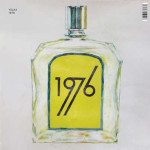


Yelka’s "1976" is the kind of album that sounds like it’s wearing flared pants, sporting aviator sunglasses, and whispering cryptic epiphanies about the cosmos into your ear at a vinyl shop in 1970s Berlin. But let’s be clear: this album isn’t nostalgia. It’s a painstakingly crafted "homage" - the kind where you sense the band has dug into the record crates, pulled out the most esoteric stuff from 1976, and come out on the other side with something that’s both tongue-in-cheek and earnest, a delicate balance only few can strike without face-planting into pretension.
Yelka’s Berlin trio (drummer Christian Obermaier, guitarist Daniel Meteo, and bassist/singer Yelka Wehmeier) positions itself as post-krautrock revivalists, but they’re much more than that. They’re time travellers, conjuring up an era when punk was still underground, krautrock had been absorbed into art rock’s fabric, and disco was only just becoming self-aware. And then they smirk knowingly as they throw all of these references into a blender and serve it chilled with a side of cosmic bewilderment.
Opening track “Ringe” is a fleeting 1:28 of ambience, like walking into a hazy, sun-streaked memory of 1976 that never quite settles into place. Then comes “Petrichor”, where Yelka’s voice - soft, understated, and haunting - channels Fleetwood Mac in a way that feels both reverent and completely irreverent. It’s the kind of vocal performance that suggests Yelka herself is in on the cosmic joke: she knows this track is a tip of the hat to the Lindsey Buckingham and Stevie Nicks of yesteryear, but she’s too cool to let it be just that. The track aches in all the right ways, but it never quite reaches for the melodrama, keeping it at arm’s length like a knowing shrug.
The Alan Parsons Project comparison, floated by guitarist Daniel Meteo in the album’s notes, is a wink and a nod to the listener. "1976" is, indeed, a bit of a concept album, but it’s not going to hit you over the head with lofty sci-fi themes. Instead, it offers "Saturn" - a near 10-minute cosmic disco journey that could easily soundtrack a space cruise through a shimmering asteroid field. It’s indulgent, hypnotic, and a little bit ridiculous - but only if you aren’t already swept away by its quiet brilliance. There’s a patient propulsion to it, like the album’s slow-motion heart beating underneath all the alien textures.
And then there’s "Das Goldene Kalb", where the disco influence creeps in even further, though it's twisted into something Beefheart might have conjured in a funkier mood. It’s the most playful track here, embracing disco’s awkward, alien phase, as if to remind us that we once thought this genre was weird before it became a global juggernaut.
Yelka’s sense of humor is part of what makes "1976" so irresistible. "Caravan" could be a postcard from Amsterdam, but it feels more like a glammed-up, campy nod to the internationalism of that era’s music. The song titles themselves - "Hanover" and "Saturn" - feel like inside jokes you want to be let in on, and the playful kitsch is held together by deeply considered musicianship. Each song swings between genres like it’s changing clothes in a thrift store dressing room - proggy one minute, folky the next, cosmic disco the next.
But for all its cheekiness, "1976" also has its tender moments. “Petrichor” and “Das Goldene Kalb” radiate a kind of wistful nostalgia, reminding us that this isn’t just a danceable concept piece - it’s an album with heart. Yelka’s voice is a hidden weapon that needs more room to roam on future releases, but when it appears, it’s as captivating as it is unassuming.
The biggest strength of "1976" is how well it captures that weird, magical moment in pop music history when all these disparate genres were spinning in their own directions, colliding and overlapping in unpredictable ways. Yelka manages to evoke that time without being enslaved to it. There’s never a moment on this album where it feels like they’re trying too hard to sound like the past - they’re simply "channeling" it, with enough distance to wink at its absurdities.
"1976" is an album that knows exactly what it is: a gleaming, off-kilter time capsule that never fully takes itself seriously but still manages to resonate deeply. For fans of krautrock, disco, prog, and anything else that might appear on the vinyl shelf of an acid-drenched flea market in 1976, this album is a treat - equal parts brainy, silly, and groovy. It's like walking through the past with your most delightfully cynical friend, the one who wears bell-bottoms ironically but secretly loves them.
Yelka’s Berlin trio (drummer Christian Obermaier, guitarist Daniel Meteo, and bassist/singer Yelka Wehmeier) positions itself as post-krautrock revivalists, but they’re much more than that. They’re time travellers, conjuring up an era when punk was still underground, krautrock had been absorbed into art rock’s fabric, and disco was only just becoming self-aware. And then they smirk knowingly as they throw all of these references into a blender and serve it chilled with a side of cosmic bewilderment.
Opening track “Ringe” is a fleeting 1:28 of ambience, like walking into a hazy, sun-streaked memory of 1976 that never quite settles into place. Then comes “Petrichor”, where Yelka’s voice - soft, understated, and haunting - channels Fleetwood Mac in a way that feels both reverent and completely irreverent. It’s the kind of vocal performance that suggests Yelka herself is in on the cosmic joke: she knows this track is a tip of the hat to the Lindsey Buckingham and Stevie Nicks of yesteryear, but she’s too cool to let it be just that. The track aches in all the right ways, but it never quite reaches for the melodrama, keeping it at arm’s length like a knowing shrug.
The Alan Parsons Project comparison, floated by guitarist Daniel Meteo in the album’s notes, is a wink and a nod to the listener. "1976" is, indeed, a bit of a concept album, but it’s not going to hit you over the head with lofty sci-fi themes. Instead, it offers "Saturn" - a near 10-minute cosmic disco journey that could easily soundtrack a space cruise through a shimmering asteroid field. It’s indulgent, hypnotic, and a little bit ridiculous - but only if you aren’t already swept away by its quiet brilliance. There’s a patient propulsion to it, like the album’s slow-motion heart beating underneath all the alien textures.
And then there’s "Das Goldene Kalb", where the disco influence creeps in even further, though it's twisted into something Beefheart might have conjured in a funkier mood. It’s the most playful track here, embracing disco’s awkward, alien phase, as if to remind us that we once thought this genre was weird before it became a global juggernaut.
Yelka’s sense of humor is part of what makes "1976" so irresistible. "Caravan" could be a postcard from Amsterdam, but it feels more like a glammed-up, campy nod to the internationalism of that era’s music. The song titles themselves - "Hanover" and "Saturn" - feel like inside jokes you want to be let in on, and the playful kitsch is held together by deeply considered musicianship. Each song swings between genres like it’s changing clothes in a thrift store dressing room - proggy one minute, folky the next, cosmic disco the next.
But for all its cheekiness, "1976" also has its tender moments. “Petrichor” and “Das Goldene Kalb” radiate a kind of wistful nostalgia, reminding us that this isn’t just a danceable concept piece - it’s an album with heart. Yelka’s voice is a hidden weapon that needs more room to roam on future releases, but when it appears, it’s as captivating as it is unassuming.
The biggest strength of "1976" is how well it captures that weird, magical moment in pop music history when all these disparate genres were spinning in their own directions, colliding and overlapping in unpredictable ways. Yelka manages to evoke that time without being enslaved to it. There’s never a moment on this album where it feels like they’re trying too hard to sound like the past - they’re simply "channeling" it, with enough distance to wink at its absurdities.
"1976" is an album that knows exactly what it is: a gleaming, off-kilter time capsule that never fully takes itself seriously but still manages to resonate deeply. For fans of krautrock, disco, prog, and anything else that might appear on the vinyl shelf of an acid-drenched flea market in 1976, this album is a treat - equal parts brainy, silly, and groovy. It's like walking through the past with your most delightfully cynical friend, the one who wears bell-bottoms ironically but secretly loves them.
Comments
Stream
Browse by Genre
Industrial Music / Industrial Metal / Aggro Industrial / Electro Metal
Industrial Noise / Power Noise / Harsh Noise
Synth Pop / Electro Pop / Synth-Electronica
Techno / Trance / Goa / Drum'n'Bass / Jungle / Tribal / Trip-Hop
Ambient / Electronica / Ethereal / Dub / Soundscapes / Abstract
Experimental / Avantgarde / Weird & Wired / Glitch / Noise / Field Recording
Dark / Gothic / Wave / New Wave / Dark Wave / Industrial Gothic
New Music / Downtown / Avantgarde Jazz / New Classical / World