
Thursday, August 27, 2026
Dave Brown / Jason Kahn: Terminal Analog
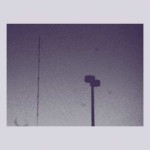


There’s an irony to "Terminal Analog" - in its sheer expansiveness, it manages to be both deeply minimal and overwhelmingly rich. Like a conversation between old friends who only speak in subsonic frequencies, the record unfolds with a surprising intimacy despite its chaotic veneer.
Dave Brown’s tenor guitar, drenched in drone, tension, and open-tuned mysteries, forms the foundation. Meanwhile, Kahn’s erratic electronics hover above, as if they’re disintegrating in real-time. It’s a testament to raw collaboration - deliberately lacking polish, yet never losing depth.
At its core, "Terminal Analog" is a meditation on process. The duo creates not with grandiosity but through deliberate, artful deconstruction. Every note from Brown feels like it’s falling apart, only for Kahn’s electronics to catch the pieces, stitch them into new forms, and then shred them again. This isn’t music that asks for easy listening; it demands engagement. You feel every echo, every glitch, every silence pregnant with more intent than sound itself.
It's hard not to compare this with the works of AMM or even Derek Bailey’s exploratory tangents. Like them, Brown and Kahn revel in the unknown. But there’s also something distinctly "Australian" in this - perhaps it’s the desolate vastness that seeps into the tones, the spaciousness between the notes, as if the land itself has been etched into the music.
Emotionally, it’s a challenging experience. At moments, it feels like you're overhearing a dialogue not meant for you - a deeply personal exchange that’s both alluring and alienating. But isn’t that the beauty of experimental music? The way it lets you peer into an artist's soul, without needing them to explain it?
Ultimately, "Terminal Analog" is a study in contrasts: expansive yet claustrophobic, harmonious yet discordant, logical yet fractured. It’s not for everyone - but for those willing to dive into its fractured beauty, it’s a journey worth taking.
Dave Brown’s tenor guitar, drenched in drone, tension, and open-tuned mysteries, forms the foundation. Meanwhile, Kahn’s erratic electronics hover above, as if they’re disintegrating in real-time. It’s a testament to raw collaboration - deliberately lacking polish, yet never losing depth.
At its core, "Terminal Analog" is a meditation on process. The duo creates not with grandiosity but through deliberate, artful deconstruction. Every note from Brown feels like it’s falling apart, only for Kahn’s electronics to catch the pieces, stitch them into new forms, and then shred them again. This isn’t music that asks for easy listening; it demands engagement. You feel every echo, every glitch, every silence pregnant with more intent than sound itself.
It's hard not to compare this with the works of AMM or even Derek Bailey’s exploratory tangents. Like them, Brown and Kahn revel in the unknown. But there’s also something distinctly "Australian" in this - perhaps it’s the desolate vastness that seeps into the tones, the spaciousness between the notes, as if the land itself has been etched into the music.
Emotionally, it’s a challenging experience. At moments, it feels like you're overhearing a dialogue not meant for you - a deeply personal exchange that’s both alluring and alienating. But isn’t that the beauty of experimental music? The way it lets you peer into an artist's soul, without needing them to explain it?
Ultimately, "Terminal Analog" is a study in contrasts: expansive yet claustrophobic, harmonious yet discordant, logical yet fractured. It’s not for everyone - but for those willing to dive into its fractured beauty, it’s a journey worth taking.
Comments
Stream
Browse by Genre
Industrial Music / Industrial Metal / Aggro Industrial / Electro Metal
Industrial Noise / Power Noise / Harsh Noise
Synth Pop / Electro Pop / Synth-Electronica
Techno / Trance / Goa / Drum'n'Bass / Jungle / Tribal / Trip-Hop
Ambient / Electronica / Ethereal / Dub / Soundscapes / Abstract
Experimental / Avantgarde / Weird & Wired / Glitch / Noise / Field Recording
Dark / Gothic / Wave / New Wave / Dark Wave / Industrial Gothic
New Music / Downtown / Avantgarde Jazz / New Classical / World