
Wilt: Mold the Earth
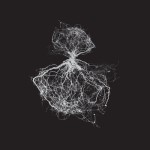


There's a funny story about this album. This was originally recorded in 2001 and was submitted to Fusion Audio Recordings at that time. However at that point Fusion Audio had abruptly stopped and the album was forgotten. Two decades, later Barry Sheffield decided to restart Fusion Audio Recordings and had found this recording and decided to release it (with Wilt’s blessing, of course). The notes for the album have the following description of the events and the album: "I had forgotten about this release for over 20 years," Keeler reflects. "At the time, I was heavily influenced by Aube and Hands To. I wanted to create an opus from singular source materials, all of which were natural. Ultimately, 'Mold The Earth' is a sound sculpture crafted from the sounds of the earth, a mix of haunting ambience and dark textures." The liner notes state that all tracks are composed from natural sound sources, such as field recordings of wood, rock, dirt, metal, and samples. Additional sounds were contributed by Steve Brand (Augur), J. Benham, and Jeph Jerman (Hands To). I've been following Wilt’s production since before this album was recorded, so it's kind of a blast from the past for me to listen to this recording. We can think of this as a time capsule of sorts, so let’s dive in and see what vintage Wilt has in store for us.
We open with “The Skies are Haunting,” which is a spectral number that has wind, clanking metal, and bits of grinding noise. The overall feel is unsettling, like you're waiting for a storm to pass, and it serves as a nice opening to the disc. “Torn Apart and Drifting” keeps the wind motif going, but becomes increasingly intense. Where “The Skies are Haunting” was more thin and spectral, this track is the feel of plate tectonics at work. Crushing, rumbling sounds with snippets of voice buried in the mix give it a feeling of pressure. Next up we have “An Invisible Violence.” Imagine that you are shrunk down to the size of an ant and you're listening to the sounds of the insects and the animals around you. Suddenly, someone gets out a shovel and shoves it in the ground next to you. This is what you would be hearing. “Involved Motion” gives us sweeping flanger sounds and pounding wooden percussion that gives it a kind of spasticness that reminds me of Zoviet France’s “Loh Land.” “The Spaces In Between” has the feeling of being either subterranean or submerged underwater; heavy bass drone that a soothing feel reminiscent of Lustmord’s “Heresy.” “Psychic Space” is like listening to heavy machinery in a wind tunnel. It's alternately piercing and soothing in turn. “Formal Reduction” is more rumbling drone with just a hint of dissonance built into it to keep things interesting. If you were wondering where the noisiness was “Kinetic Nature” has you covered. We begin with some staccato bass thumps which descends into cacophony as it proceeds, with wind noise, scraping, and static to create a kind of chaos that doesn't quite devolve into noise but it's certainly noisy. “Mold the Earth” brings back the low end rumble and insect and animal noise field recordings. “Spatial Reorientation” closes it down with a short track that is much like synthesizing whale song and then running it through a ton of reverb and some distortion. This gives an interesting echoey effect that is somewhat jarring.
What makes this album work is the sense of continuity throughout. It doesn't all sound the same but it hangs together in that certain songs are similar in approach. If you're used to some of Wilt’s more recent stuff that's a bit more synth-based, this one may sound a little organic to your taste, but that's what Wilt’s always been about. If you're looking for noise, you won't find it here in the way that you're expecting. This is not harsh by any stretch, but it is a bit chaotic. Kind of like nature herself. This falls squarely into the category of experimental, and you get the sense that Keeler is trying to evoke a sense of being somewhere rather than bludgeoning the listener over the head with sound. This really does warrant a nice relaxing listen through headphones to get the nuances of what Wilt is doing here. It's a bit less polished than some of his other works, but there's a certain charm to that. Well worth checking out.
We open with “The Skies are Haunting,” which is a spectral number that has wind, clanking metal, and bits of grinding noise. The overall feel is unsettling, like you're waiting for a storm to pass, and it serves as a nice opening to the disc. “Torn Apart and Drifting” keeps the wind motif going, but becomes increasingly intense. Where “The Skies are Haunting” was more thin and spectral, this track is the feel of plate tectonics at work. Crushing, rumbling sounds with snippets of voice buried in the mix give it a feeling of pressure. Next up we have “An Invisible Violence.” Imagine that you are shrunk down to the size of an ant and you're listening to the sounds of the insects and the animals around you. Suddenly, someone gets out a shovel and shoves it in the ground next to you. This is what you would be hearing. “Involved Motion” gives us sweeping flanger sounds and pounding wooden percussion that gives it a kind of spasticness that reminds me of Zoviet France’s “Loh Land.” “The Spaces In Between” has the feeling of being either subterranean or submerged underwater; heavy bass drone that a soothing feel reminiscent of Lustmord’s “Heresy.” “Psychic Space” is like listening to heavy machinery in a wind tunnel. It's alternately piercing and soothing in turn. “Formal Reduction” is more rumbling drone with just a hint of dissonance built into it to keep things interesting. If you were wondering where the noisiness was “Kinetic Nature” has you covered. We begin with some staccato bass thumps which descends into cacophony as it proceeds, with wind noise, scraping, and static to create a kind of chaos that doesn't quite devolve into noise but it's certainly noisy. “Mold the Earth” brings back the low end rumble and insect and animal noise field recordings. “Spatial Reorientation” closes it down with a short track that is much like synthesizing whale song and then running it through a ton of reverb and some distortion. This gives an interesting echoey effect that is somewhat jarring.
What makes this album work is the sense of continuity throughout. It doesn't all sound the same but it hangs together in that certain songs are similar in approach. If you're used to some of Wilt’s more recent stuff that's a bit more synth-based, this one may sound a little organic to your taste, but that's what Wilt’s always been about. If you're looking for noise, you won't find it here in the way that you're expecting. This is not harsh by any stretch, but it is a bit chaotic. Kind of like nature herself. This falls squarely into the category of experimental, and you get the sense that Keeler is trying to evoke a sense of being somewhere rather than bludgeoning the listener over the head with sound. This really does warrant a nice relaxing listen through headphones to get the nuances of what Wilt is doing here. It's a bit less polished than some of his other works, but there's a certain charm to that. Well worth checking out.
Comments
Stream
Browse by Genre
Industrial Music / Industrial Metal / Aggro Industrial / Electro Metal
Industrial Noise / Power Noise / Harsh Noise
Synth Pop / Electro Pop / Synth-Electronica
Techno / Trance / Goa / Drum'n'Bass / Jungle / Tribal / Trip-Hop
Ambient / Electronica / Ethereal / Dub / Soundscapes / Abstract
Experimental / Avantgarde / Weird & Wired / Glitch / Noise / Field Recording
Dark / Gothic / Wave / New Wave / Dark Wave / Industrial Gothic
New Music / Downtown / Avantgarde Jazz / New Classical / World