
Saturday, August 29, 2026
Henrik Meierkord: Falling
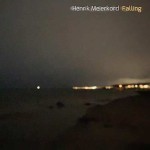
Artist: Henrik Meierkord (@)
Title: Falling
Format: Download Only (MP3 + Lossless)
Label: Projekt (@)
Rated:

Title: Falling
Format: Download Only (MP3 + Lossless)
Label: Projekt (@)
Rated:
Henrik Meierkord’s "Falling" could sound like a plunge into the heart’s murkier waters, where melancholy drifts alongside glimmers of light. Meierkord, a Stockholm-based cellist and composer, has built a reputation on sculpting ambient soundscapes with strings, not synths. Here, the cello, violin, and viola resonate not as polished instruments but as raw, human voices - each note a breath, a murmur, a sigh in the language of solitude.
This album feels like sinking into the depths, yet it’s a fall that asks us to trust the unknown. Opening with "Tonalitet I", Meierkord crafts overlapping motifs that swell and recede like ocean tides. Each track is its own introspective journey, yet together, they form a vast sea of emotional texture. "SpelemÄn" weaves melancholy with a reverent touch, while "Vi Faller" offers a slow, aching descent that wraps the listener in what feels like the warmest embrace of sadness. Here, sorrow becomes a sanctuary, darkness a homecoming.
It could sound relatively unconventional the fact that while most ambient artists reach for electronic synthesizers to create atmosphere, he mines an acoustic terrain, conjuring a kind of medieval, almost baroque sound world. Yet these strings don’t feel bound to any time period; rather, they seem suspended in their own dimension, drifting between the earthly and the ethereal. "Tonalitet III" and "Sarabandesque Streicher" are where Meierkord’s baroque influences truly unfurl, transforming the melancholic into something that feels almost sacred.
But "Falling" is not simply an album about melancholy; it’s about the healing that emerges when one dares to accept the plunge. As Meierkord himself has said, he creates from a place of anxiety, the music acting as a balm, a “harmonic creative ocean” where he surrenders to his own process. "Ambient Dreams" and "Summerbreeze" allow glimpses of light, like sunbeams piercing through storm clouds - a reminder that even in darkness, there is beauty, even warmth.
This is an album best experienced in solitude, with only your own thoughts and Meierkord’s strings echoing around you. "Falling" invites us to lose ourselves, to dive into our own emotional depths, and ultimately to resurface, if not lighter, then at least more whole. In "Falling", Meierkord offers a rare, resonant experience: a chance to sit within one’s sorrow and let it sing, discovering, perhaps, that to fall is sometimes to find peace.
This album feels like sinking into the depths, yet it’s a fall that asks us to trust the unknown. Opening with "Tonalitet I", Meierkord crafts overlapping motifs that swell and recede like ocean tides. Each track is its own introspective journey, yet together, they form a vast sea of emotional texture. "SpelemÄn" weaves melancholy with a reverent touch, while "Vi Faller" offers a slow, aching descent that wraps the listener in what feels like the warmest embrace of sadness. Here, sorrow becomes a sanctuary, darkness a homecoming.
It could sound relatively unconventional the fact that while most ambient artists reach for electronic synthesizers to create atmosphere, he mines an acoustic terrain, conjuring a kind of medieval, almost baroque sound world. Yet these strings don’t feel bound to any time period; rather, they seem suspended in their own dimension, drifting between the earthly and the ethereal. "Tonalitet III" and "Sarabandesque Streicher" are where Meierkord’s baroque influences truly unfurl, transforming the melancholic into something that feels almost sacred.
But "Falling" is not simply an album about melancholy; it’s about the healing that emerges when one dares to accept the plunge. As Meierkord himself has said, he creates from a place of anxiety, the music acting as a balm, a “harmonic creative ocean” where he surrenders to his own process. "Ambient Dreams" and "Summerbreeze" allow glimpses of light, like sunbeams piercing through storm clouds - a reminder that even in darkness, there is beauty, even warmth.
This is an album best experienced in solitude, with only your own thoughts and Meierkord’s strings echoing around you. "Falling" invites us to lose ourselves, to dive into our own emotional depths, and ultimately to resurface, if not lighter, then at least more whole. In "Falling", Meierkord offers a rare, resonant experience: a chance to sit within one’s sorrow and let it sing, discovering, perhaps, that to fall is sometimes to find peace.
Comments
Stream
Browse by Genre
Industrial Music / Industrial Metal / Aggro Industrial / Electro Metal
Industrial Noise / Power Noise / Harsh Noise
Synth Pop / Electro Pop / Synth-Electronica
Techno / Trance / Goa / Drum'n'Bass / Jungle / Tribal / Trip-Hop
Ambient / Electronica / Ethereal / Dub / Soundscapes / Abstract
Experimental / Avantgarde / Weird & Wired / Glitch / Noise / Field Recording
Dark / Gothic / Wave / New Wave / Dark Wave / Industrial Gothic
New Music / Downtown / Avantgarde Jazz / New Classical / World