
Saturday, August 29, 2026
Disturbio: Les Mauvaises Fr?quentations
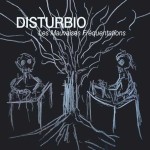
Artist: Disturbio
Title: Les Mauvaises Fr?quentations
Format: CD
Label: Klanggalerie (http://www.klanggalerie.com/) (@)
Rated:


Title: Les Mauvaises Fr?quentations
Format: CD
Label: Klanggalerie (http://www.klanggalerie.com/) (@)
Rated:
In "Les Mauvaises Fréquentations", the duo Disturbio - comprising Jérome Noetinger and Angélica Castelló - guides us through an auditory landscape as surreal as it is immersive. The album is a masterclass in deconstructing sound into its raw components: fractured loops, ghostly radio signals, and the magnetic hum of analog recordings. Each track feels like stumbling upon a dusty reel-to-reel tape in an attic - alive with voices, crackles, and memories on the edge of coherence.
This collaboration is a fitting partnership for Noetinger and Castelló. Noetinger, with his background in musique concrète, is renowned for coaxing an unsettling beauty from his Revox B77 and a miscellany of homemade electronics, crafting pieces that seem to breathe with life of their own. His fascination with the unpredictable timbres of cassette tapes and magnetic fields finds a natural counterpart in Castelló’s Paetzold recorder and spectral electronics. Hailing from Mexico City but now working between Vienna and Europe, Castelló’s music inhabits the borders between dream and waking life, drawing listeners into soundscapes that feel as fragile and ethereal as smoke.
"Les Mauvaises Fréquentations" plays like a series of short films rendered in sound. It begins with "Topos", where we encounter a distorted topography of overlapping tones, hums, and subdued feedback. It’s a suspenseful introduction that lures us into Disturbio's world of faded sounds and forgotten voices. Then, with "Aude" and "Antoine", Noetinger and Castelló expand their universe, inviting cellist Aude Romary and vocalist Antoine LÄng. The cello groans and sighs, while LÄng’s jaw harp and murmurs inject an eerie, almost primal texture that hovers between the organic and the otherworldly.
One of the most striking elements of the album is its treatment of voices - distorted, whispered, and embedded deep in the fabric of each track. On "Natacha", with guest vocalist Natacha Muslera, there is a pervasive sense of haunted intimacy, as though the listener is eavesdropping on a conversation that has long ended. These are not simply voices but traces, remnants caught on tape, slipping between foreground and background as though remembered from a dream.
With the track "Mathias", featuring Mathias Forge on cello and tapes, the album reaches its most texturally rich moments, conjuring dense layers of tape hiss and fluctuating string tones. The recording itself feels as tactile as wood grain, each instrument seemingly dissolving into its own sonic residue. The final track, "February", is a fitting close - a reflective pause after the dense soundscapes that precede it, marking an end that feels both abrupt and intentional, like a broken transmission.
"Les Mauvaises Fréquentations" is more than an album; it is an experience that sits somewhere between music, memory, and the flickering of old film reels. By weaving in unexpected collaborators and using every possible quirk of analog equipment, Disturbio has crafted a collection that feels at once cinematic and elusive. This is music as archaeology, digging through the layers of forgotten voices and decaying sounds, emerging with fragments of something deeply human, yet mysterious. The result is a testament to the beauty found in imperfection - a work of echoes, glitches, and fragile memories, bound together by Noetinger and Castelló's shared fascination with the fleeting and the ephemeral.
This collaboration is a fitting partnership for Noetinger and Castelló. Noetinger, with his background in musique concrète, is renowned for coaxing an unsettling beauty from his Revox B77 and a miscellany of homemade electronics, crafting pieces that seem to breathe with life of their own. His fascination with the unpredictable timbres of cassette tapes and magnetic fields finds a natural counterpart in Castelló’s Paetzold recorder and spectral electronics. Hailing from Mexico City but now working between Vienna and Europe, Castelló’s music inhabits the borders between dream and waking life, drawing listeners into soundscapes that feel as fragile and ethereal as smoke.
"Les Mauvaises Fréquentations" plays like a series of short films rendered in sound. It begins with "Topos", where we encounter a distorted topography of overlapping tones, hums, and subdued feedback. It’s a suspenseful introduction that lures us into Disturbio's world of faded sounds and forgotten voices. Then, with "Aude" and "Antoine", Noetinger and Castelló expand their universe, inviting cellist Aude Romary and vocalist Antoine LÄng. The cello groans and sighs, while LÄng’s jaw harp and murmurs inject an eerie, almost primal texture that hovers between the organic and the otherworldly.
One of the most striking elements of the album is its treatment of voices - distorted, whispered, and embedded deep in the fabric of each track. On "Natacha", with guest vocalist Natacha Muslera, there is a pervasive sense of haunted intimacy, as though the listener is eavesdropping on a conversation that has long ended. These are not simply voices but traces, remnants caught on tape, slipping between foreground and background as though remembered from a dream.
With the track "Mathias", featuring Mathias Forge on cello and tapes, the album reaches its most texturally rich moments, conjuring dense layers of tape hiss and fluctuating string tones. The recording itself feels as tactile as wood grain, each instrument seemingly dissolving into its own sonic residue. The final track, "February", is a fitting close - a reflective pause after the dense soundscapes that precede it, marking an end that feels both abrupt and intentional, like a broken transmission.
"Les Mauvaises Fréquentations" is more than an album; it is an experience that sits somewhere between music, memory, and the flickering of old film reels. By weaving in unexpected collaborators and using every possible quirk of analog equipment, Disturbio has crafted a collection that feels at once cinematic and elusive. This is music as archaeology, digging through the layers of forgotten voices and decaying sounds, emerging with fragments of something deeply human, yet mysterious. The result is a testament to the beauty found in imperfection - a work of echoes, glitches, and fragile memories, bound together by Noetinger and Castelló's shared fascination with the fleeting and the ephemeral.
Comments
Stream
Browse by Genre
Industrial Music / Industrial Metal / Aggro Industrial / Electro Metal
Industrial Noise / Power Noise / Harsh Noise
Synth Pop / Electro Pop / Synth-Electronica
Techno / Trance / Goa / Drum'n'Bass / Jungle / Tribal / Trip-Hop
Ambient / Electronica / Ethereal / Dub / Soundscapes / Abstract
Experimental / Avantgarde / Weird & Wired / Glitch / Noise / Field Recording
Dark / Gothic / Wave / New Wave / Dark Wave / Industrial Gothic
New Music / Downtown / Avantgarde Jazz / New Classical / World