
Saagara: 3
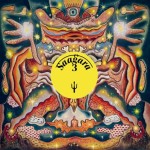

Imagine if the ancient gods of Carnatic music descended upon a 21st-century club, their intricate rhythms entangled in the glow of synthesizers and the pulsing beat of electronic patterns. This is the soundscape of "3", the third album by Saagara - a project where Polish multi-instrumentalist and producer Wacaw Zimpel joins forces with Carnatic virtuosos Giridhar Udupa, Aggu Baba, K Raja, and Mysore N. Karthik. It is, quite simply, an ecstatic collision of tradition and futurism, one that blurs boundaries with the grace of a raga and the urgency of a rave.
Waclaw Zimpel, hailed as a "musical chameleon" by "The New York Times", is no stranger to such experiments. From free jazz with legends like Ken Vandermark to hypnotic minimalist soundscapes and electronic collaborations with James Holden, Zimpel has consistently defied categorization. In "3", he ventures even further, weaving Carnatic music’s intricate rhythmic cycles with acidic electronic textures, creating what he calls “interstellar folk”.
The album opens with "God of Bangalore", a piece that stomps into your ears with relentless energy. Ghatam, khanjira, and thavil drums ripple through the mix, their intricate patterns somehow finding perfect harmony with Zimpel’s swirling electronics. It’s an unapologetically kinetic opener, almost daring the listener to remain still.
But "3" isn’t content to stay in one gear. Tracks like "The Rite of Rain" shift into a more contemplative space, where violinist Mysore N. Karthik’s melodic passages hover like a gentle monsoon over Zimpel’s textured electronic backdrop. Then there’s "Northern Wind Brings Redemption", where pulsating sequences and Carnatic improvisation swirl together, creating a sonic storm that feels both ancient and alien.
What sets this album apart is its refusal to treat electronics and acoustic instruments as separate entities. With the help of cutting-edge tools like James Holden’s Humanizer plugin, Zimpel dissolves the divide, creating a single, cohesive organism where technology and tradition intertwine. At times, it’s hard to tell where a drumbeat ends and a sequencer begins, or whether a sound originates from Karthik’s violin or a cleverly manipulated synthesizer.
There’s irony in this fusion: Carnatic music, with its deeply spiritual roots, is often tied to ideas of eternity and continuity, while electronic music tends to evoke transience and the relentless march of technology. But "3" bridges these worlds with audacity and grace. It invites the listener to dance not just with their feet but with their mind, challenging perceptions of what music can be.
If Saagara’s previous albums leaned toward introspection, "3" turns outward, inviting movement, joy, and cosmic wonder. It’s music for temples and clubs, for ritual and revelry, for the past and the future. And, like the Carnatic tradition it draws from, it carries the listener from one state of being to another.
Zimpel, ever the restless innovator, reminds us that tradition is not a static museum piece but a living, breathing force. In "3", he and his collaborators take this force and propel it into new realms, proving that the sacred and the synthetic are not so far apart after all. Saagara’s "3" is not just an album - it’s a journey, a transformation, a celebration of the infinite ways in which sound can transcend borders, both cultural and temporal.
Here is a work where every rhythm, every tone, and every pulse feels like an invitation to reconsider what music means. Accept it, and you’ll find yourself somewhere beyond the confines of genre, somewhere timeless and uncharted.
Waclaw Zimpel, hailed as a "musical chameleon" by "The New York Times", is no stranger to such experiments. From free jazz with legends like Ken Vandermark to hypnotic minimalist soundscapes and electronic collaborations with James Holden, Zimpel has consistently defied categorization. In "3", he ventures even further, weaving Carnatic music’s intricate rhythmic cycles with acidic electronic textures, creating what he calls “interstellar folk”.
The album opens with "God of Bangalore", a piece that stomps into your ears with relentless energy. Ghatam, khanjira, and thavil drums ripple through the mix, their intricate patterns somehow finding perfect harmony with Zimpel’s swirling electronics. It’s an unapologetically kinetic opener, almost daring the listener to remain still.
But "3" isn’t content to stay in one gear. Tracks like "The Rite of Rain" shift into a more contemplative space, where violinist Mysore N. Karthik’s melodic passages hover like a gentle monsoon over Zimpel’s textured electronic backdrop. Then there’s "Northern Wind Brings Redemption", where pulsating sequences and Carnatic improvisation swirl together, creating a sonic storm that feels both ancient and alien.
What sets this album apart is its refusal to treat electronics and acoustic instruments as separate entities. With the help of cutting-edge tools like James Holden’s Humanizer plugin, Zimpel dissolves the divide, creating a single, cohesive organism where technology and tradition intertwine. At times, it’s hard to tell where a drumbeat ends and a sequencer begins, or whether a sound originates from Karthik’s violin or a cleverly manipulated synthesizer.
There’s irony in this fusion: Carnatic music, with its deeply spiritual roots, is often tied to ideas of eternity and continuity, while electronic music tends to evoke transience and the relentless march of technology. But "3" bridges these worlds with audacity and grace. It invites the listener to dance not just with their feet but with their mind, challenging perceptions of what music can be.
If Saagara’s previous albums leaned toward introspection, "3" turns outward, inviting movement, joy, and cosmic wonder. It’s music for temples and clubs, for ritual and revelry, for the past and the future. And, like the Carnatic tradition it draws from, it carries the listener from one state of being to another.
Zimpel, ever the restless innovator, reminds us that tradition is not a static museum piece but a living, breathing force. In "3", he and his collaborators take this force and propel it into new realms, proving that the sacred and the synthetic are not so far apart after all. Saagara’s "3" is not just an album - it’s a journey, a transformation, a celebration of the infinite ways in which sound can transcend borders, both cultural and temporal.
Here is a work where every rhythm, every tone, and every pulse feels like an invitation to reconsider what music means. Accept it, and you’ll find yourself somewhere beyond the confines of genre, somewhere timeless and uncharted.
Comments
Stream
Browse by Genre
Industrial Music / Industrial Metal / Aggro Industrial / Electro Metal
Industrial Noise / Power Noise / Harsh Noise
Synth Pop / Electro Pop / Synth-Electronica
Techno / Trance / Goa / Drum'n'Bass / Jungle / Tribal / Trip-Hop
Ambient / Electronica / Ethereal / Dub / Soundscapes / Abstract
Experimental / Avantgarde / Weird & Wired / Glitch / Noise / Field Recording
Dark / Gothic / Wave / New Wave / Dark Wave / Industrial Gothic
New Music / Downtown / Avantgarde Jazz / New Classical / World