
Saturday, August 29, 2026
Nakamura Hiroyuki: Sen no Tsudoi
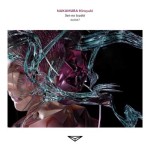
Artist: Nakamura Hiroyuki
Title: Sen no Tsudoi
Format: Download Only (MP3 + Lossless)
Label: Dragon's Eye Recordings (@)
Rated:

Title: Sen no Tsudoi
Format: Download Only (MP3 + Lossless)
Label: Dragon's Eye Recordings (@)
Rated:
Some albums are maps, guiding us through uncharted territories of sound. Others are mirrors, reflecting the complexities of our shared human history. "Sen no Tsudoi" - “Gathering of a Thousand Layers” - by Nakamura Hiroyuki, is both: a sonic manifesto and a deeply personal exploration of the tangled intersections between Asia and Europe. Released on the ever-thoughtful Dragon’s Eye Recordings, the album radiates a quiet intensity, inviting us to question what it means to create in a world teetering on contradictions.
At its core, "Sen no Tsudoi" is a meditation on identity, history, and art’s ability to transcend cultural and temporal boundaries. Nakamura takes a deeply reflective approach, weaving together European instruments, Asian tonalities, and environmental textures. But this is no mere act of fusion; it is a reimagination, a rewriting of history where ancient caves and cathedral vaults echo with the same resonance, collapsing time and space into one sprawling, multidimensional soundscape.
The album begins with "Bokubi", a piece as nebulous and evocative as its namesake ink painting. Disparate rhythms, fragmented voices, and raw, unrefined textures slowly congeal into something purposeful, like the gradual revelation of a landscape through mist. The effect is both grounding and elusive, setting the tone for the rest of the album.
"Distance to Soil" extends this journey into abstraction, where space itself becomes a compositional tool. The track’s interplay of expanding and contracting sonic elements feels like a meditation on creation and decay - powerful sounds fracture the soundscape, but intentionality always emerges from the chaos.
With "River God", Nakamura crafts something deeply organic. Its breathing rhythm and ambiguous vocal harmonies evoke the solidity and permanence of stone - a fitting metaphor for history as a pulsating, living force. It’s a grounding counterpoint to the album’s more abstract moments, suggesting that even in flux, there is an anchor.
The playful ambiguity of "Hakusha-Seisho" blurs boundaries between the natural and the constructed, merging environmental textures with instrumental voices. It’s a track that asks whether such distinctions are meaningful - or whether they were ever real.
"Voices in the Void", featuring pianist Atsushi Mori, feels like a dialogue across epochs. Electronic textures wrap around Mori’s piano, breathing life into its rhythms. This is not a clash but a coexistence, a union of improvisation and spatial awareness that underscores Nakamura’s thesis: that art is both personal and collective memory, vibrating endlessly through time.
The deceptively simple "Bella" is a meditation on beauty’s duality - its inevitable coupling with ugliness. Nakamura contrasts sounds from disparate eras, letting them coexist with startling naturalness, as if to remind us that history is as layered and contradictory as the people who live it.
Finally, "Senshu" bursts forth with a vitality that feels almost celebratory. With rhythms reminiscent of Asian festivals and Western folk traditions, the track becomes a bridge, spanning time and geography. It’s nostalgic yet modern, intimate yet expansive, a perfect coda to an album so deeply concerned with the continuity of past and present.
What stands out most in "Sen no Tsudoi" is Nakamura’s commitment to art as a tool for documentation and reinterpretation. His music doesn’t attempt to resolve the fractures of history or the weight of global conflict; instead, it acknowledges them, offering sound as a means of reckoning. Ironically, in questioning music’s capacity to change the world, Nakamura has created an album that quietly does just that. Its layered compositions demand attentiveness and empathy, asking us to listen not just with our ears but with our histories and futures in mind. With its rich textures, profound conceptual grounding, and moments of transcendent beauty, "Sen no Tsudoi" doesn’t just gather a thousand layers; it builds a thousand bridges. For those willing to take the journey, it’s an experience as challenging as it is rewarding - a testament to the enduring power of sound to hold space for the complexity of being human.
At its core, "Sen no Tsudoi" is a meditation on identity, history, and art’s ability to transcend cultural and temporal boundaries. Nakamura takes a deeply reflective approach, weaving together European instruments, Asian tonalities, and environmental textures. But this is no mere act of fusion; it is a reimagination, a rewriting of history where ancient caves and cathedral vaults echo with the same resonance, collapsing time and space into one sprawling, multidimensional soundscape.
The album begins with "Bokubi", a piece as nebulous and evocative as its namesake ink painting. Disparate rhythms, fragmented voices, and raw, unrefined textures slowly congeal into something purposeful, like the gradual revelation of a landscape through mist. The effect is both grounding and elusive, setting the tone for the rest of the album.
"Distance to Soil" extends this journey into abstraction, where space itself becomes a compositional tool. The track’s interplay of expanding and contracting sonic elements feels like a meditation on creation and decay - powerful sounds fracture the soundscape, but intentionality always emerges from the chaos.
With "River God", Nakamura crafts something deeply organic. Its breathing rhythm and ambiguous vocal harmonies evoke the solidity and permanence of stone - a fitting metaphor for history as a pulsating, living force. It’s a grounding counterpoint to the album’s more abstract moments, suggesting that even in flux, there is an anchor.
The playful ambiguity of "Hakusha-Seisho" blurs boundaries between the natural and the constructed, merging environmental textures with instrumental voices. It’s a track that asks whether such distinctions are meaningful - or whether they were ever real.
"Voices in the Void", featuring pianist Atsushi Mori, feels like a dialogue across epochs. Electronic textures wrap around Mori’s piano, breathing life into its rhythms. This is not a clash but a coexistence, a union of improvisation and spatial awareness that underscores Nakamura’s thesis: that art is both personal and collective memory, vibrating endlessly through time.
The deceptively simple "Bella" is a meditation on beauty’s duality - its inevitable coupling with ugliness. Nakamura contrasts sounds from disparate eras, letting them coexist with startling naturalness, as if to remind us that history is as layered and contradictory as the people who live it.
Finally, "Senshu" bursts forth with a vitality that feels almost celebratory. With rhythms reminiscent of Asian festivals and Western folk traditions, the track becomes a bridge, spanning time and geography. It’s nostalgic yet modern, intimate yet expansive, a perfect coda to an album so deeply concerned with the continuity of past and present.
What stands out most in "Sen no Tsudoi" is Nakamura’s commitment to art as a tool for documentation and reinterpretation. His music doesn’t attempt to resolve the fractures of history or the weight of global conflict; instead, it acknowledges them, offering sound as a means of reckoning. Ironically, in questioning music’s capacity to change the world, Nakamura has created an album that quietly does just that. Its layered compositions demand attentiveness and empathy, asking us to listen not just with our ears but with our histories and futures in mind. With its rich textures, profound conceptual grounding, and moments of transcendent beauty, "Sen no Tsudoi" doesn’t just gather a thousand layers; it builds a thousand bridges. For those willing to take the journey, it’s an experience as challenging as it is rewarding - a testament to the enduring power of sound to hold space for the complexity of being human.
Comments
Stream
Browse by Genre
Industrial Music / Industrial Metal / Aggro Industrial / Electro Metal
Industrial Noise / Power Noise / Harsh Noise
Synth Pop / Electro Pop / Synth-Electronica
Techno / Trance / Goa / Drum'n'Bass / Jungle / Tribal / Trip-Hop
Ambient / Electronica / Ethereal / Dub / Soundscapes / Abstract
Experimental / Avantgarde / Weird & Wired / Glitch / Noise / Field Recording
Dark / Gothic / Wave / New Wave / Dark Wave / Industrial Gothic
New Music / Downtown / Avantgarde Jazz / New Classical / World