
Bryan Senti & Dominic Bouffard: Killing Horizon
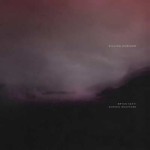
Artist: Bryan Senti & Dominic Bouffard (@)
Title: Killing Horizon
Format: LP
Label: Na?ve Senti
Rated:

Title: Killing Horizon
Format: LP
Label: Na?ve Senti
Rated:
In "Killing Horizon", Bryan Senti and Dominic Bouffard take us to the edge of the event horizon, inviting listeners to stare into a void that is anything but empty. The album, born of pandemic-era Zoom exchanges and fragmented creativity, is a reflection of a time when the world felt simultaneously too vast and suffocatingly small - a paradox these two masterfully translate into sound.
Bryan Senti, a BAFTA-winning composer of immense versatility, and Dominic Bouffard, an experimental guitarist with a penchant for the avant-garde, bring their unique sensibilities together here like the convergence of two celestial bodies. Their collaboration feels like a carefully orchestrated collision, yielding music that is lush, introspective, and hauntingly beautiful.
The opener, "Drift", sets the tone with its languid pace and shimmering textures. Senti’s violin weaves through Bouffard’s melancholic guitar lines like a thread of light in the darkness, evoking the suspended weightlessness of floating in deep space - or perhaps the emotional stasis of lockdown days.
From there, "The Ground" pulls us back to earth, but only just. The track’s intricate layering of guitar and piano is reminiscent of an arid landscape - a fitting nod to the album’s cover art, Nat Martin’s stark "Barren Landscape". Here, each note feels deliberate, each silence heavy with meaning.
"Rain" introduces a sense of movement, its piano lines cascading like droplets, each one distinct yet part of a larger flow. But even this movement is restrained, as if the rain falls in a world where time itself has slowed.
The album’s centerpiece, "Cathedral", is an awe-inspiring expanse of sound, blending the sacred and the profane. Bouffard’s guitar drones reverberate like organ pipes in a cavernous space, while Senti’s strings carve out melodies that feel both ancient and futuristic. It’s a piece that could accompany a Tarkovsky film or the quiet moment after a personal revelation.
The final tracks, "Circle" and "Mirage", bring the album full circle - fittingly so. “Circle” evokes a sense of infinity, its repeating motifs creating a meditative trance, while “Mirage” is a fading dream, its ethereal synths and plaintive strings dissolving into silence.
"Killing Horizon" is an album that exists in liminal spaces: between the acoustic and the electronic, the planned and the improvised, the past and the present. Senti and Bouffard’s decision to record independently and then meld their fragments reflects the fragmented reality of its creation, yet the result is astonishingly cohesive - a testament to their shared vision and chemistry.
It’s also an album that revels in contrasts. Where Bouffard’s guitar work is often raw and grounded, Senti’s contributions soar, creating a dynamic interplay of earth and sky, body and soul. Noah Hoffeld’s cello, added remotely from New York, adds a third voice to the conversation, its warmth grounding the album’s more celestial moments.
If there’s an irony to "Killing Horizon", it’s in the title. A "killing horizon" in physics refers to the boundary of a black hole - a point beyond which nothing can escape. But instead of obliteration, Senti and Bouffard offer creation: a record that draws us in, not to destroy, but to transform. It is a testament to what art can achieve even in the face of isolation and uncertainty.
In the end, "Killing Horizon" feels less like an album and more like an experience - a journey through a barren yet beautiful landscape, where every note is a step toward understanding and every silence a space for reflection.
Bryan Senti, a BAFTA-winning composer of immense versatility, and Dominic Bouffard, an experimental guitarist with a penchant for the avant-garde, bring their unique sensibilities together here like the convergence of two celestial bodies. Their collaboration feels like a carefully orchestrated collision, yielding music that is lush, introspective, and hauntingly beautiful.
The opener, "Drift", sets the tone with its languid pace and shimmering textures. Senti’s violin weaves through Bouffard’s melancholic guitar lines like a thread of light in the darkness, evoking the suspended weightlessness of floating in deep space - or perhaps the emotional stasis of lockdown days.
From there, "The Ground" pulls us back to earth, but only just. The track’s intricate layering of guitar and piano is reminiscent of an arid landscape - a fitting nod to the album’s cover art, Nat Martin’s stark "Barren Landscape". Here, each note feels deliberate, each silence heavy with meaning.
"Rain" introduces a sense of movement, its piano lines cascading like droplets, each one distinct yet part of a larger flow. But even this movement is restrained, as if the rain falls in a world where time itself has slowed.
The album’s centerpiece, "Cathedral", is an awe-inspiring expanse of sound, blending the sacred and the profane. Bouffard’s guitar drones reverberate like organ pipes in a cavernous space, while Senti’s strings carve out melodies that feel both ancient and futuristic. It’s a piece that could accompany a Tarkovsky film or the quiet moment after a personal revelation.
The final tracks, "Circle" and "Mirage", bring the album full circle - fittingly so. “Circle” evokes a sense of infinity, its repeating motifs creating a meditative trance, while “Mirage” is a fading dream, its ethereal synths and plaintive strings dissolving into silence.
"Killing Horizon" is an album that exists in liminal spaces: between the acoustic and the electronic, the planned and the improvised, the past and the present. Senti and Bouffard’s decision to record independently and then meld their fragments reflects the fragmented reality of its creation, yet the result is astonishingly cohesive - a testament to their shared vision and chemistry.
It’s also an album that revels in contrasts. Where Bouffard’s guitar work is often raw and grounded, Senti’s contributions soar, creating a dynamic interplay of earth and sky, body and soul. Noah Hoffeld’s cello, added remotely from New York, adds a third voice to the conversation, its warmth grounding the album’s more celestial moments.
If there’s an irony to "Killing Horizon", it’s in the title. A "killing horizon" in physics refers to the boundary of a black hole - a point beyond which nothing can escape. But instead of obliteration, Senti and Bouffard offer creation: a record that draws us in, not to destroy, but to transform. It is a testament to what art can achieve even in the face of isolation and uncertainty.
In the end, "Killing Horizon" feels less like an album and more like an experience - a journey through a barren yet beautiful landscape, where every note is a step toward understanding and every silence a space for reflection.
Comments
Stream
Browse by Genre
Industrial Music / Industrial Metal / Aggro Industrial / Electro Metal
Industrial Noise / Power Noise / Harsh Noise
Synth Pop / Electro Pop / Synth-Electronica
Techno / Trance / Goa / Drum'n'Bass / Jungle / Tribal / Trip-Hop
Ambient / Electronica / Ethereal / Dub / Soundscapes / Abstract
Experimental / Avantgarde / Weird & Wired / Glitch / Noise / Field Recording
Dark / Gothic / Wave / New Wave / Dark Wave / Industrial Gothic
New Music / Downtown / Avantgarde Jazz / New Classical / World