
Saturday, August 29, 2026
Ketil Bj?rnstad: Jag etter vind / Chasing the Wind
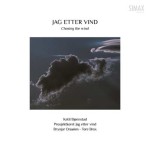
Artist: Ketil Bj?rnstad (http://ketilbjornstad.com/) (@)
Title: Jag etter vind / Chasing the Wind
Format: CD x 2 (double CD)
Label: Simax Classics (@)
Rated:
Title: Jag etter vind / Chasing the Wind
Format: CD x 2 (double CD)
Label: Simax Classics (@)
Rated:
Ketil Bjørnstad’s "Chasing the Wind" is less a mere album than an existential pilgrimage, a soundscape born of deep introspection and unflinching engagement with Ecclesiastes - the Bible’s famously philosophical (and famously bleak) rumination on life’s cyclical futility. With a mighty choir of over 100 singers and a meditative piano as its beating heart, this double album invites us to grapple with the universal, the transient, and the ungraspable.
The Oslo Cathedral premiere of this work, a striking dialogue between the Teacher and Humanity, resonated like a modern-day sermon, echoing Bach’s monumental passion plays while reaching forward into new sonic realms. Bjørnstad, a veteran of musical and literary exploration, blends his classical sensibility with a flair for the contemporary, aided by longtime collaborator and producer Mike Hartung.
The opening track, "Alt er tomhet" ("Everything Is Meaningless"), sets the tone with a somber magnificence that feels both intimate and grandiose, as if whispered by the cosmos itself. The choir swells like an ancient tide, and baritone Brynjar Onsøien’s voice emerges as the guiding star in this contemplative odyssey.
By the time we reach "Alt har sin tid" ("A Time for Everything"), the album unfurls its thematic core, tenderly exploring the inevitability of cycles - birth and death, war and peace, despair and joy. Bjørnstad's composition doesn’t offer answers but instead lays a space bare for the listener to ponder, question, and ultimately surrender to life’s paradoxes.
Pieces like "Urett og dårskap" ("Injustice and Folly") and "Rikdom kan bli ulykke" ("Riches Are Meaningless") add sharp edges to the mix, reminding us of humanity’s folly with a touch of irony that’s unmistakably Bjørnstad: poignant but never preachy, wise but not sanctimonious.
The second half of the album offers piano sketches that strip the grandeur of the choir and orchestra down to their essence, presenting the work as a series of solitary reflections. Here, Bjørnstad’s Bechstein grand piano becomes a vessel of quiet revelation, its keys delivering truths as gentle as falling leaves yet as profound as shifting tectonic plates.
But perhaps the most remarkable aspect of "Chasing the Wind" is its ability to connect the personal and the universal, to weave a tapestry of individual voices - spanning ages eight to eighty - into a single, resonant chord. It’s a testament to the human spirit’s capacity to seek meaning, even in the face of futility.
Bjørnstad has long been a chronicler of life’s subtleties, whether through his compositions, his novels, or his essays. With "Chasing the Wind", he takes on the audacious task of setting Ecclesiastes to music - and succeeds not by simplifying its complexity but by embracing it fully.
The Oslo Cathedral premiere of this work, a striking dialogue between the Teacher and Humanity, resonated like a modern-day sermon, echoing Bach’s monumental passion plays while reaching forward into new sonic realms. Bjørnstad, a veteran of musical and literary exploration, blends his classical sensibility with a flair for the contemporary, aided by longtime collaborator and producer Mike Hartung.
The opening track, "Alt er tomhet" ("Everything Is Meaningless"), sets the tone with a somber magnificence that feels both intimate and grandiose, as if whispered by the cosmos itself. The choir swells like an ancient tide, and baritone Brynjar Onsøien’s voice emerges as the guiding star in this contemplative odyssey.
By the time we reach "Alt har sin tid" ("A Time for Everything"), the album unfurls its thematic core, tenderly exploring the inevitability of cycles - birth and death, war and peace, despair and joy. Bjørnstad's composition doesn’t offer answers but instead lays a space bare for the listener to ponder, question, and ultimately surrender to life’s paradoxes.
Pieces like "Urett og dårskap" ("Injustice and Folly") and "Rikdom kan bli ulykke" ("Riches Are Meaningless") add sharp edges to the mix, reminding us of humanity’s folly with a touch of irony that’s unmistakably Bjørnstad: poignant but never preachy, wise but not sanctimonious.
The second half of the album offers piano sketches that strip the grandeur of the choir and orchestra down to their essence, presenting the work as a series of solitary reflections. Here, Bjørnstad’s Bechstein grand piano becomes a vessel of quiet revelation, its keys delivering truths as gentle as falling leaves yet as profound as shifting tectonic plates.
But perhaps the most remarkable aspect of "Chasing the Wind" is its ability to connect the personal and the universal, to weave a tapestry of individual voices - spanning ages eight to eighty - into a single, resonant chord. It’s a testament to the human spirit’s capacity to seek meaning, even in the face of futility.
Bjørnstad has long been a chronicler of life’s subtleties, whether through his compositions, his novels, or his essays. With "Chasing the Wind", he takes on the audacious task of setting Ecclesiastes to music - and succeeds not by simplifying its complexity but by embracing it fully.
Comments
Stream
Browse by Genre
Industrial Music / Industrial Metal / Aggro Industrial / Electro Metal
Industrial Noise / Power Noise / Harsh Noise
Synth Pop / Electro Pop / Synth-Electronica
Techno / Trance / Goa / Drum'n'Bass / Jungle / Tribal / Trip-Hop
Ambient / Electronica / Ethereal / Dub / Soundscapes / Abstract
Experimental / Avantgarde / Weird & Wired / Glitch / Noise / Field Recording
Dark / Gothic / Wave / New Wave / Dark Wave / Industrial Gothic
New Music / Downtown / Avantgarde Jazz / New Classical / World