
Thursday, October 22, 2026
Yair Elazar Glotman & Mats Erlandsson: Glory Fades
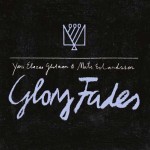
Artist: Yair Elazar Glotman & Mats Erlandsson (@)
Title: Glory Fades
Format: LP
Label: XKatedral (@)
Rated:

Title: Glory Fades
Format: LP
Label: XKatedral (@)
Rated:
Some albums whisper their truths, others let them decay in the spaces between notes. "Glory Fades", the latest collaboration between Berlin-based composer Yair Elazar Glotman and Stockholm’s Mats Erlandsson, belongs to the latter category. It’s a sonic palimpsest, a collection of eight “songs” (a term used loosely, almost ironically) that construct and deconstruct themselves in a perpetual state of erasure and emergence.
This isn’t drone in the monolithic sense, nor is it chamber music in the traditional one - rather, it exists in a liminal state, like a folk tradition unearthed in an abandoned cathedral, its melodies fraying at the edges. The duo employs an unusual ensemble of bowed and plucked acoustic guitars, zithers, bells, double bass, violin, and percussion, interwoven with subtle electronic manipulations. The result is music that breathes: expanding, contracting, and sometimes sighing under the weight of its own harmonic tensions.
Each track unfolds patiently, governed by its own internal logic yet tethered to the overarching modal and tonal framework that binds the album. "At Ends" opens the collection with a ghostly shimmer, as if hesitant to fully materialize. The title track, "Glory Fades", serves as a mournful coda - its layered overtones suggesting a sense of resignation, or perhaps quiet acceptance. In between, "The Grinding Wheel" churns with mechanical inevitability, its patterns shifting imperceptibly like a vast, unseen machine at work. "On the Folding of Leaves" feels almost like a moment of clarity - an ephemeral moment of warmth before fading into silence.
Glotman’s background in orchestral double bass and electroacoustic composition meets Erlandsson’s expertise in textured drone music, resulting in a language that is at once ancient and post-industrial. There’s a rigor to their approach, an austere beauty that rewards deep listening. It’s not about grand gestures but about what happens in the decay, in the resonances that linger after each sound has passed.
For those familiar with Glotman’s haunting work on "All Quiet on the Western Front" or Erlandsson’s extensive contributions to Stockholm’s experimental music scene (including his tenure at EMS), "Glory Fades" might feel like an intimate conversation between two artists who have long since stopped needing to fill silences with unnecessary noise. This is music for ruins, for flickering candlelight, for contemplation. And in an age of sonic excess, its restraint feels almost radical.
This isn’t drone in the monolithic sense, nor is it chamber music in the traditional one - rather, it exists in a liminal state, like a folk tradition unearthed in an abandoned cathedral, its melodies fraying at the edges. The duo employs an unusual ensemble of bowed and plucked acoustic guitars, zithers, bells, double bass, violin, and percussion, interwoven with subtle electronic manipulations. The result is music that breathes: expanding, contracting, and sometimes sighing under the weight of its own harmonic tensions.
Each track unfolds patiently, governed by its own internal logic yet tethered to the overarching modal and tonal framework that binds the album. "At Ends" opens the collection with a ghostly shimmer, as if hesitant to fully materialize. The title track, "Glory Fades", serves as a mournful coda - its layered overtones suggesting a sense of resignation, or perhaps quiet acceptance. In between, "The Grinding Wheel" churns with mechanical inevitability, its patterns shifting imperceptibly like a vast, unseen machine at work. "On the Folding of Leaves" feels almost like a moment of clarity - an ephemeral moment of warmth before fading into silence.
Glotman’s background in orchestral double bass and electroacoustic composition meets Erlandsson’s expertise in textured drone music, resulting in a language that is at once ancient and post-industrial. There’s a rigor to their approach, an austere beauty that rewards deep listening. It’s not about grand gestures but about what happens in the decay, in the resonances that linger after each sound has passed.
For those familiar with Glotman’s haunting work on "All Quiet on the Western Front" or Erlandsson’s extensive contributions to Stockholm’s experimental music scene (including his tenure at EMS), "Glory Fades" might feel like an intimate conversation between two artists who have long since stopped needing to fill silences with unnecessary noise. This is music for ruins, for flickering candlelight, for contemplation. And in an age of sonic excess, its restraint feels almost radical.
Comments
Stream
Browse by Genre
Industrial Music / Industrial Metal / Aggro Industrial / Electro Metal
Industrial Noise / Power Noise / Harsh Noise
Synth Pop / Electro Pop / Synth-Electronica
Techno / Trance / Goa / Drum'n'Bass / Jungle / Tribal / Trip-Hop
Ambient / Electronica / Ethereal / Dub / Soundscapes / Abstract
Experimental / Avantgarde / Weird & Wired / Glitch / Noise / Field Recording
Dark / Gothic / Wave / New Wave / Dark Wave / Industrial Gothic
New Music / Downtown / Avantgarde Jazz / New Classical / World