
Wednesday, October 21, 2026
Jacob Kirkegaard: Snowblind
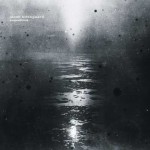
Artist: Jacob Kirkegaard (@)
Title: Snowblind
Format: 12" + Download
Label: Helen Scarsdale (@)
Rated:


Title: Snowblind
Format: 12" + Download
Label: Helen Scarsdale (@)
Rated:
Jacob Kirkegaard’s "Snowblind" is an album of frozen inevitability. A slow, numbing descent into an abyss of ice, wind, and regret. The Danish composer, known for his masterful work with sonic decay and environmental resonance, here conjures the spectral echoes of a doomed expedition - the 1897 attempt by Swedish explorer S.A. Andrée to reach the North Pole by balloon. A story of blind ambition, crushed under the weight of indifferent ice.
Kirkegaard, who has previously turned his ear to the radioactive hum of Chernobyl ("4 Rooms") and the ominous creaks of melting Arctic landscapes, is no stranger to hostile environments. But "Snowblind" is not merely an exploration of extreme cold - it is an auditory experience of loss, isolation, and the slow erosion of hope. The album is devoid of warmth, devoid of reprieve, its beauty lying in the solemn, glacial inevitability of its sound.
Across eleven starkly titled tracks - "Ascend", "Drift", "Astray", "Barren", "Nyctophobia", "Wreckage", "Scavenge", "Animal", "Phantasmagoria", "Torment", "Perish" - Kirkegaard builds an atmosphere of creeping dread. There is no melodrama, no grand orchestral swells, just a relentless, monochromatic freeze. The textures shift subtly: thrumming reverberations suggest distant ice cracking under its own weight, hollow tones evoke breath caught in frigid air, while occasional gusts of white noise feel like the very wind that sealed Andrée’s fate.
Unlike the cavernous drones of Thomas Köner or the subterranean gloom of Lustmord, Kirkegaard avoids total stasis. There are movements, however glacial - "Drift" flutters uneasily, "Astray" stumbles through snowblind disorientation, "Nyctophobia" swarms like a chorus of frozen ghosts. By the time "Perish" arrives, there is no catharsis, only the slow extinguishing of a light already too faint to see.
What makes "Snowblind" so affecting is Kirkegaard’s ability to distill not just the sound of ice, but its psychology. This is an album about the slow realization of failure, about realizing you will not be found, that history will move on without you. It is not a work of escapism, but of confrontation - a sonification of frostbite, of human hubris vanishing into the white void.
Like the recovered notebooks and photographs of Andrée’s doomed journey, "Snowblind" is an artifact of something lost. It does not romanticize the adventure; it documents the stillness after the struggle, the way snow buries all trace of movement. In Kirkegaard’s hands, sound itself becomes frostbitten, brittle, and ultimately, silent.
Kirkegaard, who has previously turned his ear to the radioactive hum of Chernobyl ("4 Rooms") and the ominous creaks of melting Arctic landscapes, is no stranger to hostile environments. But "Snowblind" is not merely an exploration of extreme cold - it is an auditory experience of loss, isolation, and the slow erosion of hope. The album is devoid of warmth, devoid of reprieve, its beauty lying in the solemn, glacial inevitability of its sound.
Across eleven starkly titled tracks - "Ascend", "Drift", "Astray", "Barren", "Nyctophobia", "Wreckage", "Scavenge", "Animal", "Phantasmagoria", "Torment", "Perish" - Kirkegaard builds an atmosphere of creeping dread. There is no melodrama, no grand orchestral swells, just a relentless, monochromatic freeze. The textures shift subtly: thrumming reverberations suggest distant ice cracking under its own weight, hollow tones evoke breath caught in frigid air, while occasional gusts of white noise feel like the very wind that sealed Andrée’s fate.
Unlike the cavernous drones of Thomas Köner or the subterranean gloom of Lustmord, Kirkegaard avoids total stasis. There are movements, however glacial - "Drift" flutters uneasily, "Astray" stumbles through snowblind disorientation, "Nyctophobia" swarms like a chorus of frozen ghosts. By the time "Perish" arrives, there is no catharsis, only the slow extinguishing of a light already too faint to see.
What makes "Snowblind" so affecting is Kirkegaard’s ability to distill not just the sound of ice, but its psychology. This is an album about the slow realization of failure, about realizing you will not be found, that history will move on without you. It is not a work of escapism, but of confrontation - a sonification of frostbite, of human hubris vanishing into the white void.
Like the recovered notebooks and photographs of Andrée’s doomed journey, "Snowblind" is an artifact of something lost. It does not romanticize the adventure; it documents the stillness after the struggle, the way snow buries all trace of movement. In Kirkegaard’s hands, sound itself becomes frostbitten, brittle, and ultimately, silent.
Comments
Stream
Browse by Genre
Industrial Music / Industrial Metal / Aggro Industrial / Electro Metal
Industrial Noise / Power Noise / Harsh Noise
Synth Pop / Electro Pop / Synth-Electronica
Techno / Trance / Goa / Drum'n'Bass / Jungle / Tribal / Trip-Hop
Ambient / Electronica / Ethereal / Dub / Soundscapes / Abstract
Experimental / Avantgarde / Weird & Wired / Glitch / Noise / Field Recording
Dark / Gothic / Wave / New Wave / Dark Wave / Industrial Gothic
New Music / Downtown / Avantgarde Jazz / New Classical / World