
Saturday, August 29, 2026
Jon Rose & Erik Griswold: Unnamed Road
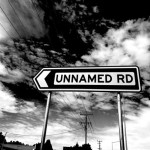
Artist: Jon Rose & Erik Griswold (@)
Title: Unnamed Road
Format: CD + Download
Label: Harrigans Lane Collective (@)
Rated:


Title: Unnamed Road
Format: CD + Download
Label: Harrigans Lane Collective (@)
Rated:
There are roads, and then there are roads - the ones that slither through desert heat, curl into rainforest shadows, and vanish under the shifting tides of dust and memory. "Unnamed Road", the first recorded meeting of violin deconstructionist Jon Rose and prepared piano wizard Erik Griswold, doesn’t just travel these landscapes - it listens to them, translating their cracked surfaces, odd rhythms, and ghostly echoes into an improvised dialogue where music feels as unstable and alive as the terrain itself.
Rose, an Australian avant-garde legend known for his lifelong interrogation of the violin (including his infamous fence-playing experiments in the Outback), wields both a regular and a tenor violin here, bending and scraping out sounds that seem to emerge from the fissures of the earth itself. Griswold, a longtime explorer of the prepared piano, treats his instrument less like a grand harmonic temple and more like a rickety, wind-battered shack full of unexpected resonances. Together, they chart a course through a musical landscape that is at once familiar and alien, structured and anarchic, deeply human and strangely inhuman.
The album unfolds like a road trip through Australia’s endless interior, each track a different stretch of the journey. The title track, "Unnamed Road", sets the tone with a slow, deliberate unfolding - violin harmonics hovering like mirages over Griswold’s muted, percussive piano clusters. "On The Verge" stretches tension like a rubber band about to snap, while "Bitumen" rolls forward with a brittle, rhythmic insistence, capturing the strange hypnotic quality of endless asphalt. "Potholes" is all jagged interruptions, sudden stops, and playful detours, while "Deserted" lingers in the eerie silence of empty spaces, where the ghosts of notes decay into the dust.
The duo’s playfulness is especially evident in "No Limit", where they test the elasticity of time itself, and "Something to do with Sun Ra", a brief yet volatile track where piano and violin seem to orbit each other in an eccentric gravitational dance, nodding (or maybe smirking) toward cosmic jazz. Closing piece "The Soft Shoulder" leans into a gentle unraveling, the kind of music that dissolves before your ears, leaving behind only the impression of movement.
Both Rose and Griswold seem keenly aware of their own musical histories, yet "Unnamed Road" refuses to rest on past achievements. The music is in constant flux, the prepared piano mutating from a percussion instrument to a spectral harmonic cloud, the violin shifting from raw, bowed aggression to eerie, breath-like whispers. It is, at times, unsettling, at times ecstatic, but never static.
And then, there’s the humor - the dry, knowing wit that lingers in both the music and the liner notes. Rose ponders whether music will “survive us via a transfer to another bunch who may make a better job of it”, speculating that it could end up “rumbling around in the earth’s core” or “spiraling around in the clouds like synchronized budgerigars”. Griswold, in turn, wonders if anything on this record is "truly" unique - before immediately disproving his own skepticism with a sonic vocabulary that feels both deeply personal and strangely unplaceable.
Like the best journeys, "Unnamed Road" offers no clear destination, no singular meaning - only the exhilaration of movement, the thrill of the unexpected, and the strange beauty of sound emerging from silence. It is music for travelers, for wanderers, for those who know that the most interesting paths are the ones that refuse to be named.
Rose, an Australian avant-garde legend known for his lifelong interrogation of the violin (including his infamous fence-playing experiments in the Outback), wields both a regular and a tenor violin here, bending and scraping out sounds that seem to emerge from the fissures of the earth itself. Griswold, a longtime explorer of the prepared piano, treats his instrument less like a grand harmonic temple and more like a rickety, wind-battered shack full of unexpected resonances. Together, they chart a course through a musical landscape that is at once familiar and alien, structured and anarchic, deeply human and strangely inhuman.
The album unfolds like a road trip through Australia’s endless interior, each track a different stretch of the journey. The title track, "Unnamed Road", sets the tone with a slow, deliberate unfolding - violin harmonics hovering like mirages over Griswold’s muted, percussive piano clusters. "On The Verge" stretches tension like a rubber band about to snap, while "Bitumen" rolls forward with a brittle, rhythmic insistence, capturing the strange hypnotic quality of endless asphalt. "Potholes" is all jagged interruptions, sudden stops, and playful detours, while "Deserted" lingers in the eerie silence of empty spaces, where the ghosts of notes decay into the dust.
The duo’s playfulness is especially evident in "No Limit", where they test the elasticity of time itself, and "Something to do with Sun Ra", a brief yet volatile track where piano and violin seem to orbit each other in an eccentric gravitational dance, nodding (or maybe smirking) toward cosmic jazz. Closing piece "The Soft Shoulder" leans into a gentle unraveling, the kind of music that dissolves before your ears, leaving behind only the impression of movement.
Both Rose and Griswold seem keenly aware of their own musical histories, yet "Unnamed Road" refuses to rest on past achievements. The music is in constant flux, the prepared piano mutating from a percussion instrument to a spectral harmonic cloud, the violin shifting from raw, bowed aggression to eerie, breath-like whispers. It is, at times, unsettling, at times ecstatic, but never static.
And then, there’s the humor - the dry, knowing wit that lingers in both the music and the liner notes. Rose ponders whether music will “survive us via a transfer to another bunch who may make a better job of it”, speculating that it could end up “rumbling around in the earth’s core” or “spiraling around in the clouds like synchronized budgerigars”. Griswold, in turn, wonders if anything on this record is "truly" unique - before immediately disproving his own skepticism with a sonic vocabulary that feels both deeply personal and strangely unplaceable.
Like the best journeys, "Unnamed Road" offers no clear destination, no singular meaning - only the exhilaration of movement, the thrill of the unexpected, and the strange beauty of sound emerging from silence. It is music for travelers, for wanderers, for those who know that the most interesting paths are the ones that refuse to be named.
Comments
Stream
Browse by Genre
Industrial Music / Industrial Metal / Aggro Industrial / Electro Metal
Industrial Noise / Power Noise / Harsh Noise
Synth Pop / Electro Pop / Synth-Electronica
Techno / Trance / Goa / Drum'n'Bass / Jungle / Tribal / Trip-Hop
Ambient / Electronica / Ethereal / Dub / Soundscapes / Abstract
Experimental / Avantgarde / Weird & Wired / Glitch / Noise / Field Recording
Dark / Gothic / Wave / New Wave / Dark Wave / Industrial Gothic
New Music / Downtown / Avantgarde Jazz / New Classical / World