
John Surman: Flashpoints and Undercurrents
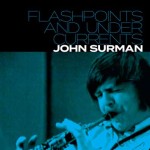
Artist: John Surman (@)
Title: Flashpoints and Undercurrents
Format: CD x 2 (double CD)
Label: Cuneiform (http://www.cuneiformrecords.com/) (@)
Rated:

Title: Flashpoints and Undercurrents
Format: CD x 2 (double CD)
Label: Cuneiform (http://www.cuneiformrecords.com/) (@)
Rated:
The year is 1969. The British jazz scene is ablaze with invention, its players straddling post-bop, free jazz, and the edges of an emerging jazz-rock fusion. Miles Davis is watching from across the Atlantic, quietly recruiting British talent for his own electric revolution. And in the midst of it all, a young baritone saxophonist named John Surman is carving out his own furious, searching path - one that would make him one of Europe’s most distinctive jazz voices for the next half-century.
And now, in 2025, we unearth "Flashpoints and Undercurrents", a previously unheard 1969 recording that captures Surman at the height of his youthful fire, leading a ten-piece ensemble filled with some of Britain’s greatest improvisers. This is not a polite archival document; it’s a storm, a livewire performance crackling with restless energy, a glimpse into a moment when anything felt possible in jazz.
The lineup alone reads like a who's who of late-'60s Brit-jazz: Alan Skidmore and Ronnie Scott on tenor saxophones, Mike Osborne on alto, Kenny Wheeler with his unmistakable trumpet and flugelhorn, and the powerful rhythm section of Fritz Pauer (piano), Harry Miller (bass), and Alan Jackson (drums). It’s a volatile mix - players who could swing effortlessly but were just as comfortable pushing into the freer, wilder zones of improvisation.
From the first notes of "Jack Knife", it’s clear this is no stiff, formalized affair. The horns surge in a tight, muscular fanfare before the rhythm section drops into an urgent, fast-paced drive. Surman’s baritone roars, Skidmore’s tenor spirals upward, and the ensemble locks into something that feels both explosive and precise. It’s a track that could have easily fit alongside McCoy Tyner’s big-band workouts or the kinetic energy of Charles Mingus’s late-’60s experiments.
Then there’s "Gratuliere", stretching over ten minutes, a piece that builds and fractures in waves, with Wheeler’s soaring trumpet lines giving way to surging collective improvisation. Here, Surman’s compositional instincts shine - this is not just free jazz abandon; it’s a carefully balanced push-and-pull between structure and spontaneity. "Undercurrent" sways in darker waters, propelled by Miller’s insistent basslines, while "Mayflower" starts in introspective balladry before unraveling into a fevered, ecstatic climax.
Elsewhere, the energy takes on new shapes. "Dallab" and "Puzzle" embrace a more angular, knotty approach, the kind of tightrope-walking that would later define much of Surman’s work with ECM. And then there’s "Where Fortune Smiles", a sprawling, nearly 12-minute excursion into rhythmic abstraction, with the band operating as a swirling mass of sound, rising and falling like a tide of organized chaos.
For longtime Surman fans, "Flashpoints and Undercurrents" is a revelation. Before the meditative, spacious landscapes of his ECM years, before his atmospheric synth explorations and pastoral solo projects, Surman was a firebrand, a player capable of astonishing intensity and drive. But even here, in the thick of a hard-hitting large ensemble, we can already hear the seeds of what would come later: his gift for layering voices, his ear for texture, his ability to create space even within density.
Perhaps most excitingly, this album contains a wealth of previously unheard compositions, offering a fresh lens into this period of British jazz history. High-quality recordings from this era are rare, and this one - captured in excellent stereo sound - is a thrillingly immediate listen, an unearthed time capsule that still feels alive and urgent.
There’s a moment in "Flashpoint", the album’s closer, where the horns rise together in a swirling, almost centrifugal motion, then suddenly scatter in all directions - a perfect encapsulation of the spirit of this album. It is music in motion, teetering between the past and the future, between form and freedom, between fire and restraint.
More than 50 years later, John Surman is celebrated as a jazz elder statesman, an artist who has shaped the course of European jazz. But here, in "Flashpoints and Undercurrents", we find him at his most unbridled - a young musician throwing himself headlong into the music, not looking back. And we are all the better for being able to hear it now.
Score: 1969/2025 - timeless!
And now, in 2025, we unearth "Flashpoints and Undercurrents", a previously unheard 1969 recording that captures Surman at the height of his youthful fire, leading a ten-piece ensemble filled with some of Britain’s greatest improvisers. This is not a polite archival document; it’s a storm, a livewire performance crackling with restless energy, a glimpse into a moment when anything felt possible in jazz.
The lineup alone reads like a who's who of late-'60s Brit-jazz: Alan Skidmore and Ronnie Scott on tenor saxophones, Mike Osborne on alto, Kenny Wheeler with his unmistakable trumpet and flugelhorn, and the powerful rhythm section of Fritz Pauer (piano), Harry Miller (bass), and Alan Jackson (drums). It’s a volatile mix - players who could swing effortlessly but were just as comfortable pushing into the freer, wilder zones of improvisation.
From the first notes of "Jack Knife", it’s clear this is no stiff, formalized affair. The horns surge in a tight, muscular fanfare before the rhythm section drops into an urgent, fast-paced drive. Surman’s baritone roars, Skidmore’s tenor spirals upward, and the ensemble locks into something that feels both explosive and precise. It’s a track that could have easily fit alongside McCoy Tyner’s big-band workouts or the kinetic energy of Charles Mingus’s late-’60s experiments.
Then there’s "Gratuliere", stretching over ten minutes, a piece that builds and fractures in waves, with Wheeler’s soaring trumpet lines giving way to surging collective improvisation. Here, Surman’s compositional instincts shine - this is not just free jazz abandon; it’s a carefully balanced push-and-pull between structure and spontaneity. "Undercurrent" sways in darker waters, propelled by Miller’s insistent basslines, while "Mayflower" starts in introspective balladry before unraveling into a fevered, ecstatic climax.
Elsewhere, the energy takes on new shapes. "Dallab" and "Puzzle" embrace a more angular, knotty approach, the kind of tightrope-walking that would later define much of Surman’s work with ECM. And then there’s "Where Fortune Smiles", a sprawling, nearly 12-minute excursion into rhythmic abstraction, with the band operating as a swirling mass of sound, rising and falling like a tide of organized chaos.
For longtime Surman fans, "Flashpoints and Undercurrents" is a revelation. Before the meditative, spacious landscapes of his ECM years, before his atmospheric synth explorations and pastoral solo projects, Surman was a firebrand, a player capable of astonishing intensity and drive. But even here, in the thick of a hard-hitting large ensemble, we can already hear the seeds of what would come later: his gift for layering voices, his ear for texture, his ability to create space even within density.
Perhaps most excitingly, this album contains a wealth of previously unheard compositions, offering a fresh lens into this period of British jazz history. High-quality recordings from this era are rare, and this one - captured in excellent stereo sound - is a thrillingly immediate listen, an unearthed time capsule that still feels alive and urgent.
There’s a moment in "Flashpoint", the album’s closer, where the horns rise together in a swirling, almost centrifugal motion, then suddenly scatter in all directions - a perfect encapsulation of the spirit of this album. It is music in motion, teetering between the past and the future, between form and freedom, between fire and restraint.
More than 50 years later, John Surman is celebrated as a jazz elder statesman, an artist who has shaped the course of European jazz. But here, in "Flashpoints and Undercurrents", we find him at his most unbridled - a young musician throwing himself headlong into the music, not looking back. And we are all the better for being able to hear it now.
Score: 1969/2025 - timeless!
Comments
Stream
Browse by Genre
Industrial Music / Industrial Metal / Aggro Industrial / Electro Metal
Industrial Noise / Power Noise / Harsh Noise
Synth Pop / Electro Pop / Synth-Electronica
Techno / Trance / Goa / Drum'n'Bass / Jungle / Tribal / Trip-Hop
Ambient / Electronica / Ethereal / Dub / Soundscapes / Abstract
Experimental / Avantgarde / Weird & Wired / Glitch / Noise / Field Recording
Dark / Gothic / Wave / New Wave / Dark Wave / Industrial Gothic
New Music / Downtown / Avantgarde Jazz / New Classical / World