
Saturday, August 29, 2026
VV.AA.: 'Электронная Музыка АНС' (ANS Electronic Music)
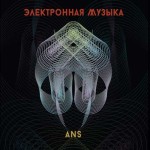
Artist: VV.AA.
Title: 'Электронная Музыка АНС' (ANS Electronic Music)
Format: CD + Download
Label: Cold Spring (@)
Rated:
Title: 'Электронная Музыка АНС' (ANS Electronic Music)
Format: CD + Download
Label: Cold Spring (@)
Rated:
There are synthesizers, and then there is the . Imagine an orchestra made of light, a machine where music is drawn, not played, where ghostly frequencies resonate from etched glass discs, whispering the dreams of Soviet composers into the void. Cold Spring’s reissue of " Electronic Music" is nothing short of an archaeological excavation - a long-lost transmission from the era of space-age optimism and eerie state-controlled futurism, finally available outside the Soviet Union.
The , conceived by Evgeny Murzin over 20 painstaking years, was not just a synthesizer but a visionary leap into an alternate form of composition. Named after Alexander Nikolayevich Scriabin, the synesthetic composer obsessed with fusing music and color, the turned visual scores into sound through an arcane process involving glass, light, and photoelectric magic. It remains one of the rarest and most enigmatic instruments in electronic music history, having inspired everyone from Coil to Clock DVA and The Anti Group Communications.
The album opens with Eduard Artemiev and Stanislav Kreitchi’s "Music for the Film “Cosmos”", an atmospheric voyage that immediately places us in the eerie, gravity-free world of Soviet sci-fi. Artemiev, best known for scoring Tarkovsky’s "Solaris" and "Stalker", paints with alien textures, weaving sustained electronic waves that seem to expand infinitely, evoking vast celestial distances. It’s unsettling, wondrous, and oddly human - a meditation on the smallness of the self in the great black unknown.
Then comes Kreitchi’s "Intermezzo", a surreal detour that sounds like a ghostly carousel rotating in deep space. There’s an eerie, almost carnivalesque charm to it, as if an old Soviet organ grinder had been reanimated inside the and forced to perform in zero gravity. If Tarkovsky had ever filmed a haunted amusement park, this would have been the soundtrack.
Alexander Nemtin’s "Chorale Prelude in C Major (J.S. Bach)" is perhaps the most shocking moment on the record. In a bold act of time-warping, Nemtin translates Bach’s stately harmonies into the ’s shimmering, alien voice - proof that this ghost machine could even breathe life into centuries-old compositions. It’s like hearing Bach transmitted from a lost Soviet space probe, floating somewhere between galaxies.
If "Chorale Prelude" proves that the could mimic tradition, Nemtin’s "Tears" and Sándor Kallós’s "Northern Tale" prove the opposite: these are pieces of pure, unshackled experimentation. "Tears" is all brooding drones and spectral murmurs, a study in slow, inevitable decay, while "Northern Tale" pushes the machine’s 720 simultaneous tones to the edge of chaos, conjuring shimmering auroras of sound.
Finally, Kreitchi’s "A Voice of the East" closes the album with a mysterious, fragmented composition that hints at non-Western scales and jazz-like melodic improvisation. It’s as if the is attempting to speak in a forgotten dialect, one that doesn’t quite belong to any known musical tradition but feels strangely intuitive.
This is not merely a historical curiosity or an exercise in Soviet nostalgia - it’s a vital document of early electronic innovation, a glimpse into an alternate technological and artistic reality that ran parallel to the more widely documented synth revolutions in the West. While the Buchla and Moog were giving birth to the counterculture’s electronic dreams, the was shaping a different vision: a government-sanctioned, avant-garde surrealism, somehow both oppressive and boundlessly imaginative.
For fans of Daphne Oram, Éliane Radigue, Iannis Xenakis, and early EMS Synthi experiments, this album is essential. It is both an artifact and an active force, whispering across decades with the eerie persistence of light passing through glass. A must-have for anyone fascinated by the outermost fringes of electronic music.
The , conceived by Evgeny Murzin over 20 painstaking years, was not just a synthesizer but a visionary leap into an alternate form of composition. Named after Alexander Nikolayevich Scriabin, the synesthetic composer obsessed with fusing music and color, the turned visual scores into sound through an arcane process involving glass, light, and photoelectric magic. It remains one of the rarest and most enigmatic instruments in electronic music history, having inspired everyone from Coil to Clock DVA and The Anti Group Communications.
The album opens with Eduard Artemiev and Stanislav Kreitchi’s "Music for the Film “Cosmos”", an atmospheric voyage that immediately places us in the eerie, gravity-free world of Soviet sci-fi. Artemiev, best known for scoring Tarkovsky’s "Solaris" and "Stalker", paints with alien textures, weaving sustained electronic waves that seem to expand infinitely, evoking vast celestial distances. It’s unsettling, wondrous, and oddly human - a meditation on the smallness of the self in the great black unknown.
Then comes Kreitchi’s "Intermezzo", a surreal detour that sounds like a ghostly carousel rotating in deep space. There’s an eerie, almost carnivalesque charm to it, as if an old Soviet organ grinder had been reanimated inside the and forced to perform in zero gravity. If Tarkovsky had ever filmed a haunted amusement park, this would have been the soundtrack.
Alexander Nemtin’s "Chorale Prelude in C Major (J.S. Bach)" is perhaps the most shocking moment on the record. In a bold act of time-warping, Nemtin translates Bach’s stately harmonies into the ’s shimmering, alien voice - proof that this ghost machine could even breathe life into centuries-old compositions. It’s like hearing Bach transmitted from a lost Soviet space probe, floating somewhere between galaxies.
If "Chorale Prelude" proves that the could mimic tradition, Nemtin’s "Tears" and Sándor Kallós’s "Northern Tale" prove the opposite: these are pieces of pure, unshackled experimentation. "Tears" is all brooding drones and spectral murmurs, a study in slow, inevitable decay, while "Northern Tale" pushes the machine’s 720 simultaneous tones to the edge of chaos, conjuring shimmering auroras of sound.
Finally, Kreitchi’s "A Voice of the East" closes the album with a mysterious, fragmented composition that hints at non-Western scales and jazz-like melodic improvisation. It’s as if the is attempting to speak in a forgotten dialect, one that doesn’t quite belong to any known musical tradition but feels strangely intuitive.
This is not merely a historical curiosity or an exercise in Soviet nostalgia - it’s a vital document of early electronic innovation, a glimpse into an alternate technological and artistic reality that ran parallel to the more widely documented synth revolutions in the West. While the Buchla and Moog were giving birth to the counterculture’s electronic dreams, the was shaping a different vision: a government-sanctioned, avant-garde surrealism, somehow both oppressive and boundlessly imaginative.
For fans of Daphne Oram, Éliane Radigue, Iannis Xenakis, and early EMS Synthi experiments, this album is essential. It is both an artifact and an active force, whispering across decades with the eerie persistence of light passing through glass. A must-have for anyone fascinated by the outermost fringes of electronic music.
Comments
Stream
Browse by Genre
Industrial Music / Industrial Metal / Aggro Industrial / Electro Metal
Industrial Noise / Power Noise / Harsh Noise
Synth Pop / Electro Pop / Synth-Electronica
Techno / Trance / Goa / Drum'n'Bass / Jungle / Tribal / Trip-Hop
Ambient / Electronica / Ethereal / Dub / Soundscapes / Abstract
Experimental / Avantgarde / Weird & Wired / Glitch / Noise / Field Recording
Dark / Gothic / Wave / New Wave / Dark Wave / Industrial Gothic
New Music / Downtown / Avantgarde Jazz / New Classical / World