
Tuesday, September 15, 2026
Charles Petersohn: Children Of Zu Zu
Artist: Charles Petersohn (@)
Title: Children Of Zu Zu
Format: 12" + Download
Label: Compost Records (@)
Rated:

Title: Children Of Zu Zu
Format: 12" + Download
Label: Compost Records (@)
Rated:
Some artists take a few years between releases; Charles Petersohn took nearly two decades. But after 18 years away from the label world, he’s returned with "Children of Zu Zu", an EP that doesn’t just pick up where he left off - it transcends time altogether. This is deep house through a kaleidoscope, a jazz-not-jazz séance, a cosmic blend of Afro-Brazilian rhythms and psychedelic funk poetry that refuses to sit still.
Petersohn has never been one to fit neatly into a genre. Since the ‘90s, he’s been a sonic explorer, touching everything from funk to electronica, hip-hop to abstract sound collages. But here, with the help of pianist Roberto Di Gioia (of Web Web fame) and a lineup of collaborators from across the globe, he crafts something that feels both deeply rooted and completely untethered - like a message sent from Sun Ra’s spaceship, bouncing between the favelas of Brazil and a dimly lit Berlin club at 3 AM.
The title track, "Children of Zu Zu", sets the mood with hypnotic deep house grooves, its rhythms interwoven with haunting, celestial vocals from the People of Tala’aga, Samoa. It’s warm, spacious, and meditative, like floating in an endless twilight between continents. Then there’s "Schmetterlinge Im Bauch" (Butterflies in the Stomach), where Di Gioia’s piano lines drift effortlessly over a pulsating rhythm, creating a feeling somewhere between euphoria and nostalgia.
"Love in Space Pt. 1" is a brief but intoxicating interlude, an abstract detour that dissolves into "Zu Zu Music", one of the album’s most dynamic moments. With Mickey Neher, AdaSoul, and Narjara Thamiz in the mix, this track is a vibrant, percussive journey - like a carnival parade drifting through a dream. Then comes "Myth Versus Reality", a piece that feels like a question wrapped in rhythm, where jazz, house, and spoken word collide in a swirl of echoes. The EP closes with "Love in Space Pt. 2", a ghostly, drifting coda that feels like watching the Earth fade into the distance from a spaceship window.
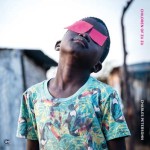
But "Children of Zu Zu" isn’t just about music. It’s about connection - across cultures, across time, across the artificial borders we create between genres, between people. The cover art, a photograph taken in a South African township, carries Petersohn’s message: music, like life, thrives in the margins, in the overlooked places, in the spaces where improvisation is survival.
Petersohn has never been one to fit neatly into a genre. Since the ‘90s, he’s been a sonic explorer, touching everything from funk to electronica, hip-hop to abstract sound collages. But here, with the help of pianist Roberto Di Gioia (of Web Web fame) and a lineup of collaborators from across the globe, he crafts something that feels both deeply rooted and completely untethered - like a message sent from Sun Ra’s spaceship, bouncing between the favelas of Brazil and a dimly lit Berlin club at 3 AM.
The title track, "Children of Zu Zu", sets the mood with hypnotic deep house grooves, its rhythms interwoven with haunting, celestial vocals from the People of Tala’aga, Samoa. It’s warm, spacious, and meditative, like floating in an endless twilight between continents. Then there’s "Schmetterlinge Im Bauch" (Butterflies in the Stomach), where Di Gioia’s piano lines drift effortlessly over a pulsating rhythm, creating a feeling somewhere between euphoria and nostalgia.
"Love in Space Pt. 1" is a brief but intoxicating interlude, an abstract detour that dissolves into "Zu Zu Music", one of the album’s most dynamic moments. With Mickey Neher, AdaSoul, and Narjara Thamiz in the mix, this track is a vibrant, percussive journey - like a carnival parade drifting through a dream. Then comes "Myth Versus Reality", a piece that feels like a question wrapped in rhythm, where jazz, house, and spoken word collide in a swirl of echoes. The EP closes with "Love in Space Pt. 2", a ghostly, drifting coda that feels like watching the Earth fade into the distance from a spaceship window.
But "Children of Zu Zu" isn’t just about music. It’s about connection - across cultures, across time, across the artificial borders we create between genres, between people. The cover art, a photograph taken in a South African township, carries Petersohn’s message: music, like life, thrives in the margins, in the overlooked places, in the spaces where improvisation is survival.
Comments
Stream
Browse by Genre
Industrial Music / Industrial Metal / Aggro Industrial / Electro Metal
Industrial Noise / Power Noise / Harsh Noise
Synth Pop / Electro Pop / Synth-Electronica
Techno / Trance / Goa / Drum'n'Bass / Jungle / Tribal / Trip-Hop
Ambient / Electronica / Ethereal / Dub / Soundscapes / Abstract
Experimental / Avantgarde / Weird & Wired / Glitch / Noise / Field Recording
Dark / Gothic / Wave / New Wave / Dark Wave / Industrial Gothic
New Music / Downtown / Avantgarde Jazz / New Classical / World