
Monday, October 26, 2026
Daniel Blinkhorn: Wave Function
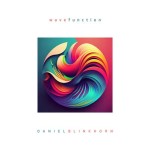
Artist: Daniel Blinkhorn
Title: Wave Function
Format: Download Only (MP3 + Lossless)
Label: Audiobulb (@)
Rated:

Title: Wave Function
Format: Download Only (MP3 + Lossless)
Label: Audiobulb (@)
Rated:
If the earth could sing, if the wind could whisper its itinerant secrets, if fire could lament its own destruction - perhaps it would sound like "Wave Function", the latest eco-acoustic journey by Daniel Blinkhorn. A seasoned sound artist and field recordist, Blinkhorn has built a career on sculpting the ephemeral, translating the language of natural and synthetic worlds into music that feels both intimately familiar and otherworldly. Here, he extends that approach to its logical, shimmering extreme, crafting an album that is as much a meditation on sound as it is an exploration of its instability, resonance, and decay.
Blinkhorn's compositional process reads like a scientist’s field notes crossed with a poet’s dream journal. The raw materials of "Wave Function" include instruments both traditional and accidental: the "kibuyu", a gourd drum from Zanzibar, a Madagascan "valiha" zither, and a celluloid ping pong ball bouncing into an acoustic hallucination. And then, there are the environments - bushfires raging through Australia, the mechanical hum of urban landscapes, waves collapsing into themselves. Sound isn’t just captured here; it’s courted, manipulated, refracted into new dimensions.
Take "Kibuyu", the album’s longest piece, which unfolds like an auditory time-lapse of a distant coastline, the resonance of the gourd drum merging with the natural and digital spaces it inhabits. Or "Smoke Machine", where the echoes of destruction - charred forests, embers dissolving into wind - are repurposed into something strangely beautiful, an elegy for the Australian landscape in crisis.
The "Gossima Collective" pieces, scattered throughout the album, serve as connective tissue, their name referencing the early, experimental iterations of table tennis (before it became the sport we know today). It’s an apt metaphor for Blinkhorn’s approach: a back-and-forth between sound and its environment, between composer and the unpredictable materials he chooses to wield.
Blinkhorn’s work is often discussed in the context of biomimetic composition - music that takes inspiration from biological and ecological processes. But what sets "Wave Function" apart is its refusal to romanticize the sounds of nature. This is no pastoral ambient drift. Instead, it treats the sonic environment as an active, evolving organism - one shaped by destruction and renewal, industry and decay. A wave is never just a wave; it is movement, collapse, regeneration.
Perhaps this is why "Wave Function" feels so vital. In an age of ecological uncertainty, it serves as both a document and an intervention, reminding us that to listen is to participate in the world’s unfolding. Whether in the Arctic, the Amazon, or the back alleys of Sydney, Blinkhorn has spent decades proving that sound is never neutral - it carries history, trauma, memory.
Jeff Dungfelder’s artwork, created for each track, reinforces the album’s fluid, shape-shifting nature. Much like the music, the visuals seem to oscillate between the organic and the alien, suggesting landscapes that could belong to Earth or some distant, unknowable world. And maybe that’s the essence of "Wave Function" - a reminder that sound, like water, refuses to be fixed in place. It travels, it mutates, it wears down the boundaries we try to impose on it. In Blinkhorn’s hands, it becomes something between a map and a mirror: a reflection of the world we live in, and an invitation to imagine the ones we have yet to discover.
Blinkhorn's compositional process reads like a scientist’s field notes crossed with a poet’s dream journal. The raw materials of "Wave Function" include instruments both traditional and accidental: the "kibuyu", a gourd drum from Zanzibar, a Madagascan "valiha" zither, and a celluloid ping pong ball bouncing into an acoustic hallucination. And then, there are the environments - bushfires raging through Australia, the mechanical hum of urban landscapes, waves collapsing into themselves. Sound isn’t just captured here; it’s courted, manipulated, refracted into new dimensions.
Take "Kibuyu", the album’s longest piece, which unfolds like an auditory time-lapse of a distant coastline, the resonance of the gourd drum merging with the natural and digital spaces it inhabits. Or "Smoke Machine", where the echoes of destruction - charred forests, embers dissolving into wind - are repurposed into something strangely beautiful, an elegy for the Australian landscape in crisis.
The "Gossima Collective" pieces, scattered throughout the album, serve as connective tissue, their name referencing the early, experimental iterations of table tennis (before it became the sport we know today). It’s an apt metaphor for Blinkhorn’s approach: a back-and-forth between sound and its environment, between composer and the unpredictable materials he chooses to wield.
Blinkhorn’s work is often discussed in the context of biomimetic composition - music that takes inspiration from biological and ecological processes. But what sets "Wave Function" apart is its refusal to romanticize the sounds of nature. This is no pastoral ambient drift. Instead, it treats the sonic environment as an active, evolving organism - one shaped by destruction and renewal, industry and decay. A wave is never just a wave; it is movement, collapse, regeneration.
Perhaps this is why "Wave Function" feels so vital. In an age of ecological uncertainty, it serves as both a document and an intervention, reminding us that to listen is to participate in the world’s unfolding. Whether in the Arctic, the Amazon, or the back alleys of Sydney, Blinkhorn has spent decades proving that sound is never neutral - it carries history, trauma, memory.
Jeff Dungfelder’s artwork, created for each track, reinforces the album’s fluid, shape-shifting nature. Much like the music, the visuals seem to oscillate between the organic and the alien, suggesting landscapes that could belong to Earth or some distant, unknowable world. And maybe that’s the essence of "Wave Function" - a reminder that sound, like water, refuses to be fixed in place. It travels, it mutates, it wears down the boundaries we try to impose on it. In Blinkhorn’s hands, it becomes something between a map and a mirror: a reflection of the world we live in, and an invitation to imagine the ones we have yet to discover.
Comments
Stream
Browse by Genre
Industrial Music / Industrial Metal / Aggro Industrial / Electro Metal
Industrial Noise / Power Noise / Harsh Noise
Synth Pop / Electro Pop / Synth-Electronica
Techno / Trance / Goa / Drum'n'Bass / Jungle / Tribal / Trip-Hop
Ambient / Electronica / Ethereal / Dub / Soundscapes / Abstract
Experimental / Avantgarde / Weird & Wired / Glitch / Noise / Field Recording
Dark / Gothic / Wave / New Wave / Dark Wave / Industrial Gothic
New Music / Downtown / Avantgarde Jazz / New Classical / World