
Saturday, August 29, 2026
Rashad Becker: The Incident
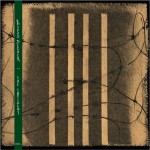


Rashad Becker has always sounded like someone tuning reality with a bent screwdriver - and "The Incident", his first full-length since "Traditional Music of Notional Species Vol. II", is no exception. Released on the slyly named clunk (the newborn label named after his Berlin studio), this double LP is as baffling and brilliant as an encrypted dream in four acts. Call it a "pseudo-musical" or an avant-garde pantomime of the post-truth era - either way, it sounds like a conspiracy being giggled into a modular synth.
This is Becker's third major solo album, but chronology is irrelevant in his sonic universe, where cause and effect often swap seats. Known both as a mastering engineer and a radical sound artist based in Berlin, Becker has built a reputation for sculpting acoustically rich, synthetic organisms that breathe, convulse, and occasionally malfunction with intent. Here, he goes even further - constructing a surreal operetta for a world permanently mid-glitch.
Act I: Let the Record Show
The opening tracks wriggle through synthetic membranes like data leaks dressed as slapstick theatre. Rhythms stagger like bureaucrats on stilts. Tones are so plasticky and misaligned that they feel sculpted from melting signage and jellied statistics. There’s humour here - not the LOL kind, but the nervous chuckle you emit when the firewall crashes and the lights flicker in unison.
Act II: The Currency of an Urgent Moment
This act might be the most overtly “conceptual”, but it's also where the album blossoms. Four tracks titled “Zero Hour” in English, French ("l’heure H"), German ("Stunde Null"), and Arabic ("satu alssufri") present variations on a sonic theme of historical amnesia. Each sounds like a different dialect of collapse: the English version is anxious and synthetic; the German one sparkles like Kraftwerk eating helium; the Arabic take is ornate, tragic, and tangled in its own overtones. It's as if Becker is asking: does the end of time sound different depending on your postal code?
Act III: Repercussions
Described elsewhere as a “comical exorcism”, this is Becker at his most percussively grotesque. "A Puttering Purgation" and "Deadlock" clang and twist like religious ceremonies held inside malfunctioning 3D printers. One might picture a choir of semi-sentient smart fridges mumbling scripture in tongues. There’s a strange joy to the absurdity, like finding out the doomsday cult was just a performance art troupe with rhythm issues.
Act IV: What Really Happened
And then comes the epic: "What Really Happened", nearly 19 minutes of maximal, shape-shifting sound-theatre. It lurches, brays, drones, explodes, recoils. It is absolutely cinematic - if the film were a closed-circuit security feed from the backroom of a data centre where forgotten truths go to decompose. It’s not the answers you get here, it’s the questions you didn’t know how to ask - rendered in alarm tones, glitched brass, and foghorn elegies.
What makes "The Incident" so thrilling (and, occasionally, so bewildering) is its refusal to sit still. It won’t settle into a genre, a rhythm, or a worldview. Instead, it buzzes with contradictions: anxious but playful, rigorous but absurd, alien but eerily familiar. Listening to it is like trying to decode a manifesto written by an AI that got stuck in an existential feedback loop halfway through its sentence.
But here’s the thing: in a world where the surreal often feels more truthful than the news, "The Incident" feels oddly honest. Rashad Becker doesn’t offer clarity - he offers texture, gesture, implication. He’s not trying to tell you what happened. He’s letting you hear how it "feels" to not know.
And sometimes, in these gooey, tangled, juddering sonic corridors, that’s the only kind of truth we have left.
This is Becker's third major solo album, but chronology is irrelevant in his sonic universe, where cause and effect often swap seats. Known both as a mastering engineer and a radical sound artist based in Berlin, Becker has built a reputation for sculpting acoustically rich, synthetic organisms that breathe, convulse, and occasionally malfunction with intent. Here, he goes even further - constructing a surreal operetta for a world permanently mid-glitch.
Act I: Let the Record Show
The opening tracks wriggle through synthetic membranes like data leaks dressed as slapstick theatre. Rhythms stagger like bureaucrats on stilts. Tones are so plasticky and misaligned that they feel sculpted from melting signage and jellied statistics. There’s humour here - not the LOL kind, but the nervous chuckle you emit when the firewall crashes and the lights flicker in unison.
Act II: The Currency of an Urgent Moment
This act might be the most overtly “conceptual”, but it's also where the album blossoms. Four tracks titled “Zero Hour” in English, French ("l’heure H"), German ("Stunde Null"), and Arabic ("satu alssufri") present variations on a sonic theme of historical amnesia. Each sounds like a different dialect of collapse: the English version is anxious and synthetic; the German one sparkles like Kraftwerk eating helium; the Arabic take is ornate, tragic, and tangled in its own overtones. It's as if Becker is asking: does the end of time sound different depending on your postal code?
Act III: Repercussions
Described elsewhere as a “comical exorcism”, this is Becker at his most percussively grotesque. "A Puttering Purgation" and "Deadlock" clang and twist like religious ceremonies held inside malfunctioning 3D printers. One might picture a choir of semi-sentient smart fridges mumbling scripture in tongues. There’s a strange joy to the absurdity, like finding out the doomsday cult was just a performance art troupe with rhythm issues.
Act IV: What Really Happened
And then comes the epic: "What Really Happened", nearly 19 minutes of maximal, shape-shifting sound-theatre. It lurches, brays, drones, explodes, recoils. It is absolutely cinematic - if the film were a closed-circuit security feed from the backroom of a data centre where forgotten truths go to decompose. It’s not the answers you get here, it’s the questions you didn’t know how to ask - rendered in alarm tones, glitched brass, and foghorn elegies.
What makes "The Incident" so thrilling (and, occasionally, so bewildering) is its refusal to sit still. It won’t settle into a genre, a rhythm, or a worldview. Instead, it buzzes with contradictions: anxious but playful, rigorous but absurd, alien but eerily familiar. Listening to it is like trying to decode a manifesto written by an AI that got stuck in an existential feedback loop halfway through its sentence.
But here’s the thing: in a world where the surreal often feels more truthful than the news, "The Incident" feels oddly honest. Rashad Becker doesn’t offer clarity - he offers texture, gesture, implication. He’s not trying to tell you what happened. He’s letting you hear how it "feels" to not know.
And sometimes, in these gooey, tangled, juddering sonic corridors, that’s the only kind of truth we have left.
Comments
Stream
Browse by Genre
Industrial Music / Industrial Metal / Aggro Industrial / Electro Metal
Industrial Noise / Power Noise / Harsh Noise
Synth Pop / Electro Pop / Synth-Electronica
Techno / Trance / Goa / Drum'n'Bass / Jungle / Tribal / Trip-Hop
Ambient / Electronica / Ethereal / Dub / Soundscapes / Abstract
Experimental / Avantgarde / Weird & Wired / Glitch / Noise / Field Recording
Dark / Gothic / Wave / New Wave / Dark Wave / Industrial Gothic
New Music / Downtown / Avantgarde Jazz / New Classical / World