
Monday, October 19, 2026
Satomimagae: Taba
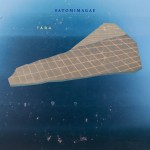

Some albums feel like places. "Taba" is more like a weather pattern slowly unbundling over the course of fifteen tracks — a scattered drizzle of guitar strings, the occasional rustle of insect wings, a clarinet hiding in the underbrush. It doesn’t demand attention; it glides by like a thought you forgot you had, half-dreamt but strangely vivid.
The title - "Taba", meaning “a bunch” or “a bundle” - is apt. This is not an album of songs in any traditional sense, but rather a gentle hoarding of moments, stitched together with the quiet insistence of someone sorting their memories by color, then realizing there’s no correct order after all. Tracks come and go like shadow puppets on paper doors: the tender “Ishi”, the faintly whimsical “Mushi Dance”, or the woozy lullaby “Kodama”, with its Rhodes piano chiming like a toy left in the rain.
Satomimagae has long been associated with hushed acoustic folk, but "Taba" tugs that intimacy outwards, inviting voices, clarinets, and subtle electronics into her orbit. Here, the acoustic guitar is no longer the axis but one of many murmurs in a crowded silence. There’s a sense of someone opening a window not to let the world in, but to remember it’s there. It’s music for watching laundry dry while contemplating the existence of parallel universes.
The real magic, though, lies in her ability to make vagueness feel meaningful. Much of "Taba" plays like a sonic haiku stretched to the edge of abstraction — too long to be poetry, too delicate to be capital-M Music. Satomi’s voice, sometimes barely more than a hum, threads through like smoke in the wind, hinting at stories never quite told. It’s as if she’s not singing to us, but rather with us, from a place slightly to the left of reality.
And yet, amid the quietude, "Taba" speaks volumes about connection — between people, places, memories, and moods. Each fragment is a part of a larger system, a musical ecology of things unsaid. There’s something quietly radical about an album that refuses to resolve, to climax, or even to clearly begin. In a world addicted to immediacy, "Taba" is content to wander. It doesn't announce itself; it lingers.
If "Hanazono" was Satomimagae’s inner garden, "Taba" is her venturing outside — not far, maybe just to the porch, barefoot, listening to the sound of ants debating the meaning of rain. A tiny epic of very small things. A bundle of whispers. A speculative folk album for those who believe that magic still lives in the corners.
The title - "Taba", meaning “a bunch” or “a bundle” - is apt. This is not an album of songs in any traditional sense, but rather a gentle hoarding of moments, stitched together with the quiet insistence of someone sorting their memories by color, then realizing there’s no correct order after all. Tracks come and go like shadow puppets on paper doors: the tender “Ishi”, the faintly whimsical “Mushi Dance”, or the woozy lullaby “Kodama”, with its Rhodes piano chiming like a toy left in the rain.
Satomimagae has long been associated with hushed acoustic folk, but "Taba" tugs that intimacy outwards, inviting voices, clarinets, and subtle electronics into her orbit. Here, the acoustic guitar is no longer the axis but one of many murmurs in a crowded silence. There’s a sense of someone opening a window not to let the world in, but to remember it’s there. It’s music for watching laundry dry while contemplating the existence of parallel universes.
The real magic, though, lies in her ability to make vagueness feel meaningful. Much of "Taba" plays like a sonic haiku stretched to the edge of abstraction — too long to be poetry, too delicate to be capital-M Music. Satomi’s voice, sometimes barely more than a hum, threads through like smoke in the wind, hinting at stories never quite told. It’s as if she’s not singing to us, but rather with us, from a place slightly to the left of reality.
And yet, amid the quietude, "Taba" speaks volumes about connection — between people, places, memories, and moods. Each fragment is a part of a larger system, a musical ecology of things unsaid. There’s something quietly radical about an album that refuses to resolve, to climax, or even to clearly begin. In a world addicted to immediacy, "Taba" is content to wander. It doesn't announce itself; it lingers.
If "Hanazono" was Satomimagae’s inner garden, "Taba" is her venturing outside — not far, maybe just to the porch, barefoot, listening to the sound of ants debating the meaning of rain. A tiny epic of very small things. A bundle of whispers. A speculative folk album for those who believe that magic still lives in the corners.
Comments
Stream
Browse by Genre
Industrial Music / Industrial Metal / Aggro Industrial / Electro Metal
Industrial Noise / Power Noise / Harsh Noise
Synth Pop / Electro Pop / Synth-Electronica
Techno / Trance / Goa / Drum'n'Bass / Jungle / Tribal / Trip-Hop
Ambient / Electronica / Ethereal / Dub / Soundscapes / Abstract
Experimental / Avantgarde / Weird & Wired / Glitch / Noise / Field Recording
Dark / Gothic / Wave / New Wave / Dark Wave / Industrial Gothic
New Music / Downtown / Avantgarde Jazz / New Classical / World