
Mark Springer + Neil Tennant + Sacconi Quartet: Sleep of Reason
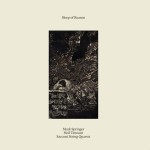
Artist: Mark Springer + Neil Tennant + Sacconi Quartet (@)
Title: Sleep of Reason
Format: CD x 2 (double CD)
Label: Sub Rosa / Exit (@)
Rated:

Title: Sleep of Reason
Format: CD x 2 (double CD)
Label: Sub Rosa / Exit (@)
Rated:
In "Sleep of Reason", pianist-composer Mark Springer and Pet Shop Boys' Neil Tennant, accompanied by the Sacconi String Quartet, craft a sonic tapestry that bridges centuries, drawing inspiration from Francisco Goya's "Los Caprichos" to comment on contemporary society. Springer's avant-garde compositions, combined with Tennant's incisive lyrics and the Sacconi String Quartet's emotive performances, create a tapestry that mirrors the complexities of our modern world.
The album unfolds in three movements: a vocal quintet, a string quartet, and solo piano pieces. More specifically, the "Sleep of Reason Quintet" introduces Tennant's vocals, weaving narratives of societal disarray; the "Morn, Noon, Night" string quartet offers instrumental reflections; and the solo piano pieces distill earlier themes into introspective meditations. Tracks like "Phantoms and Monsters" and "Truth is for Losers" confront the listener with stark portrayals of modern dilemmas, while pieces like "My Friend the Monster" delve into personal struggles amidst societal chaos. Tennant's vocals, interwoven with the quartet's strings, offer a sardonic reflection on modern monsters, echoing Goya's themes of societal decay. Springer's compositions oscillate between tension and release, mirroring the dualities present in both 18th-century etchings and today's digital landscape.
Critics have lauded the album for its seamless blend of classical and contemporary elements, noting its ability to challenge and engage listeners. The collaboration between Springer and Tennant, though unexpected, proves to be a compelling fusion of radical expression and meticulous craftsmanship. The Sacconi String Quartet's contributions further elevate the work, adding depth and nuance to the compositions.
Tracks like "Phantoms and Monsters" and "Truth is for Losers" juxtapose haunting melodies with incisive lyrics, challenging listeners to confront uncomfortable truths. The instrumental sections, particularly the "Morn, Noon, Night" suite, showcase the quartet's dynamic range, while the concluding piano solos provide introspective closure.
"Sleep of Reason" is not merely an album but a commentary on the cyclical nature of human folly, urging introspection in an age dominated by noise and spectacle.
The album unfolds in three movements: a vocal quintet, a string quartet, and solo piano pieces. More specifically, the "Sleep of Reason Quintet" introduces Tennant's vocals, weaving narratives of societal disarray; the "Morn, Noon, Night" string quartet offers instrumental reflections; and the solo piano pieces distill earlier themes into introspective meditations. Tracks like "Phantoms and Monsters" and "Truth is for Losers" confront the listener with stark portrayals of modern dilemmas, while pieces like "My Friend the Monster" delve into personal struggles amidst societal chaos. Tennant's vocals, interwoven with the quartet's strings, offer a sardonic reflection on modern monsters, echoing Goya's themes of societal decay. Springer's compositions oscillate between tension and release, mirroring the dualities present in both 18th-century etchings and today's digital landscape.
Critics have lauded the album for its seamless blend of classical and contemporary elements, noting its ability to challenge and engage listeners. The collaboration between Springer and Tennant, though unexpected, proves to be a compelling fusion of radical expression and meticulous craftsmanship. The Sacconi String Quartet's contributions further elevate the work, adding depth and nuance to the compositions.
Tracks like "Phantoms and Monsters" and "Truth is for Losers" juxtapose haunting melodies with incisive lyrics, challenging listeners to confront uncomfortable truths. The instrumental sections, particularly the "Morn, Noon, Night" suite, showcase the quartet's dynamic range, while the concluding piano solos provide introspective closure.
"Sleep of Reason" is not merely an album but a commentary on the cyclical nature of human folly, urging introspection in an age dominated by noise and spectacle.
Comments
Stream
Browse by Genre
Industrial Music / Industrial Metal / Aggro Industrial / Electro Metal
Industrial Noise / Power Noise / Harsh Noise
Synth Pop / Electro Pop / Synth-Electronica
Techno / Trance / Goa / Drum'n'Bass / Jungle / Tribal / Trip-Hop
Ambient / Electronica / Ethereal / Dub / Soundscapes / Abstract
Experimental / Avantgarde / Weird & Wired / Glitch / Noise / Field Recording
Dark / Gothic / Wave / New Wave / Dark Wave / Industrial Gothic
New Music / Downtown / Avantgarde Jazz / New Classical / World