
Saturday, August 29, 2026
Annie Bloch & Emily Wittbrodt: The Mendelssohn-Project
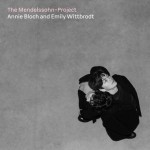
Artist: Annie Bloch & Emily Wittbrodt (http://anniebloch.com/) (@)
Title: The Mendelssohn-Project
Format: CD + Download
Label: stssts records
Rated:

Title: The Mendelssohn-Project
Format: CD + Download
Label: stssts records
Rated:
Felix Mendelssohn’s ghost probably never expected to be invited to a séance inside a pipe organ, but here he is, echoing through the smoky corridors of "The Mendelssohn-Project", where 19th-century formalism meets a kind of disciplined mischief. This collaboration between Annie Bloch and Emily Wittbrodt - two intrepid sonic cartographers based in Cologne - takes the bones of Mendelssohn’s "Prelude and Fugue in C minor" and breathes into them a whole new set of lungs, ones that wheeze, sigh, rebel, and occasionally burst into ecstatic laughter.
It all starts innocently enough: the "PrÄludium" is presented in its solemn dignity, with Ralf Borghoff’s stately organ lines pairing up with Wittbrodt’s expressive cello to re-establish the original material in something like its Sunday best. But from track II onward, things begin to unravel - in the best way possible. These are not deconstructions in the academic sense. Think of them instead as meditative dérives through the haunted house of classical form. The themes stretch like shadows at dusk, and time no longer clicks forward - it pulses, dilates, contracts.
The duo are less interested in paying homage to Mendelssohn than in asking him provocative questions: What if your fugue never quite arrives? What if the cello forgets the theme and starts daydreaming in microtonal glissandi? What if the organ becomes less a church fixture and more a breathing, groaning creature with a memory problem?
And yet, "The Mendelssohn-Project" is not a parody or a demolition job - it’s an act of creative reverence. Bloch and Wittbrodt aren’t trying to “fix” Mendelssohn. They’re communing with him through their own artistic languages, blending their roots in jazz, folk, pop, and the German experimental underground. There's humor here - sometimes subtle, sometimes cheeky - as when a staccato cello line seems to tiptoe away from the organ’s grandiosity, or when harmonies flirt with dissonance like two choir members gossiping during mass. But there’s also a deep seriousness of intent, a sense that both artists are trying to hear something that isn’t quite there anymore - a fugitive resonance that lies between the notes, between eras, between identities.
Wittbrodt, ever the restless cellist, plays like someone who has both studied the score and torn it up out of love. Her cello sings and sighs, but also scratches, pulses, and hums - an instrument halfway between a baroque narrator and a noise poet. Bloch, on the other hand, coaxes the organ into unlikely registers of fragility. You’d expect grandeur; you get hesitation, intimacy, occasional moments of whispered rupture. Her work on the 2025 chamber-pop gem "I DEPEND" hinted at this interplay between the monumental and the personal - here it blossoms fully, in a sonic cathedral with no fixed theology.
By the time we reach track VII, it’s clear that the original fugue is long gone, replaced by something far more interesting: a shared language that lives in the interstices between structure and intuition, quotation and invention, reverence and rebellion. The duo doesn’t just reinterpret Mendelssohn - they translate him into a dialect of the now.
In the end, "The Mendelssohn-Project" is less about Mendelssohn and more about what it means to inherit sound. What do we do with the musical past? Imitate it? Break it? Speak to it softly and wait for a reply? Bloch and Wittbrodt choose the latter - and in doing so, they’ve made one of the most beguiling and strangely touching records of the year. It’s a quiet act of musical archaeology with a sly grin and a generous soul. Felix, wherever he is, might be nodding along - perhaps even tapping a foot in triple meter.
It all starts innocently enough: the "PrÄludium" is presented in its solemn dignity, with Ralf Borghoff’s stately organ lines pairing up with Wittbrodt’s expressive cello to re-establish the original material in something like its Sunday best. But from track II onward, things begin to unravel - in the best way possible. These are not deconstructions in the academic sense. Think of them instead as meditative dérives through the haunted house of classical form. The themes stretch like shadows at dusk, and time no longer clicks forward - it pulses, dilates, contracts.
The duo are less interested in paying homage to Mendelssohn than in asking him provocative questions: What if your fugue never quite arrives? What if the cello forgets the theme and starts daydreaming in microtonal glissandi? What if the organ becomes less a church fixture and more a breathing, groaning creature with a memory problem?
And yet, "The Mendelssohn-Project" is not a parody or a demolition job - it’s an act of creative reverence. Bloch and Wittbrodt aren’t trying to “fix” Mendelssohn. They’re communing with him through their own artistic languages, blending their roots in jazz, folk, pop, and the German experimental underground. There's humor here - sometimes subtle, sometimes cheeky - as when a staccato cello line seems to tiptoe away from the organ’s grandiosity, or when harmonies flirt with dissonance like two choir members gossiping during mass. But there’s also a deep seriousness of intent, a sense that both artists are trying to hear something that isn’t quite there anymore - a fugitive resonance that lies between the notes, between eras, between identities.
Wittbrodt, ever the restless cellist, plays like someone who has both studied the score and torn it up out of love. Her cello sings and sighs, but also scratches, pulses, and hums - an instrument halfway between a baroque narrator and a noise poet. Bloch, on the other hand, coaxes the organ into unlikely registers of fragility. You’d expect grandeur; you get hesitation, intimacy, occasional moments of whispered rupture. Her work on the 2025 chamber-pop gem "I DEPEND" hinted at this interplay between the monumental and the personal - here it blossoms fully, in a sonic cathedral with no fixed theology.
By the time we reach track VII, it’s clear that the original fugue is long gone, replaced by something far more interesting: a shared language that lives in the interstices between structure and intuition, quotation and invention, reverence and rebellion. The duo doesn’t just reinterpret Mendelssohn - they translate him into a dialect of the now.
In the end, "The Mendelssohn-Project" is less about Mendelssohn and more about what it means to inherit sound. What do we do with the musical past? Imitate it? Break it? Speak to it softly and wait for a reply? Bloch and Wittbrodt choose the latter - and in doing so, they’ve made one of the most beguiling and strangely touching records of the year. It’s a quiet act of musical archaeology with a sly grin and a generous soul. Felix, wherever he is, might be nodding along - perhaps even tapping a foot in triple meter.
Comments
Stream
Browse by Genre
Industrial Music / Industrial Metal / Aggro Industrial / Electro Metal
Industrial Noise / Power Noise / Harsh Noise
Synth Pop / Electro Pop / Synth-Electronica
Techno / Trance / Goa / Drum'n'Bass / Jungle / Tribal / Trip-Hop
Ambient / Electronica / Ethereal / Dub / Soundscapes / Abstract
Experimental / Avantgarde / Weird & Wired / Glitch / Noise / Field Recording
Dark / Gothic / Wave / New Wave / Dark Wave / Industrial Gothic
New Music / Downtown / Avantgarde Jazz / New Classical / World