
Monogoto: Partial Deletion of Everything, Vol. 3
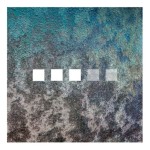
Artist: Monogoto (@)
Title: Partial Deletion of Everything, Vol. 3
Format: CD + Download
Label: Home Normal
Rated:


Title: Partial Deletion of Everything, Vol. 3
Format: CD + Download
Label: Home Normal
Rated:
Imagine you’re slowly erasing a memory, but instead of forgetting it, you’re folding it into something softer. That’s the feeling you get with "Partial Deletion of Everything Vol. 3", the latest installment in Monogoto’s quiet and beautiful act of vanishing.
The trio of David Newman, Porya Hatami, and Ian Hawgood - each a well-seasoned ambient artisan in their own right - has returned with the same devotion to gentle disintegration that characterized the previous volumes released on 12k and Polar Seas. But this time, hosted by Hawgood’s own Home Normal label, the deletion feels more intimate, more intentional - like cleaning your mental hard drive while sipping tea in the rain.
The record contains only two long-form pieces: "Marine Snow (deletion 23)" and "Virga (deletion 84)". Titles that sound like redacted weather reports from a lost civilization. But don’t be fooled by their minimalism. Each track is a dense and delicate microcosm, filled with frequencies that quiver like moth wings and melodies that drift in and out like memories from childhood - half-real, half-daydream.
"Marine Snow" opens like a transmission from deep water. Not metaphorically - literally. You feel submerged. And yet there’s light, refracted and liquid. It’s hard to tell if what you’re hearing is guitar, piano, field recording, or a slowly disintegrating tape loop of your own heartbeat. There are whispers of wind, distant hums, and textures so thin you could sew them into silk. Time does not pass in this track; it breathes.
"Virga", meanwhile, is the sound of rain that never hits the ground - evaporating before arrival. It’s shorter but no less immersive, and it unfolds with the kind of restraint that only three sonic minimalists who have nothing to prove can afford. It’s music that trusts your ears to do the wandering.
The “partial deletion” of the title is not just a poetic gesture - it’s a practice. Each volume in the series seems to engage with loss not as tragedy but as tender necessity. Noise is embraced, not polished away. Sound is treated like a sculpture: chiseled, worn, and occasionally cracked on purpose. There’s even humor in this erasure - a kind of monkish playfulness. It’s like watching a sand mandala being swept away in ultra-slow motion by a breeze made of reel-to-reel hiss.
But don’t mistake quiet for apathy. The emotional core of "Vol. 3" is very much intact - it's just buried under snowdrifts of texture and ghostly melody. Like grief after a decade: no longer sharp, but woven into your bones.
And really, what a rare gift this is. In a world of maximalism, Monogoto has chosen disappearance as its aesthetic. But this isn't the kind of vanishing that leaves you empty. It's the kind that makes space - for reflection, for breath, for the tiniest details to feel monumental.
Put simply: this is music for when the lights are low, the mind is heavy, and the world outside is just a bit too loud. Or, to put it another way - this is what deletion sounds like when done with love.
The trio of David Newman, Porya Hatami, and Ian Hawgood - each a well-seasoned ambient artisan in their own right - has returned with the same devotion to gentle disintegration that characterized the previous volumes released on 12k and Polar Seas. But this time, hosted by Hawgood’s own Home Normal label, the deletion feels more intimate, more intentional - like cleaning your mental hard drive while sipping tea in the rain.
The record contains only two long-form pieces: "Marine Snow (deletion 23)" and "Virga (deletion 84)". Titles that sound like redacted weather reports from a lost civilization. But don’t be fooled by their minimalism. Each track is a dense and delicate microcosm, filled with frequencies that quiver like moth wings and melodies that drift in and out like memories from childhood - half-real, half-daydream.
"Marine Snow" opens like a transmission from deep water. Not metaphorically - literally. You feel submerged. And yet there’s light, refracted and liquid. It’s hard to tell if what you’re hearing is guitar, piano, field recording, or a slowly disintegrating tape loop of your own heartbeat. There are whispers of wind, distant hums, and textures so thin you could sew them into silk. Time does not pass in this track; it breathes.
"Virga", meanwhile, is the sound of rain that never hits the ground - evaporating before arrival. It’s shorter but no less immersive, and it unfolds with the kind of restraint that only three sonic minimalists who have nothing to prove can afford. It’s music that trusts your ears to do the wandering.
The “partial deletion” of the title is not just a poetic gesture - it’s a practice. Each volume in the series seems to engage with loss not as tragedy but as tender necessity. Noise is embraced, not polished away. Sound is treated like a sculpture: chiseled, worn, and occasionally cracked on purpose. There’s even humor in this erasure - a kind of monkish playfulness. It’s like watching a sand mandala being swept away in ultra-slow motion by a breeze made of reel-to-reel hiss.
But don’t mistake quiet for apathy. The emotional core of "Vol. 3" is very much intact - it's just buried under snowdrifts of texture and ghostly melody. Like grief after a decade: no longer sharp, but woven into your bones.
And really, what a rare gift this is. In a world of maximalism, Monogoto has chosen disappearance as its aesthetic. But this isn't the kind of vanishing that leaves you empty. It's the kind that makes space - for reflection, for breath, for the tiniest details to feel monumental.
Put simply: this is music for when the lights are low, the mind is heavy, and the world outside is just a bit too loud. Or, to put it another way - this is what deletion sounds like when done with love.
Comments
Stream
Browse by Genre
Industrial Music / Industrial Metal / Aggro Industrial / Electro Metal
Industrial Noise / Power Noise / Harsh Noise
Synth Pop / Electro Pop / Synth-Electronica
Techno / Trance / Goa / Drum'n'Bass / Jungle / Tribal / Trip-Hop
Ambient / Electronica / Ethereal / Dub / Soundscapes / Abstract
Experimental / Avantgarde / Weird & Wired / Glitch / Noise / Field Recording
Dark / Gothic / Wave / New Wave / Dark Wave / Industrial Gothic
New Music / Downtown / Avantgarde Jazz / New Classical / World