
Meitei: Sen?nyu
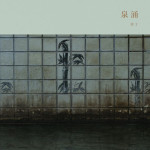


Meitei has always composed with ghosts at his side - ghosts of forgotten eras, abandoned rituals, flickering impressions of a Japan that slips further into memory each year. But "Sen’nyu" finds him less haunted and more submerged, literally: in the mist of Beppu’s geothermal lungs, in the hiss of sulfur, in the whispered chorus of bathers dissolving into steam. Commissioned to celebrate the city’s centenary as an onsen capital, this record is less a dedication and more a form of immersion therapy - sound as hot mineral soak, composition as condensation on the walls of a century-old inn.
The premise is deceptively simple: Meitei walked the streets and sacred sites of Beppu with a microphone, listening with the patience of a stone. The results are anything but documentary. The bubbling mud of Bouzu Jigoku, the faint creak of Yamada Bessou’s wood, the sigh of water shifting endlessly between states - these are filtered through Meitei’s synesthetic sensibility until they feel less like recordings and more like portals. "Sen’nyu" doesn’t capture sound as much as it captures atmosphere, like fog in a jar, somehow refusing to dissipate when you open the lid.
Where the "Lost Japan" cycle often suggested a sepia-toned world half-recalled, here the sense of place is almost unbearably tactile. You can feel the humidity gathering on your skin, the weight of centuries carried by stone steps, the particular hush that fills a bathhouse at midnight. If "kankyo ongaku" was meant to harmonize with its environment, "Sen’nyu" seems born directly from it: not background music for space, but space itself rendered audible.
It unfolds as a continuous drift, but not without character. Each section ("Ichi-no-yu", "Ni-no-yu", and so on) is like another chamber in a labyrinthine bathhouse, its own temperature, its own mineral composition. By the time the brief track "Oyu" arrives, barely over a minute, it feels like a cleansing breath between immersions. And then you sink once more, deeper, into "Go-no-yu", as though the waters themselves have remembered you and are reluctant to let go.
The accompanying public installation at Takegawara Onsen - where bathers literally soaked in Meitei’s sound as much as in Beppu’s waters - suggests the true ambition of this project: music as ritual, as embodied listening, as an extension of place. To call it “ambient” feels inadequate. It is more like an archaeology of steam, an ethnography of mist.
What makes "Sen’nyu" so striking is its refusal of spectacle. No crescendo, no drama, only the slow patience of water. Yet within that restraint lies an undeniable gravity. It suggests that in order to find the essence of a culture, or of ourselves, we might need to stop moving and simply let the world condense around us.
Meitei once gave us "Lost Japan". With "Sen’nyu", he offers a Japan not lost but vaporous - hovering, elusive, breathing through fissures in the earth. Listening is like stepping into a bath alone, where time itself dissolves, and for once, you can almost believe that the steam remembers you back.
The premise is deceptively simple: Meitei walked the streets and sacred sites of Beppu with a microphone, listening with the patience of a stone. The results are anything but documentary. The bubbling mud of Bouzu Jigoku, the faint creak of Yamada Bessou’s wood, the sigh of water shifting endlessly between states - these are filtered through Meitei’s synesthetic sensibility until they feel less like recordings and more like portals. "Sen’nyu" doesn’t capture sound as much as it captures atmosphere, like fog in a jar, somehow refusing to dissipate when you open the lid.
Where the "Lost Japan" cycle often suggested a sepia-toned world half-recalled, here the sense of place is almost unbearably tactile. You can feel the humidity gathering on your skin, the weight of centuries carried by stone steps, the particular hush that fills a bathhouse at midnight. If "kankyo ongaku" was meant to harmonize with its environment, "Sen’nyu" seems born directly from it: not background music for space, but space itself rendered audible.
It unfolds as a continuous drift, but not without character. Each section ("Ichi-no-yu", "Ni-no-yu", and so on) is like another chamber in a labyrinthine bathhouse, its own temperature, its own mineral composition. By the time the brief track "Oyu" arrives, barely over a minute, it feels like a cleansing breath between immersions. And then you sink once more, deeper, into "Go-no-yu", as though the waters themselves have remembered you and are reluctant to let go.
The accompanying public installation at Takegawara Onsen - where bathers literally soaked in Meitei’s sound as much as in Beppu’s waters - suggests the true ambition of this project: music as ritual, as embodied listening, as an extension of place. To call it “ambient” feels inadequate. It is more like an archaeology of steam, an ethnography of mist.
What makes "Sen’nyu" so striking is its refusal of spectacle. No crescendo, no drama, only the slow patience of water. Yet within that restraint lies an undeniable gravity. It suggests that in order to find the essence of a culture, or of ourselves, we might need to stop moving and simply let the world condense around us.
Meitei once gave us "Lost Japan". With "Sen’nyu", he offers a Japan not lost but vaporous - hovering, elusive, breathing through fissures in the earth. Listening is like stepping into a bath alone, where time itself dissolves, and for once, you can almost believe that the steam remembers you back.
Comments
Stream
Browse by Genre
Industrial Music / Industrial Metal / Aggro Industrial / Electro Metal
Industrial Noise / Power Noise / Harsh Noise
Synth Pop / Electro Pop / Synth-Electronica
Techno / Trance / Goa / Drum'n'Bass / Jungle / Tribal / Trip-Hop
Ambient / Electronica / Ethereal / Dub / Soundscapes / Abstract
Experimental / Avantgarde / Weird & Wired / Glitch / Noise / Field Recording
Dark / Gothic / Wave / New Wave / Dark Wave / Industrial Gothic
New Music / Downtown / Avantgarde Jazz / New Classical / World