
Wednesday, November 18, 2026
Aki Onda: In the Depth of Illusion: A Soundtrack for Nervous Magic Lantern
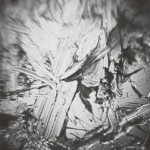


Aki Onda’s "In the Depth of Illusion: A Soundtrack for Nervous Magic Lantern" (Room40) is less an album than a séance in sound, a way of holding hands with memory, perception, and the flickering ghosts of cinema itself. It is also, fittingly, an ode to a long collaboration with Ken Jacobs, the towering avant-garde filmmaker who spent his life teasing the eye into disbelief.
To describe Jacobs’ Nervous Magic Lantern to someone who’s never seen it is like describing a dream: spinning shutters, painted slides, light breaking into phantom shapes that don’t sit politely on a screen but hover and mutate in space. Onda’s role was to give those apparitions a voice, but not through melodrama or illustrative cues - Jacobs specifically asked for “sounds of daily life”. Street noise, conversations, the hiss of tapes left in drawers for decades. The ordinary, folded back into the extraordinary.
What Onda achieves here is uncanny. He takes Jacobs’ private archive of cassette field recordings - Chinatown hum, murmurs of friends, the everyday rustle of life in TriBeCa lofts - and weaves them into an electro-acoustic dreamscape. These are not found sounds in the trendy sense; they are the sediment of a life lived in art. Layered, stretched, sometimes left raw, they give texture and weight to the hallucinations. The images stay abstract, but the sound insists on narrative, on intimacy: suddenly you are not just witnessing a flicker experiment but overhearing Ken and Flo Jacobs’ lived world bleeding into it.
The five tracks capture the tension between structure and improvisation that defined Onda and Jacobs’ live collaborations. “Liminal Space” is exactly that - suspended, uncertain, a sonic Möbius strip that never settles. “Screen Test” crackles with suggestion, a nod to the history of cinema while also dismantling its grammar. “Brooklyn Bridge (extended version)”, at over twenty minutes, is the anchor: sprawling, patient, a living document of New York soundscapes refracted through tape hiss until they shimmer like the Lantern’s apparitions.
There is a gentle humor here too. Titles like “Tiger Balm” remind us that Jacobs’ art, while visionary, was never precious; life, ointments and all, was always part of the frame. And Flo Jacobs’ unseen but vital presence hovers throughout - a reminder that even the most radical art is sustained by everyday acts of care and pragmatism.
Listening to "In the Depth of Illusion" is like walking into a cinema that forgot to close its doors to the street: you hear traffic, chatter, the cough of a neighbor, and yet what unfurls before you is impossible - a phantasmagoria hovering between the eyes. Onda doesn’t try to explain Jacobs’ impossible visions. He gives them a sonic body that is as fragile, shifting, and deeply human as the flicker itself.
It is, in the end, a love letter - to Jacobs, to Flo, to the act of collaboration where dream and dailiness feed one another. A soundtrack, yes, but also a diary, a memorial, and perhaps even an instruction: if reality feels too fixed, close your eyes, press play, and step into the nervous magic of illusion.
Comments
Stream
Browse by Genre
Industrial Music / Industrial Metal / Aggro Industrial / Electro Metal
Industrial Noise / Power Noise / Harsh Noise
Synth Pop / Electro Pop / Synth-Electronica
Techno / Trance / Goa / Drum'n'Bass / Jungle / Tribal / Trip-Hop
Ambient / Electronica / Ethereal / Dub / Soundscapes / Abstract
Experimental / Avantgarde / Weird & Wired / Glitch / Noise / Field Recording
Dark / Gothic / Wave / New Wave / Dark Wave / Industrial Gothic
New Music / Downtown / Avantgarde Jazz / New Classical / World