
The Worm: Pantilde
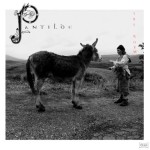


In Pantilde, The Worm slithers across the boundary between folk ritual and surrealist theatre, leaving a shimmering trail of cello dust and pagan laughter. Amy Lawrence’s Cornish alter ego – a trickster, a time traveller, a clown with a harp – has built an entire parallel world where myths still walk around in mud boots and gossip about eclipses. The record sounds both centuries old and strangely futuristic, as if Vashti Bunyan had been secretly collaborating with Delia Derbyshire in a damp stone cottage that hums when the wind turns east.
The Worm’s folk is not pastoral escapism but a form of living hallucination: harp strings and recorders form crooked ladders between melody and murmuring noise, while Lawrence’s voice moves between tenderness and eerie detachment, like a shepherd delivering cosmic news. Pantilde is built from small, fragile gestures – a breath, a bowed string, a phrase whispered as if it might dissolve – yet together they summon a vivid mythology. Songs like “Through Greeness” and “Portal” feel like spells written by someone who doesn’t quite believe in language anymore. “Heva’s Village” rises as a slow-motion lament for a place both invented and remembered, its vocal drones and cello tremors forming a landscape of sorrow and resolve. “Journey” might be the most affecting piece: part confession, part creation myth, a song that begins with a contorted voice and ends like dawn seen from underwater. It’s folk as séance, each sound a flicker of spirit projected through a cracked reel of memory.
The humour here is sly and subterranean. “The Clown is Free” skips through its own absurdity, proving that Lawrence understands how fragility and laughter share the same pulse. Even the brief interludes – “Gust”, “Path Tune” – sound like clues left behind by a trickster god who’s half serious, half prank. The lo-fi, handmade production gives everything a sense of domestic magic, the feeling of a ritual conducted with kitchen utensils and candle wax.
By the time “The Tower of the Eclipses” closes the record, we’ve been transported into a wyrd utopia that’s tender, ragged, and strangely luminous. It’s folk music that doesn’t pretend to restore the past but instead invents a future where myth is once again intimate, tactile, and slightly unhinged. Pantilde is an album of mud and stars, of portals and puddles – a testament to how strangeness can still sound holy when it’s sung with conviction. The Worm doesn’t revive folk tradition; it composts it, and from that humus grows something wilder, softer, and beautifully alive.
The Worm’s folk is not pastoral escapism but a form of living hallucination: harp strings and recorders form crooked ladders between melody and murmuring noise, while Lawrence’s voice moves between tenderness and eerie detachment, like a shepherd delivering cosmic news. Pantilde is built from small, fragile gestures – a breath, a bowed string, a phrase whispered as if it might dissolve – yet together they summon a vivid mythology. Songs like “Through Greeness” and “Portal” feel like spells written by someone who doesn’t quite believe in language anymore. “Heva’s Village” rises as a slow-motion lament for a place both invented and remembered, its vocal drones and cello tremors forming a landscape of sorrow and resolve. “Journey” might be the most affecting piece: part confession, part creation myth, a song that begins with a contorted voice and ends like dawn seen from underwater. It’s folk as séance, each sound a flicker of spirit projected through a cracked reel of memory.
The humour here is sly and subterranean. “The Clown is Free” skips through its own absurdity, proving that Lawrence understands how fragility and laughter share the same pulse. Even the brief interludes – “Gust”, “Path Tune” – sound like clues left behind by a trickster god who’s half serious, half prank. The lo-fi, handmade production gives everything a sense of domestic magic, the feeling of a ritual conducted with kitchen utensils and candle wax.
By the time “The Tower of the Eclipses” closes the record, we’ve been transported into a wyrd utopia that’s tender, ragged, and strangely luminous. It’s folk music that doesn’t pretend to restore the past but instead invents a future where myth is once again intimate, tactile, and slightly unhinged. Pantilde is an album of mud and stars, of portals and puddles – a testament to how strangeness can still sound holy when it’s sung with conviction. The Worm doesn’t revive folk tradition; it composts it, and from that humus grows something wilder, softer, and beautifully alive.
Comments
Stream
Browse by Genre
Industrial Music / Industrial Metal / Aggro Industrial / Electro Metal
Industrial Noise / Power Noise / Harsh Noise
Synth Pop / Electro Pop / Synth-Electronica
Techno / Trance / Goa / Drum'n'Bass / Jungle / Tribal / Trip-Hop
Ambient / Electronica / Ethereal / Dub / Soundscapes / Abstract
Experimental / Avantgarde / Weird & Wired / Glitch / Noise / Field Recording
Dark / Gothic / Wave / New Wave / Dark Wave / Industrial Gothic
New Music / Downtown / Avantgarde Jazz / New Classical / World