
Marmur: Elektroniczne Systemy
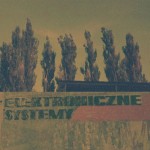


There’s a certain grim laughter humming inside Elektroniczne Systemy. It’s the kind that sneaks out from between dusty oscillators and corroded guitar cables, that peculiar Polish humour which sounds like despair trying to dance, failing gracefully, and deciding that failure is, in fact, the point.
Marmur - that’s Artur Rumiski and Macio Moretti - are two shapeshifters from different ends of the country’s experimental underground: Rumiski, the architect of texture and tension in outfits like Furia, Thaw, and Arrm, and Moretti, the cosmic jester behind LXMP and countless side aliases, who treats irony like a musical instrument. Together, they form a duo that sounds less like a band and more like a "malfunctioning ecosystem", where guitars melt into static, machines breathe, and feedback turns into a form of prayer.
The album’s title, Elektroniczne Systemy (“Electronic Systems”), is wonderfully misleading. There’s nothing systematic here. Everything bleeds. Circuits collapse into drones, drones crack into glitches, and every sound feels like it’s trying to reform itself after a slow disaster. It’s ambient music if you redefined “ambient” as “the inside of a broken fax machine dreaming of the sea”.
Opener “Ludzko” (Humanity) begins like an autopsy of civilization recorded through a wet contact mic - metallic hums, ghostly overtones, a texture that hovers between sacred and decomposing. “Drena” stretches out into twelve minutes of magnetic fatigue, like a field recording of entropy itself. And “Objazd” (Detour) closes the album with an oddly optimistic sputter - the sound of a detour that never quite finds its way back, yet enjoys the confusion.
What’s striking is how Elektroniczne Systemy feels neither nostalgic nor futuristic. It exists in a present tense of corrosion - a moment where analog and digital, human and mechanical, serious and absurd, all short-circuit into one another. The production, courtesy of Bartek Kapsa, preserves that instability with surgical precision: everything sounds deliberate, but nothing feels safe.
It’s music for the non-functioning device that is you: funny, unsettling, tender in its mechanical coldness. Rumiski and Moretti manage to build an emotional architecture out of glitches, feedback, and small domestic ghosts.
In the end, Elektroniczne Systemy doesn’t really play - it persists, like a faint electric hum in a dark room after you’ve turned everything off. A reminder that the machines are listening too.
Marmur - that’s Artur Rumiski and Macio Moretti - are two shapeshifters from different ends of the country’s experimental underground: Rumiski, the architect of texture and tension in outfits like Furia, Thaw, and Arrm, and Moretti, the cosmic jester behind LXMP and countless side aliases, who treats irony like a musical instrument. Together, they form a duo that sounds less like a band and more like a "malfunctioning ecosystem", where guitars melt into static, machines breathe, and feedback turns into a form of prayer.
The album’s title, Elektroniczne Systemy (“Electronic Systems”), is wonderfully misleading. There’s nothing systematic here. Everything bleeds. Circuits collapse into drones, drones crack into glitches, and every sound feels like it’s trying to reform itself after a slow disaster. It’s ambient music if you redefined “ambient” as “the inside of a broken fax machine dreaming of the sea”.
Opener “Ludzko” (Humanity) begins like an autopsy of civilization recorded through a wet contact mic - metallic hums, ghostly overtones, a texture that hovers between sacred and decomposing. “Drena” stretches out into twelve minutes of magnetic fatigue, like a field recording of entropy itself. And “Objazd” (Detour) closes the album with an oddly optimistic sputter - the sound of a detour that never quite finds its way back, yet enjoys the confusion.
What’s striking is how Elektroniczne Systemy feels neither nostalgic nor futuristic. It exists in a present tense of corrosion - a moment where analog and digital, human and mechanical, serious and absurd, all short-circuit into one another. The production, courtesy of Bartek Kapsa, preserves that instability with surgical precision: everything sounds deliberate, but nothing feels safe.
It’s music for the non-functioning device that is you: funny, unsettling, tender in its mechanical coldness. Rumiski and Moretti manage to build an emotional architecture out of glitches, feedback, and small domestic ghosts.
In the end, Elektroniczne Systemy doesn’t really play - it persists, like a faint electric hum in a dark room after you’ve turned everything off. A reminder that the machines are listening too.
Comments
Stream
Browse by Genre
Industrial Music / Industrial Metal / Aggro Industrial / Electro Metal
Industrial Noise / Power Noise / Harsh Noise
Synth Pop / Electro Pop / Synth-Electronica
Techno / Trance / Goa / Drum'n'Bass / Jungle / Tribal / Trip-Hop
Ambient / Electronica / Ethereal / Dub / Soundscapes / Abstract
Experimental / Avantgarde / Weird & Wired / Glitch / Noise / Field Recording
Dark / Gothic / Wave / New Wave / Dark Wave / Industrial Gothic
New Music / Downtown / Avantgarde Jazz / New Classical / World