
Saturday, August 29, 2026
Liv Andrea Hauge Trio: Døgnville
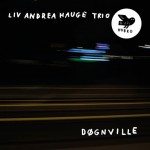


There’s something quietly heroic - and a bit comical, to be honest - about a jazz trio deciding to make an album about the sensation of being temporally misplaced. Most people deal with jet lag by drinking too much water and swearing at airport clocks; Liv Andrea Hauge decides to write half a record while delirious with fever and the other half while trying to remember what continent she’s on. That already tells you a lot about her approach: lucid when she isn’t, structured when everything else tilts sideways.
Hauge, at this point, has carved out a modest but confident profile in the Nordic jazz constellation. Critics often highlight her knack for floating between lyrical introspection and a more angular, contemporary pulse - the sort of aesthetic that keeps the ECM ghosts happy while also making room for younger, rougher inspirations. The trio with Georgia Wartel Collins and August GlÄnnestrand has been gaining traction because, well, they actually listen to each other. A rarity in jazz, just like a drummer who doesn’t fill all available airspace (thank you, August).
Døgnville sits in that hazy half-light where melody tries to remember its own name. The record isn’t revolutionary - reviews tend to call it “solid”, “mature”, “quietly ambitious”, which is critic-speak for “it won’t change your life but you’ll respect it in the morning”. But the trio plays with a sincerity that makes even the more familiar gestures feel a little enchanted.
“Natt Natt Natt” is the poster child for this twilight delirium: a tune that walks with its eyes half-closed, gently brushing the furniture, guided more by instinct than destination. Hauge’s touch is feather-soft but never vague; she outlines shadows, lets the silence breathe, and then tilts the harmony just enough to make you wonder if you’re dreaming.
The more rhythm-driven pieces - like “Karja” - show the band’s other face: the one inherited from seeing too many avant-jazz concerts where nothing is straight but everything is intentional. There’s a restless pulse under the piano’s harmonic fog, nudging the trio into that zone where structure is still present but might leave the room if you turn your head. It’s alive, alert, but never flashy.
And then there’s “Mange av oss”, their self-declared crowd-pleaser - the kind of tune that feels like sunlight hitting your brain after a week underground. It doesn’t pretend to be deep; it’s simply warm, honest, and gracefully built.
Across the album, the production preserves the trio’s natural chemistry: recorded live in one room, the sound feels like someone gently opened a door to let you eavesdrop. Nothing is over-polished. You hear chairs shift, breath move. Time is elastic, but life is present.
Døgnville isn’t an album that shouts or provokes. It wanders - in that soft, starlit Nordic way - letting the listener drift slightly out of phase with the world. Its poetry lies in how it refuses to dramatize disorientation; instead, it treats it as a natural, almost tender human state. You’re tired, you’re floating, but you’re still moving forward.
Maybe that’s the secret charm here: the trio doesn’t pretend to reveal the meaning of time. They just keep playing through it, with grace, understatement, and a touch of fever-dream humor.
Not extraordinary - but quietly luminous, in that unmistakably Hubro kind of way.
Hauge, at this point, has carved out a modest but confident profile in the Nordic jazz constellation. Critics often highlight her knack for floating between lyrical introspection and a more angular, contemporary pulse - the sort of aesthetic that keeps the ECM ghosts happy while also making room for younger, rougher inspirations. The trio with Georgia Wartel Collins and August GlÄnnestrand has been gaining traction because, well, they actually listen to each other. A rarity in jazz, just like a drummer who doesn’t fill all available airspace (thank you, August).
Døgnville sits in that hazy half-light where melody tries to remember its own name. The record isn’t revolutionary - reviews tend to call it “solid”, “mature”, “quietly ambitious”, which is critic-speak for “it won’t change your life but you’ll respect it in the morning”. But the trio plays with a sincerity that makes even the more familiar gestures feel a little enchanted.
“Natt Natt Natt” is the poster child for this twilight delirium: a tune that walks with its eyes half-closed, gently brushing the furniture, guided more by instinct than destination. Hauge’s touch is feather-soft but never vague; she outlines shadows, lets the silence breathe, and then tilts the harmony just enough to make you wonder if you’re dreaming.
The more rhythm-driven pieces - like “Karja” - show the band’s other face: the one inherited from seeing too many avant-jazz concerts where nothing is straight but everything is intentional. There’s a restless pulse under the piano’s harmonic fog, nudging the trio into that zone where structure is still present but might leave the room if you turn your head. It’s alive, alert, but never flashy.
And then there’s “Mange av oss”, their self-declared crowd-pleaser - the kind of tune that feels like sunlight hitting your brain after a week underground. It doesn’t pretend to be deep; it’s simply warm, honest, and gracefully built.
Across the album, the production preserves the trio’s natural chemistry: recorded live in one room, the sound feels like someone gently opened a door to let you eavesdrop. Nothing is over-polished. You hear chairs shift, breath move. Time is elastic, but life is present.
Døgnville isn’t an album that shouts or provokes. It wanders - in that soft, starlit Nordic way - letting the listener drift slightly out of phase with the world. Its poetry lies in how it refuses to dramatize disorientation; instead, it treats it as a natural, almost tender human state. You’re tired, you’re floating, but you’re still moving forward.
Maybe that’s the secret charm here: the trio doesn’t pretend to reveal the meaning of time. They just keep playing through it, with grace, understatement, and a touch of fever-dream humor.
Not extraordinary - but quietly luminous, in that unmistakably Hubro kind of way.
Comments
Stream
Browse by Genre
Industrial Music / Industrial Metal / Aggro Industrial / Electro Metal
Industrial Noise / Power Noise / Harsh Noise
Synth Pop / Electro Pop / Synth-Electronica
Techno / Trance / Goa / Drum'n'Bass / Jungle / Tribal / Trip-Hop
Ambient / Electronica / Ethereal / Dub / Soundscapes / Abstract
Experimental / Avantgarde / Weird & Wired / Glitch / Noise / Field Recording
Dark / Gothic / Wave / New Wave / Dark Wave / Industrial Gothic
New Music / Downtown / Avantgarde Jazz / New Classical / World