
Tuesday, September 15, 2026
Isak Ingvarsson: The Calling
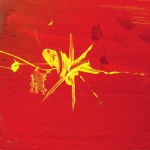


Isak Ingvarsson’s "The Calling" arrives with the quiet confidence of someone who has wrestled with angels, lost a few rounds, and decided to turn the whole affair into music rather than theology. This debut album doesn’t so much answer questions as circle them patiently, like a cat around a warm radiator, aware that certainty is overrated and doubt has better acoustics. Rooted in Ingvarsson’s Catholic upbringing but stripped of any ecclesiastical stiffness, the record treats faith less as doctrine and more as a recurring melodic ghost: something learned early, forgotten badly, and remembered at inconvenient moments.
At its core, "The Calling" is a trio record that understands the power of restraint. Ingvarsson’s tenor and baritone saxophones don’t preach; they confess, hesitate, and occasionally mutter under their breath. His lines often feel like psalms rewritten by someone who skipped church but kept the hymns lodged somewhere deep in the body. Johan Graden’s piano and organ work provides a harmonic terrain that is at once grounded and slippery, moving between meditative repetition and sudden, sideways harmonic decisions that feel like doors opening where you expected walls. Kresten Osgood, meanwhile, plays drums as if time itself were optional, nudging, prodding, and sometimes sabotaging the pulse just enough to keep everything human. Even the Yamaha PSR-1500, an instrument that in lesser hands might scream “bad taste”, is deployed with a sense of mischief that borders on grace.
What makes the album compelling is its refusal to dramatize despair or sanctify hope. Pieces unfold slowly, motifs are worried rather than developed, and silences are treated as equal partners. Tracks like “Calling” and “My Prayer” suggest ritual, but a ritual emptied of spectacle: no incense, no stained glass, just breath, friction, and repetition. Elsewhere, the recurring appearances of “Tre Toner” feel like a stubborn thought returning in slightly altered form, refusing to be resolved because resolution would be dishonest. This is music that insists on asking questions without answers, and then asking them again, just to be sure.
Ingvarsson’s background - studies in Berlin, current immersion in New York’s jazz ecosystem, mentorships that bridge avant-garde severity and straight-ahead tradition - comes through not as stylistic name-dropping but as a kind of internal tension. You can hear the pull between discipline and rupture, between lyricism and abrasion. Yet "The Calling" never collapses into angst tourism. There’s a strange calm here, the kind that comes from accepting that belief and doubt are not opposites but roommates who don’t speak much.
In the end, "The Calling" feels less like a debut statement and more like an ongoing process, caught mid-thought. It’s a record that understands that faith, like improvisation, is mostly about listening: to what’s been inherited, to what refuses to leave, and to what emerges when you stop demanding clarity. No miracles are promised here, no conversions attempted. Just a careful, searching music that suggests that sometimes the calling isn’t a voice from above, but a persistent murmur from inside, asking you to keep going, even when the answers remain stubbornly out of reach.
At its core, "The Calling" is a trio record that understands the power of restraint. Ingvarsson’s tenor and baritone saxophones don’t preach; they confess, hesitate, and occasionally mutter under their breath. His lines often feel like psalms rewritten by someone who skipped church but kept the hymns lodged somewhere deep in the body. Johan Graden’s piano and organ work provides a harmonic terrain that is at once grounded and slippery, moving between meditative repetition and sudden, sideways harmonic decisions that feel like doors opening where you expected walls. Kresten Osgood, meanwhile, plays drums as if time itself were optional, nudging, prodding, and sometimes sabotaging the pulse just enough to keep everything human. Even the Yamaha PSR-1500, an instrument that in lesser hands might scream “bad taste”, is deployed with a sense of mischief that borders on grace.
What makes the album compelling is its refusal to dramatize despair or sanctify hope. Pieces unfold slowly, motifs are worried rather than developed, and silences are treated as equal partners. Tracks like “Calling” and “My Prayer” suggest ritual, but a ritual emptied of spectacle: no incense, no stained glass, just breath, friction, and repetition. Elsewhere, the recurring appearances of “Tre Toner” feel like a stubborn thought returning in slightly altered form, refusing to be resolved because resolution would be dishonest. This is music that insists on asking questions without answers, and then asking them again, just to be sure.
Ingvarsson’s background - studies in Berlin, current immersion in New York’s jazz ecosystem, mentorships that bridge avant-garde severity and straight-ahead tradition - comes through not as stylistic name-dropping but as a kind of internal tension. You can hear the pull between discipline and rupture, between lyricism and abrasion. Yet "The Calling" never collapses into angst tourism. There’s a strange calm here, the kind that comes from accepting that belief and doubt are not opposites but roommates who don’t speak much.
In the end, "The Calling" feels less like a debut statement and more like an ongoing process, caught mid-thought. It’s a record that understands that faith, like improvisation, is mostly about listening: to what’s been inherited, to what refuses to leave, and to what emerges when you stop demanding clarity. No miracles are promised here, no conversions attempted. Just a careful, searching music that suggests that sometimes the calling isn’t a voice from above, but a persistent murmur from inside, asking you to keep going, even when the answers remain stubbornly out of reach.
Comments
Stream
Browse by Genre
Industrial Music / Industrial Metal / Aggro Industrial / Electro Metal
Industrial Noise / Power Noise / Harsh Noise
Synth Pop / Electro Pop / Synth-Electronica
Techno / Trance / Goa / Drum'n'Bass / Jungle / Tribal / Trip-Hop
Ambient / Electronica / Ethereal / Dub / Soundscapes / Abstract
Experimental / Avantgarde / Weird & Wired / Glitch / Noise / Field Recording
Dark / Gothic / Wave / New Wave / Dark Wave / Industrial Gothic
New Music / Downtown / Avantgarde Jazz / New Classical / World