
Wednesday, October 14, 2026
Cecile Seraud: Psykhé
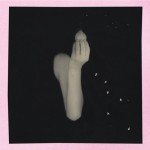


There are albums that knock politely, and others that arrive already sitting next to you on the couch, sharing your silence. "Psykhé" belongs to the second category. It doesn’t ask permission; it exhales, slowly, like someone who has already cried and is now trying to remember how to breathe.
Cécile Seraud has always worked in that fragile zone where music is less about performance and more about presence. Here, the stakes are brutally clear: "Psykhé" is born from grief that isn’t abstract, symbolic, or safely distant. It is grief with names, places, children in the next room, memories still warm. That alone makes this album risky. Sentimentality is always lurking nearby, sharpening its knives. Remarkably, Seraud never lets it take over.
The record unfolds like a private ritual carried out in semi-darkness. Piano lines move cautiously, strings hover rather than soar, electronics whisper instead of asserting themselves. Everything feels measured, as if each sound has been weighed against the question: "does this help, or does this intrude?" Often, the most powerful moments are the ones that barely announce themselves - phrases that seem to stop mid-thought, harmonies that dissolve before they resolve. This is music that understands loss as interruption.
What’s striking is how "Psykhé" avoids turning mourning into monument. There’s no grand arc from despair to redemption, no cinematic swell reassuring us that everything will be fine. Instead, Seraud traces grief as a geography: New Zealand appears not as a postcard, but as a memory with emotional altitude; Barcelona flickers like a half-remembered dream; “Back Home” sounds less like arrival than like standing still and realizing the room has changed.
The few vocal moments feel especially delicate. They don’t function as songs in the traditional sense but as soft correspondence - letters sent across a distance that cannot be crossed. Words matter here, but not more than breath. Silence remains the most eloquent collaborator on the album.
There’s something quietly courageous in how "Psykhé" balances darkness and light without trying to reconcile them. The darkness is allowed to remain opaque; the light doesn’t pretend to explain anything. Seraud seems less interested in healing than in honesty - acknowledging that love, once lost, doesn’t disappear but changes state, becoming memory, sound, vibration.
If there’s humor here, it’s of the microscopic kind: the irony that the most personal grief becomes, somehow, something others can inhabit. You listen expecting catharsis and instead find companionship. No solutions, no closure - just the strange relief of not being alone with difficult feelings.
"Psykhé" doesn’t aim to comfort in the usual sense. It sits with you, quietly, long after the music stops, like a hand resting on your shoulder - not to fix anything, but to remind you that remembering is itself a form of love.
Cécile Seraud has always worked in that fragile zone where music is less about performance and more about presence. Here, the stakes are brutally clear: "Psykhé" is born from grief that isn’t abstract, symbolic, or safely distant. It is grief with names, places, children in the next room, memories still warm. That alone makes this album risky. Sentimentality is always lurking nearby, sharpening its knives. Remarkably, Seraud never lets it take over.
The record unfolds like a private ritual carried out in semi-darkness. Piano lines move cautiously, strings hover rather than soar, electronics whisper instead of asserting themselves. Everything feels measured, as if each sound has been weighed against the question: "does this help, or does this intrude?" Often, the most powerful moments are the ones that barely announce themselves - phrases that seem to stop mid-thought, harmonies that dissolve before they resolve. This is music that understands loss as interruption.
What’s striking is how "Psykhé" avoids turning mourning into monument. There’s no grand arc from despair to redemption, no cinematic swell reassuring us that everything will be fine. Instead, Seraud traces grief as a geography: New Zealand appears not as a postcard, but as a memory with emotional altitude; Barcelona flickers like a half-remembered dream; “Back Home” sounds less like arrival than like standing still and realizing the room has changed.
The few vocal moments feel especially delicate. They don’t function as songs in the traditional sense but as soft correspondence - letters sent across a distance that cannot be crossed. Words matter here, but not more than breath. Silence remains the most eloquent collaborator on the album.
There’s something quietly courageous in how "Psykhé" balances darkness and light without trying to reconcile them. The darkness is allowed to remain opaque; the light doesn’t pretend to explain anything. Seraud seems less interested in healing than in honesty - acknowledging that love, once lost, doesn’t disappear but changes state, becoming memory, sound, vibration.
If there’s humor here, it’s of the microscopic kind: the irony that the most personal grief becomes, somehow, something others can inhabit. You listen expecting catharsis and instead find companionship. No solutions, no closure - just the strange relief of not being alone with difficult feelings.
"Psykhé" doesn’t aim to comfort in the usual sense. It sits with you, quietly, long after the music stops, like a hand resting on your shoulder - not to fix anything, but to remind you that remembering is itself a form of love.
Comments
Stream
Browse by Genre
Industrial Music / Industrial Metal / Aggro Industrial / Electro Metal
Industrial Noise / Power Noise / Harsh Noise
Synth Pop / Electro Pop / Synth-Electronica
Techno / Trance / Goa / Drum'n'Bass / Jungle / Tribal / Trip-Hop
Ambient / Electronica / Ethereal / Dub / Soundscapes / Abstract
Experimental / Avantgarde / Weird & Wired / Glitch / Noise / Field Recording
Dark / Gothic / Wave / New Wave / Dark Wave / Industrial Gothic
New Music / Downtown / Avantgarde Jazz / New Classical / World