
Afterlife: Standing at the foot of a mountain
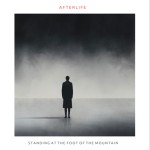
Artist: Afterlife (@)
Title: Standing at the foot of a mountain
Format: Download Only (MP3 + Lossless)
Label: Subatomic UK
Rated:

Title: Standing at the foot of a mountain
Format: Download Only (MP3 + Lossless)
Label: Subatomic UK
Rated:
Standing at the foot of a mountain is a dangerous position for ambient music. You can either stare upwards, paralysed by symbolism, or you can start walking and let your legs - and your ears - do the thinking. Afterlife, the long-running alias of British musician Steve Miller, chooses the second option. No grand manifesto, no mystical fog machine on full blast: just a steady ascent made of sound, patience, and a quietly stubborn belief that music can still mean something without shouting about it.
Miller has been orbiting the ambient constellation for decades now, often favouring melody over abstraction, emotion over theory. On "Standing At The Foot Of The Mountain", released via Subatomic UK, that tendency crystallises into a set of fifteen pieces that feel less like tracks and more like weather patterns you slowly learn to recognise. Reviews online tend to underline the album’s warmth and accessibility - rightly so - but what’s more interesting is how this warmth is earned, not assumed.
The opening title track doesn’t announce itself; it clears its throat. Gentle synth layers suggest space without pretending to be cosmic, while the pacing already hints at the album’s central idea: movement without urgency. From there, "Playing Place" and "Seasons" sketch a landscape where repetition isn’t stagnation but reassurance - a looping path you walk because it feels good under your feet.
One of the album’s emotional hinges is "Mono No Aware", where piano and double bass meet with a tenderness that borders on vulnerability. The reference to impermanence isn’t decorative; it’s embedded in the way notes appear, linger, and quietly step aside. This is ambient music that understands loss not as drama, but as texture.
Miller wisely avoids staying in one emotional register. "No Fight No Blame" introduces a darker grain, with pulses that feel less meditative and more interrogative - a reminder that calm isn’t always innocent. "Wu Wei" and "Tripping In My Garden" then loosen the grip again, filtering light through melody, as if balance were something you continuously adjust rather than achieve.
Elsewhere, titles like "The Future Is Not Cancelled" risk sounding sloganistic, but the music itself refuses easy optimism. It glides, hesitates, recalibrates. Even "Tranquility Suite" carries an undertow of unease, its chimes less about peace than about unresolved stillness - tranquillity with a question mark.
By the time "Emptiness" closes the album, the word feels almost ironic. The piece is full, tactile, intimate, suggesting that emptiness here isn’t absence but space - room for reflection, dialogue, maybe even doubt.
If there’s humour in this record, it’s understated: the quiet audacity of making sincere, melodic ambient music in an era that often rewards either maximalism or irony. "Standing At The Foot Of The Mountain" doesn’t pretend to reinvent the genre. Instead, it reminds us why we started climbing in the first place. Slow steps, open ears, no shortcuts. And somehow, that still feels like a radical act.
Miller has been orbiting the ambient constellation for decades now, often favouring melody over abstraction, emotion over theory. On "Standing At The Foot Of The Mountain", released via Subatomic UK, that tendency crystallises into a set of fifteen pieces that feel less like tracks and more like weather patterns you slowly learn to recognise. Reviews online tend to underline the album’s warmth and accessibility - rightly so - but what’s more interesting is how this warmth is earned, not assumed.
The opening title track doesn’t announce itself; it clears its throat. Gentle synth layers suggest space without pretending to be cosmic, while the pacing already hints at the album’s central idea: movement without urgency. From there, "Playing Place" and "Seasons" sketch a landscape where repetition isn’t stagnation but reassurance - a looping path you walk because it feels good under your feet.
One of the album’s emotional hinges is "Mono No Aware", where piano and double bass meet with a tenderness that borders on vulnerability. The reference to impermanence isn’t decorative; it’s embedded in the way notes appear, linger, and quietly step aside. This is ambient music that understands loss not as drama, but as texture.
Miller wisely avoids staying in one emotional register. "No Fight No Blame" introduces a darker grain, with pulses that feel less meditative and more interrogative - a reminder that calm isn’t always innocent. "Wu Wei" and "Tripping In My Garden" then loosen the grip again, filtering light through melody, as if balance were something you continuously adjust rather than achieve.
Elsewhere, titles like "The Future Is Not Cancelled" risk sounding sloganistic, but the music itself refuses easy optimism. It glides, hesitates, recalibrates. Even "Tranquility Suite" carries an undertow of unease, its chimes less about peace than about unresolved stillness - tranquillity with a question mark.
By the time "Emptiness" closes the album, the word feels almost ironic. The piece is full, tactile, intimate, suggesting that emptiness here isn’t absence but space - room for reflection, dialogue, maybe even doubt.
If there’s humour in this record, it’s understated: the quiet audacity of making sincere, melodic ambient music in an era that often rewards either maximalism or irony. "Standing At The Foot Of The Mountain" doesn’t pretend to reinvent the genre. Instead, it reminds us why we started climbing in the first place. Slow steps, open ears, no shortcuts. And somehow, that still feels like a radical act.
Comments
Stream
Browse by Genre
Industrial Music / Industrial Metal / Aggro Industrial / Electro Metal
Industrial Noise / Power Noise / Harsh Noise
Synth Pop / Electro Pop / Synth-Electronica
Techno / Trance / Goa / Drum'n'Bass / Jungle / Tribal / Trip-Hop
Ambient / Electronica / Ethereal / Dub / Soundscapes / Abstract
Experimental / Avantgarde / Weird & Wired / Glitch / Noise / Field Recording
Dark / Gothic / Wave / New Wave / Dark Wave / Industrial Gothic
New Music / Downtown / Avantgarde Jazz / New Classical / World