
Noura Mint Seymali: Yenbett
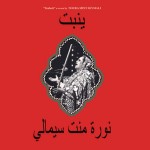

"Yenbett" arrives like a hot wind that doesn’t ask permission. It lifts sand, memory, voltage, and suddenly you’re dancing in a place that feels ancient and uncomfortably current at the same time. Noura Mint Seymali has always worked in this unstable zone - where tradition isn’t preserved in formaldehyde but wired, amplified, and thrown into the night - and with this third album she sounds less like a curator of heritage and more like a force of nature that happens to know exactly where it comes from.
What strikes first is the voice: elastic, commanding, almost architectural. Seymali sings as if her throat were a resonant chamber rather than a body part, stretching phrases into ululations that feel ritualistic without ever slipping into museum-piece reverence. There’s authority here, but also urgency - this is not the sound of history being politely remembered, it’s history insisting on being heard over the noise of now.
The album’s structure already tells you a lot. Short, almost ceremonial interludes open doors for longer, more kinetic pieces, giving "Yenbett" the feel of a sequence rather than a playlist. The opening invocation with the ardine is sparse, meditative, and deceptively calm; when the electrified version crashes in shortly after, it’s less a remix than a revelation. Tradition and electricity aren’t in dialogue - they’re the same sentence, spoken louder.
Musically, the band operates with a kind of disciplined ferocity. Jeich Ould Chighaly’s guitar doesn’t solo in the rock sense; it coils, flickers, and worries at motifs like a thought that won’t let you sleep. The rhythm section keeps things grounded but never polite, alternating between hypnotic pulse and moments of near-collapse, as if daring the songs to fall apart (they never do). There are flashes of funk, hints of psych-rock abrasion, and stretches where repetition becomes a trance technology rather than a compositional shortcut.
Seymali’s role as a griot matters here, but not in the way liner notes often flatten it into “cultural context”. Her singing carries social weight without sounding didactic. Praise, narrative, exhortation, dance - these functions blur into each other, stitched together with a logic closer to jazz improvisation than to fixed-song formats. The lyrics may draw from Moorish poetic traditions, but the delivery is pointed, physical, and meant to move bodies as much as ideas.
What’s quietly radical about "Yenbett" is how unbothered it is by genre borders. It doesn’t ask whether it belongs to “desert blues”, “world music” or “psych rock”. It simply exists, loud and unapologetic, reminding you that categorization is mostly a concern for listeners, not for music that knows what it’s doing. If there’s humor here, it’s in that confidence: the album dances while critics scramble for labels.
By the time "Yenbett" winds down, you’re left with the sense that this isn’t just a strong return after a long gap - it’s a tightening of vision. Seymali sounds fully in command of her lineage and fearless about bending it to her will. This is music with deep roots and sharp edges, ritual that sweats, tradition that moves forward without looking over its shoulder. Desert music for dense cities, yes - but also proof that the future doesn’t have to forget where it learned how to sing.
What strikes first is the voice: elastic, commanding, almost architectural. Seymali sings as if her throat were a resonant chamber rather than a body part, stretching phrases into ululations that feel ritualistic without ever slipping into museum-piece reverence. There’s authority here, but also urgency - this is not the sound of history being politely remembered, it’s history insisting on being heard over the noise of now.
The album’s structure already tells you a lot. Short, almost ceremonial interludes open doors for longer, more kinetic pieces, giving "Yenbett" the feel of a sequence rather than a playlist. The opening invocation with the ardine is sparse, meditative, and deceptively calm; when the electrified version crashes in shortly after, it’s less a remix than a revelation. Tradition and electricity aren’t in dialogue - they’re the same sentence, spoken louder.
Musically, the band operates with a kind of disciplined ferocity. Jeich Ould Chighaly’s guitar doesn’t solo in the rock sense; it coils, flickers, and worries at motifs like a thought that won’t let you sleep. The rhythm section keeps things grounded but never polite, alternating between hypnotic pulse and moments of near-collapse, as if daring the songs to fall apart (they never do). There are flashes of funk, hints of psych-rock abrasion, and stretches where repetition becomes a trance technology rather than a compositional shortcut.
Seymali’s role as a griot matters here, but not in the way liner notes often flatten it into “cultural context”. Her singing carries social weight without sounding didactic. Praise, narrative, exhortation, dance - these functions blur into each other, stitched together with a logic closer to jazz improvisation than to fixed-song formats. The lyrics may draw from Moorish poetic traditions, but the delivery is pointed, physical, and meant to move bodies as much as ideas.
What’s quietly radical about "Yenbett" is how unbothered it is by genre borders. It doesn’t ask whether it belongs to “desert blues”, “world music” or “psych rock”. It simply exists, loud and unapologetic, reminding you that categorization is mostly a concern for listeners, not for music that knows what it’s doing. If there’s humor here, it’s in that confidence: the album dances while critics scramble for labels.
By the time "Yenbett" winds down, you’re left with the sense that this isn’t just a strong return after a long gap - it’s a tightening of vision. Seymali sounds fully in command of her lineage and fearless about bending it to her will. This is music with deep roots and sharp edges, ritual that sweats, tradition that moves forward without looking over its shoulder. Desert music for dense cities, yes - but also proof that the future doesn’t have to forget where it learned how to sing.
Comments
Stream
Browse by Genre
Industrial Music / Industrial Metal / Aggro Industrial / Electro Metal
Industrial Noise / Power Noise / Harsh Noise
Synth Pop / Electro Pop / Synth-Electronica
Techno / Trance / Goa / Drum'n'Bass / Jungle / Tribal / Trip-Hop
Ambient / Electronica / Ethereal / Dub / Soundscapes / Abstract
Experimental / Avantgarde / Weird & Wired / Glitch / Noise / Field Recording
Dark / Gothic / Wave / New Wave / Dark Wave / Industrial Gothic
New Music / Downtown / Avantgarde Jazz / New Classical / World