
Saturday, August 29, 2026
Matthias Puech: La Traversée
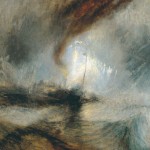


Matthias Puech has always struck me as the kind of composer who doesn’t use electronics so much as interrogate them - politely, but with persistence. With "La Traversée", his second outing for Hallow Ground, that interrogation turns into a journey in the old-fashioned sense: not a sightseeing tour, but a crossing where you’re changed simply by staying afloat.
Loosely inspired by "The Odyssey", this is not one of those records that announces its classical reference with a laurel wreath and a footnote. Homer is here less as a narrative blueprint than as a gravitational field. Longing, fear, repetition, the seduction of detours, the exhaustion of returning - these ideas seep into the music the way salt creeps into wood. You don’t hear Cyclopes or sirens; you feel the instability that makes such figures necessary.
Puech’s Eurorack modular system is the sole vessel for this voyage, but the results are strikingly human. These four pieces are among his most emotionally direct works to date, and that’s saying something for an artist often associated with density, abstraction, and a certain ascetic rigor. Here, complexity doesn’t posture. It breathes. Gestures emerge, hesitate, loop back on themselves. Systems are set in motion, then gently sabotaged from within.
The shorter pieces - "Ennosigaios", "Polyphármakos", "Nekuia" - feel like episodes rather than tracks: self-contained yet incomplete, as if they’re aware they belong to a larger arc. There’s a sense of narrative recursion at play, motifs resurfacing not as repetition but as memory. Puech has spoken about forgetting the technical processes behind these compositions when revisiting them later, and that amnesia turns out to be a gift. What remains is intention stripped of mechanism, affect divorced from instruction manual.
Then there’s "Ithákê", an 18-minute slow burn that earns every second of its duration. It unfolds with the patience of someone who knows the destination matters less than the act of moving toward it. Tensions accumulate, dissolve, reappear slightly altered - like recognizing a coastline from a distance and realizing it’s not the one you left. It’s immersive without being engulfing, demanding attention without punishing distraction. A rare balance.
What’s quietly remarkable about "La Traversée" is how intuitive it feels despite its technical underpinnings. This isn’t modular synthesis flexing its muscles; it’s modular synthesis learning to walk barefoot. Puech’s background as an instrument designer and scholar is evident, but never didactic. He knows exactly what the machine can do - and more importantly, when to let it drift.
There’s a faint irony in framing such a record around "The Odyssey" while releasing it on vinyl in 2025, a format that requires you to physically get up, flip sides, re-engage. But perhaps that’s the point. "La Traversée" resists frictionless consumption. It asks for presence. It invites you to cross something - not necessarily an ocean, but maybe a stretch of inner weather you’ve been avoiding.
In a musical landscape obsessed with arrival, Puech dares to linger in transit. And in doing so, he reminds us that the crossing itself is the story.
Loosely inspired by "The Odyssey", this is not one of those records that announces its classical reference with a laurel wreath and a footnote. Homer is here less as a narrative blueprint than as a gravitational field. Longing, fear, repetition, the seduction of detours, the exhaustion of returning - these ideas seep into the music the way salt creeps into wood. You don’t hear Cyclopes or sirens; you feel the instability that makes such figures necessary.
Puech’s Eurorack modular system is the sole vessel for this voyage, but the results are strikingly human. These four pieces are among his most emotionally direct works to date, and that’s saying something for an artist often associated with density, abstraction, and a certain ascetic rigor. Here, complexity doesn’t posture. It breathes. Gestures emerge, hesitate, loop back on themselves. Systems are set in motion, then gently sabotaged from within.
The shorter pieces - "Ennosigaios", "Polyphármakos", "Nekuia" - feel like episodes rather than tracks: self-contained yet incomplete, as if they’re aware they belong to a larger arc. There’s a sense of narrative recursion at play, motifs resurfacing not as repetition but as memory. Puech has spoken about forgetting the technical processes behind these compositions when revisiting them later, and that amnesia turns out to be a gift. What remains is intention stripped of mechanism, affect divorced from instruction manual.
Then there’s "Ithákê", an 18-minute slow burn that earns every second of its duration. It unfolds with the patience of someone who knows the destination matters less than the act of moving toward it. Tensions accumulate, dissolve, reappear slightly altered - like recognizing a coastline from a distance and realizing it’s not the one you left. It’s immersive without being engulfing, demanding attention without punishing distraction. A rare balance.
What’s quietly remarkable about "La Traversée" is how intuitive it feels despite its technical underpinnings. This isn’t modular synthesis flexing its muscles; it’s modular synthesis learning to walk barefoot. Puech’s background as an instrument designer and scholar is evident, but never didactic. He knows exactly what the machine can do - and more importantly, when to let it drift.
There’s a faint irony in framing such a record around "The Odyssey" while releasing it on vinyl in 2025, a format that requires you to physically get up, flip sides, re-engage. But perhaps that’s the point. "La Traversée" resists frictionless consumption. It asks for presence. It invites you to cross something - not necessarily an ocean, but maybe a stretch of inner weather you’ve been avoiding.
In a musical landscape obsessed with arrival, Puech dares to linger in transit. And in doing so, he reminds us that the crossing itself is the story.
Comments
Stream
Browse by Genre
Industrial Music / Industrial Metal / Aggro Industrial / Electro Metal
Industrial Noise / Power Noise / Harsh Noise
Synth Pop / Electro Pop / Synth-Electronica
Techno / Trance / Goa / Drum'n'Bass / Jungle / Tribal / Trip-Hop
Ambient / Electronica / Ethereal / Dub / Soundscapes / Abstract
Experimental / Avantgarde / Weird & Wired / Glitch / Noise / Field Recording
Dark / Gothic / Wave / New Wave / Dark Wave / Industrial Gothic
New Music / Downtown / Avantgarde Jazz / New Classical / World