
Saturday, August 29, 2026
Plaster: Mainframe re_coded
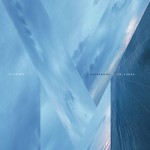


Plaster’s "Mainframe re_coded" arrives less like a nostalgic reissue and more like a controlled system reboot. The original "Mainframe", released in 2015 on Kvitnu, already carried the weight of a transition: it was the first Plaster album fully authored by Gianclaudio Hashem Moniri after Giuseppe Carlini’s departure, and it sounded like a project suddenly stripped of negotiation. What remained was pressure, focus, and a distinctly architectural approach to sound. Ten years later, "re_coded" does not soften that stance. If anything, it sharpens the edges and reorganizes the circuitry.
Moniri has always treated industrial and experimental electronics less as genres and more as working conditions. On "Mainframe", rhythm functioned like infrastructure: repetitive, oppressive, and necessary. In this remastered and expanded version, that logic becomes clearer. Tracks like “Unicore” and “Blade” hinge on obsessive loops that feel engineered rather than performed, while distortions are deployed with a kind of cold intentionality. Noise here is not chaos; it is calibration. The remaster emphasizes low-end density and spatial separation, making the album feel heavier without inflating it.
What stands out, especially in hindsight, is the album’s restraint. For music that lives in abrasive territories, "Mainframe" is remarkably disciplined. Gloomy atmospheres and corroded textures never spill into excess. Pieces like “Lucubra” and “Redshift” breathe in narrow corridors, maintaining tension through subtraction rather than overload. Valeria Svizzeri’s choral and lead vocal contributions add a human grain to the machinery, but they are treated as material rather than narrative. The voice is absorbed into the system, not elevated above it.
"Mainframe re_coded" expands this world without diluting it. The remixes by Franck Vigroux, Kaeba, and Agan are not decorative add-ons but structural reinterpretations. Vigroux’s version of “Terminal” in particular reframes the track’s severity, stretching it into something more volatile and unstable, while Kaeba’s take on “Blade” pushes the rhythmic logic toward a harsher, almost confrontational minimalism. The inclusion of live recordings and alternative mixes exposes the album’s physical dimension, reminding the listener that this music is built to test bodies as much as speakers.
There is also an unspoken narrative running beneath this release. The long delay, the collapse of earlier reissue plans, the stalled momentum of the pandemic era, and finally the successful crowdfunding campaign all feed into the album’s meaning. "Mainframe re_coded" is not just a revisiting of past material but a reclaiming of authorship and continuity. It insists on the relevance of a sound that never aimed to be timely in the first place.
Design and production details reinforce this sense of coherence. Richard Grant’s cover artwork mirrors the album’s logic: stark, functional, and suggestive of systems rather than stories. The CD edition, shorter out of necessity, feels more like a concentrated core, while the digital version allows the project to sprawl, loop back on itself, and expose its internal variations.
In the end, "Mainframe re_coded" does not ask to be rediscovered. It stands its ground, unapologetically dense and methodical, offering no comfort beyond the strange satisfaction of immersion. For longtime followers of Plaster, it clarifies a pivotal moment in the project’s evolution. For new listeners, it is a reminder that industrial music, when handled with precision and intent, can still feel dangerously alive.
Moniri has always treated industrial and experimental electronics less as genres and more as working conditions. On "Mainframe", rhythm functioned like infrastructure: repetitive, oppressive, and necessary. In this remastered and expanded version, that logic becomes clearer. Tracks like “Unicore” and “Blade” hinge on obsessive loops that feel engineered rather than performed, while distortions are deployed with a kind of cold intentionality. Noise here is not chaos; it is calibration. The remaster emphasizes low-end density and spatial separation, making the album feel heavier without inflating it.
What stands out, especially in hindsight, is the album’s restraint. For music that lives in abrasive territories, "Mainframe" is remarkably disciplined. Gloomy atmospheres and corroded textures never spill into excess. Pieces like “Lucubra” and “Redshift” breathe in narrow corridors, maintaining tension through subtraction rather than overload. Valeria Svizzeri’s choral and lead vocal contributions add a human grain to the machinery, but they are treated as material rather than narrative. The voice is absorbed into the system, not elevated above it.
"Mainframe re_coded" expands this world without diluting it. The remixes by Franck Vigroux, Kaeba, and Agan are not decorative add-ons but structural reinterpretations. Vigroux’s version of “Terminal” in particular reframes the track’s severity, stretching it into something more volatile and unstable, while Kaeba’s take on “Blade” pushes the rhythmic logic toward a harsher, almost confrontational minimalism. The inclusion of live recordings and alternative mixes exposes the album’s physical dimension, reminding the listener that this music is built to test bodies as much as speakers.
There is also an unspoken narrative running beneath this release. The long delay, the collapse of earlier reissue plans, the stalled momentum of the pandemic era, and finally the successful crowdfunding campaign all feed into the album’s meaning. "Mainframe re_coded" is not just a revisiting of past material but a reclaiming of authorship and continuity. It insists on the relevance of a sound that never aimed to be timely in the first place.
Design and production details reinforce this sense of coherence. Richard Grant’s cover artwork mirrors the album’s logic: stark, functional, and suggestive of systems rather than stories. The CD edition, shorter out of necessity, feels more like a concentrated core, while the digital version allows the project to sprawl, loop back on itself, and expose its internal variations.
In the end, "Mainframe re_coded" does not ask to be rediscovered. It stands its ground, unapologetically dense and methodical, offering no comfort beyond the strange satisfaction of immersion. For longtime followers of Plaster, it clarifies a pivotal moment in the project’s evolution. For new listeners, it is a reminder that industrial music, when handled with precision and intent, can still feel dangerously alive.
Comments
Stream
Browse by Genre
Industrial Music / Industrial Metal / Aggro Industrial / Electro Metal
Industrial Noise / Power Noise / Harsh Noise
Synth Pop / Electro Pop / Synth-Electronica
Techno / Trance / Goa / Drum'n'Bass / Jungle / Tribal / Trip-Hop
Ambient / Electronica / Ethereal / Dub / Soundscapes / Abstract
Experimental / Avantgarde / Weird & Wired / Glitch / Noise / Field Recording
Dark / Gothic / Wave / New Wave / Dark Wave / Industrial Gothic
New Music / Downtown / Avantgarde Jazz / New Classical / World