
Saturday, October 24, 2026
It Dockumer Lokaeltsje: Loop of Sloop
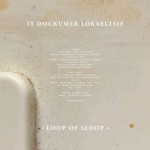


Forty years is a long time in music. Entire genres are born, flourish, collapse, and get rediscovered by people wearing carefully distressed denim jackets. Yet some bands manage to move through those decades without ever quite learning how to behave. It Dockumer Lokaeltsje clearly belongs to that category.
Their new record, "Loop of Sloop", released by Makkum Records, arrives with the sort of mischievous conceptual logic that only veteran punk groups seem capable of inventing. Back in the early eighties the Frisian trio reportedly wrote their debut album "WIL MET U NEUKEN" in a single afternoon, a gesture of chaotic spontaneity that became part of their legend. This time the process apparently ran in reverse: first they recorded an album, and only afterward did they extract ten songs from it. Which is either an avant-garde compositional method or a wonderfully elaborate joke. Possibly both.
The band itself, formed in Friesland and still proudly operating in the Frisian language, has always occupied a peculiar corner of European underground music. Punk, yes, but with the slightly crooked humor and stubborn independence that often characterize scenes from smaller linguistic cultures. When a band sings in Frisian, they are automatically liberated from many of the clichés of global rock. The language itself becomes part of the attitude.
Listening to "Loop of Sloop" feels a bit like opening an old toolbox and discovering that all the instruments inside are still functional but slightly rusted in interesting ways. The songs are short, impatient, and gloriously unstable. Most hover around two minutes or less, delivered with the kind of ragged urgency that suggests the band is simultaneously performing and trying to outrun its own momentum.
The opening tracks rattle forward with a nervous, skeletal energy. Guitars scrape and jab rather than form polite chords, while the rhythm section behaves like a machine that was assembled correctly but refuses to run smoothly. The spirit of confrontational post-punk lurks in the background; fleeting echoes of bands such as Shellac, DNA, Teenage Jesus and the Jerks and The Ex flicker through the arrangements. But these influences appear only briefly before the band swerves somewhere else, as if unwilling to linger too long in anyone else’s territory.
What keeps the album engaging is its sense of barely controlled collapse. The songs feel as though they might disintegrate at any moment. “Foarjanker”, for instance, barely crosses the one-minute mark before vanishing like a small explosion. “Helskip” expands slightly into a heavier groove, while “De klok tebek” moves with the twitchy logic of a band rewinding time and tripping over the tape.
The second side continues the controlled chaos. “Nim de Huawei” adds a faintly satirical tone to the proceedings, while “Twa flikers” and “Wekker wurde dingen dwaan” push the group’s minimalist punk mechanics into even tighter bursts of nervous energy. By the time the title track arrives, the record feels less like a sequence of songs and more like a compact manifesto: fast, crooked, stubbornly alive.
There is also something quietly touching about the album’s self-declared “posthumous” status. The band jokes that since they now have more past than future, they have decided to exist in a kind of living afterlife. In practice this means playing shows and releasing records as if the project were already a ghost of itself. It is a darkly comic concept, but also oddly liberating. If you are technically already posthumous, expectations become irrelevant.
That attitude permeates "Loop of Sloop". The music does not attempt to modernize itself or compete with contemporary punk trends. Instead it doubles down on the raw spirit that defined the band’s earliest days. The result is a record that sounds both nostalgic and strangely fresh, like a radio transmission from a parallel timeline where punk never bothered growing up.
Perhaps that is the real charm of this album. It reminds us that underground music has always thrived on a certain kind of cheerful stubbornness. Styles evolve, technologies change, scenes come and go, but somewhere there are still musicians who pick up battered instruments and produce two-minute bursts of noise simply because it feels necessary.
After forty years, It Dockumer Lokaeltsje clearly still feels that necessity. Which is impressive. Many bands spend decades polishing their legacy into something respectable. These Frisian troublemakers seem far more interested in rattling it until the screws come loose.
Their new record, "Loop of Sloop", released by Makkum Records, arrives with the sort of mischievous conceptual logic that only veteran punk groups seem capable of inventing. Back in the early eighties the Frisian trio reportedly wrote their debut album "WIL MET U NEUKEN" in a single afternoon, a gesture of chaotic spontaneity that became part of their legend. This time the process apparently ran in reverse: first they recorded an album, and only afterward did they extract ten songs from it. Which is either an avant-garde compositional method or a wonderfully elaborate joke. Possibly both.
The band itself, formed in Friesland and still proudly operating in the Frisian language, has always occupied a peculiar corner of European underground music. Punk, yes, but with the slightly crooked humor and stubborn independence that often characterize scenes from smaller linguistic cultures. When a band sings in Frisian, they are automatically liberated from many of the clichés of global rock. The language itself becomes part of the attitude.
Listening to "Loop of Sloop" feels a bit like opening an old toolbox and discovering that all the instruments inside are still functional but slightly rusted in interesting ways. The songs are short, impatient, and gloriously unstable. Most hover around two minutes or less, delivered with the kind of ragged urgency that suggests the band is simultaneously performing and trying to outrun its own momentum.
The opening tracks rattle forward with a nervous, skeletal energy. Guitars scrape and jab rather than form polite chords, while the rhythm section behaves like a machine that was assembled correctly but refuses to run smoothly. The spirit of confrontational post-punk lurks in the background; fleeting echoes of bands such as Shellac, DNA, Teenage Jesus and the Jerks and The Ex flicker through the arrangements. But these influences appear only briefly before the band swerves somewhere else, as if unwilling to linger too long in anyone else’s territory.
What keeps the album engaging is its sense of barely controlled collapse. The songs feel as though they might disintegrate at any moment. “Foarjanker”, for instance, barely crosses the one-minute mark before vanishing like a small explosion. “Helskip” expands slightly into a heavier groove, while “De klok tebek” moves with the twitchy logic of a band rewinding time and tripping over the tape.
The second side continues the controlled chaos. “Nim de Huawei” adds a faintly satirical tone to the proceedings, while “Twa flikers” and “Wekker wurde dingen dwaan” push the group’s minimalist punk mechanics into even tighter bursts of nervous energy. By the time the title track arrives, the record feels less like a sequence of songs and more like a compact manifesto: fast, crooked, stubbornly alive.
There is also something quietly touching about the album’s self-declared “posthumous” status. The band jokes that since they now have more past than future, they have decided to exist in a kind of living afterlife. In practice this means playing shows and releasing records as if the project were already a ghost of itself. It is a darkly comic concept, but also oddly liberating. If you are technically already posthumous, expectations become irrelevant.
That attitude permeates "Loop of Sloop". The music does not attempt to modernize itself or compete with contemporary punk trends. Instead it doubles down on the raw spirit that defined the band’s earliest days. The result is a record that sounds both nostalgic and strangely fresh, like a radio transmission from a parallel timeline where punk never bothered growing up.
Perhaps that is the real charm of this album. It reminds us that underground music has always thrived on a certain kind of cheerful stubbornness. Styles evolve, technologies change, scenes come and go, but somewhere there are still musicians who pick up battered instruments and produce two-minute bursts of noise simply because it feels necessary.
After forty years, It Dockumer Lokaeltsje clearly still feels that necessity. Which is impressive. Many bands spend decades polishing their legacy into something respectable. These Frisian troublemakers seem far more interested in rattling it until the screws come loose.
Comments
Stream
Browse by Genre
Industrial Music / Industrial Metal / Aggro Industrial / Electro Metal
Industrial Noise / Power Noise / Harsh Noise
Synth Pop / Electro Pop / Synth-Electronica
Techno / Trance / Goa / Drum'n'Bass / Jungle / Tribal / Trip-Hop
Ambient / Electronica / Ethereal / Dub / Soundscapes / Abstract
Experimental / Avantgarde / Weird & Wired / Glitch / Noise / Field Recording
Dark / Gothic / Wave / New Wave / Dark Wave / Industrial Gothic
New Music / Downtown / Avantgarde Jazz / New Classical / World