
Saturday, October 24, 2026
Gabriele Baldocci: Faded Gardens
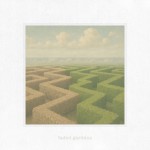
Artist: Gabriele Baldocci (@)
Title: Faded Gardens
Format: Download Only (MP3 + Lossless)
Label: MKMA Records
Rated:

Title: Faded Gardens
Format: Download Only (MP3 + Lossless)
Label: MKMA Records
Rated:
Some albums try to impress you with scale: orchestras swelling like cinematic weather systems, electronics buzzing like overcaffeinated insects. Then someone sits down at a piano and plays a handful of notes that sound suspiciously like a memory. Irritatingly effective, that trick.
With "Faded Gardens", Gabriele Baldocci chooses the minimalist weapon of recollection. No grand architectural concept, no conceptual manifesto disguised as liner notes. Just a cycle of intimate piano pieces orbiting childhood, illness, and the strange circularity of becoming a parent. The whole thing unfolds like a set of photographs left too long in sunlight: the colors fade, but the emotional outlines sharpen.
Baldocci is not some dreamy amateur scribbling between concerts. The Livorno-born pianist built an international career interpreting canonical repertoire before turning increasingly toward composition. Critics have long praised his formidable technique and interpretative intelligence, and his résumé reads like a polite brag list: collaborations with musicians such as Martha Argerich, recordings ranging from Chopin to Liszt’s transcriptions of Beethoven symphonies, and even a playful detour where Queen songs were reimagined as if Liszt himself had written them. The man clearly enjoys walking between worlds: classical orthodoxy, improvisation, and a more cinematic neoclassical language.
"Faded Gardens" sits squarely in that latter territory. The piano remains the central voice, but it behaves less like a virtuoso instrument and more like a narrator whispering slightly unreliable memories.
The emotional core of the album lies in what Baldocci calls the “Trilogy of Becoming”: “Verde Luce”, “Silent Watch”, and “Asa Nisi Masa”. These pieces revisit his childhood hospitalization after an autoimmune diagnosis that kept him isolated for long periods.
“Verde Luce” hovers in a suspended harmonic space, its quiet repetitions recalling the hypnotic cruelty of hospital nights. The green emergency light above the door becomes a strange guardian star, blinking over a child who cannot sleep. “Silent Watch” shifts the perspective: the music becomes steadier, almost maternal, reflecting the silent presence of a mother sitting beside the bed, helpless but vigilant. By the time “Asa Nisi Masa” arrives, the emotional register deepens. The title nods toward the word "anima", the soul. The piece moves carefully, as if each note must check whether the ground beneath it still exists.
Yet the album is not an exercise in tasteful melancholy. That would be far too predictable. Childhood is rarely one thing at a time, and Baldocci understands this.
“Ashen Firefly” is a small miracle of narrative imagination: a bedtime scene where the glow of a father’s cigarette becomes a tiny fairy dancing in the dark. You can almost hear the flicker. “Origami” unfolds and refolds its musical ideas with delicate symmetry, while “Paper Wings” carries the quiet optimism of every child who believes gravity is merely a suggestion.
Then there is “At the Playground”, written with Martha Argerich in mind. It’s brief, playful, and slightly mischievous, like a memory of running through a park while the ghosts of Chopin and Schumann hover somewhere in the background, mildly amused.
“Night Whispers”, dedicated to Baldocci’s son Alessandro, forms the emotional hinge of the album. Here the perspective flips. The once-isolated child is now a father listening to the strange philosophical confessions children make just before sleep. Anyone who has ever heard a five-year-old ask a question about the universe at 10:37 p.m. will recognize the mood.
The closing stretch, particularly “The Inner Field” and the title track, settles into something quieter and more reflective. Not resolution exactly. More like acceptance that memory does not behave linearly. Childhood and adulthood become two ends of the same thread.
Technically, Baldocci avoids the grand gestures one might expect from a pianist with his background. The writing favors clarity, simple motifs, and emotional pacing over virtuoso fireworks. Occasionally the harmonic language leans toward the cinematic neoclassical idiom that currently fills streaming playlists everywhere. That aesthetic can sometimes feel overly polished in lesser hands. Here it works because the emotional narrative underneath is too specific to be generic.
The result is a record that behaves less like a recital and more like a private diary written in sound. A fragile one.
Which brings us back to the title. "Faded Gardens" is not about nostalgia in the sugary sense. It is about the strange archaeology of memory. Gardens grow, wither, and grow again. Children become parents. Illness becomes story. Music becomes the thread stitching the fragments together.
Not a bad job for eighty-eight keys and a human being stubborn enough to keep turning memory into sound before it disappears.
Comments
Stream
Browse by Genre
Industrial Music / Industrial Metal / Aggro Industrial / Electro Metal
Industrial Noise / Power Noise / Harsh Noise
Synth Pop / Electro Pop / Synth-Electronica
Techno / Trance / Goa / Drum'n'Bass / Jungle / Tribal / Trip-Hop
Ambient / Electronica / Ethereal / Dub / Soundscapes / Abstract
Experimental / Avantgarde / Weird & Wired / Glitch / Noise / Field Recording
Dark / Gothic / Wave / New Wave / Dark Wave / Industrial Gothic
New Music / Downtown / Avantgarde Jazz / New Classical / World