
Łubin: Cargo
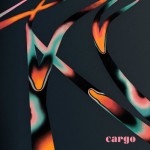


There’s something oddly reassuring about trains. Not the delays, obviously, or the existential dread of platform announcements, but the rhythm: that stubborn, repetitive insistence that something is moving forward, whether you understand the destination or not. Lubin builds "Cargo" entirely inside that logic, and then quietly dismantles it.
This third album is less about trains as objects and more about trains as systems of thought. Over nearly a year of field recordings and compositional work, Lubin reduces railway sound to its skeletal essence: pulses, friction, metallic breath. What remains is not documentary in the traditional sense, but something closer to an internalized infrastructure. The railway stops being a place and becomes a condition.
The track titles - "201 E", "ST 44", "TEM 2" - read like technical labels, almost bureaucratic in their precision. And yet the music they contain is anything but rigid. Beneath the mechanical naming lies a fluid, unstable sound world where glitchy electronics dissolve into field recordings and back again. It’s as if the machines themselves were trying to remember how they sound.
Opening pieces establish the central grammar: repetition as propulsion, texture as narrative. The rhythmic patterns mimic the cadence of wheels on tracks, but never settle into something comfortably loopable. There’s always a slight misalignment, a micro-hesitation that keeps the listener alert. You’re not riding the train. You’re listening from inside its nervous system.
What’s interesting is how "Cargo" avoids the obvious romanticism of travel. No sweeping vistas, no sentimental departures. Movement here is stripped of spectacle. It becomes cyclical, almost claustrophobic. The sense of journey is present, but without arrival. A loop rather than a line.
At times, the album drifts into something resembling a dream of industry: blurred edges, softened impacts, a kind of low-resolution memory of machinery. The glitch elements don’t disrupt so much as corrode, gently destabilizing the rhythmic grid. It’s minimalism, but with a faint anxiety running underneath, like a system that knows it might fail but keeps running anyway.
There’s a quiet intelligence in how Lubin handles time. Tracks stretch without feeling long, compress without feeling abrupt. The longest piece, "Newag 15D", unfolds like a slow recalibration of perception. By the end, rhythm no longer feels like something external. It has migrated inward, syncing with the body in a way that is slightly unsettling if you think about it too much.
If there’s humor here, it’s buried deep. The idea of turning freight trains into introspective, almost meditative compositions carries a certain dry absurdity. Industrial logistics reimagined as emotional cartography. Somewhere, a cargo manifest is being read as poetry.
What "Cargo" ultimately suggests is that infrastructure is never just functional. It accumulates memory, symbolism, even a kind of unconscious meaning. By focusing so closely on the sonic residue of railways, Lubin exposes the thin line between movement and stasis, between system and experience.
It’s not a journey in the traditional sense. More like being gently locked inside a moving mechanism and realizing, after a while, that you’ve started to breathe with it.
This third album is less about trains as objects and more about trains as systems of thought. Over nearly a year of field recordings and compositional work, Lubin reduces railway sound to its skeletal essence: pulses, friction, metallic breath. What remains is not documentary in the traditional sense, but something closer to an internalized infrastructure. The railway stops being a place and becomes a condition.
The track titles - "201 E", "ST 44", "TEM 2" - read like technical labels, almost bureaucratic in their precision. And yet the music they contain is anything but rigid. Beneath the mechanical naming lies a fluid, unstable sound world where glitchy electronics dissolve into field recordings and back again. It’s as if the machines themselves were trying to remember how they sound.
Opening pieces establish the central grammar: repetition as propulsion, texture as narrative. The rhythmic patterns mimic the cadence of wheels on tracks, but never settle into something comfortably loopable. There’s always a slight misalignment, a micro-hesitation that keeps the listener alert. You’re not riding the train. You’re listening from inside its nervous system.
What’s interesting is how "Cargo" avoids the obvious romanticism of travel. No sweeping vistas, no sentimental departures. Movement here is stripped of spectacle. It becomes cyclical, almost claustrophobic. The sense of journey is present, but without arrival. A loop rather than a line.
At times, the album drifts into something resembling a dream of industry: blurred edges, softened impacts, a kind of low-resolution memory of machinery. The glitch elements don’t disrupt so much as corrode, gently destabilizing the rhythmic grid. It’s minimalism, but with a faint anxiety running underneath, like a system that knows it might fail but keeps running anyway.
There’s a quiet intelligence in how Lubin handles time. Tracks stretch without feeling long, compress without feeling abrupt. The longest piece, "Newag 15D", unfolds like a slow recalibration of perception. By the end, rhythm no longer feels like something external. It has migrated inward, syncing with the body in a way that is slightly unsettling if you think about it too much.
If there’s humor here, it’s buried deep. The idea of turning freight trains into introspective, almost meditative compositions carries a certain dry absurdity. Industrial logistics reimagined as emotional cartography. Somewhere, a cargo manifest is being read as poetry.
What "Cargo" ultimately suggests is that infrastructure is never just functional. It accumulates memory, symbolism, even a kind of unconscious meaning. By focusing so closely on the sonic residue of railways, Lubin exposes the thin line between movement and stasis, between system and experience.
It’s not a journey in the traditional sense. More like being gently locked inside a moving mechanism and realizing, after a while, that you’ve started to breathe with it.
Comments
Stream
Browse by Genre
Industrial Music / Industrial Metal / Aggro Industrial / Electro Metal
Industrial Noise / Power Noise / Harsh Noise
Synth Pop / Electro Pop / Synth-Electronica
Techno / Trance / Goa / Drum'n'Bass / Jungle / Tribal / Trip-Hop
Ambient / Electronica / Ethereal / Dub / Soundscapes / Abstract
Experimental / Avantgarde / Weird & Wired / Glitch / Noise / Field Recording
Dark / Gothic / Wave / New Wave / Dark Wave / Industrial Gothic
New Music / Downtown / Avantgarde Jazz / New Classical / World