
bohbi: Factory Dimensia
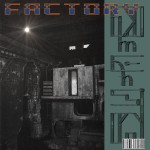
Artist: bohbi (http://antonzim.com/) (@)
Title: Factory Dimensia
Format: CD + Download
Label: Umland Records (@)
Rated:

Title: Factory Dimensia
Format: CD + Download
Label: Umland Records (@)
Rated:
Some records try to be coherent. Others prefer to be honest about the fact that coherence is mostly a social construct we cling to so we don’t spiral mid-commute. "Factory Dimensia", by Anton Zimmermann under his alias bohbi, belongs firmly to the second category.
Zimmermann - drummer, producer, and apparently someone with a high tolerance for internal noise - builds this album like a system under stress. Industrial grit, punk abrasion, and jazz elasticity are thrown together not to fuse cleanly, but to rub against each other until something sparks. The result is a sound that feels less composed than provoked.
From the opening "What Am I Doing This For?" (a title that doubles as a reasonable question for both artist and listener), the album establishes its central tension: propulsion versus collapse. Drums don’t just keep time, they interrogate it. Rhythms lurch, accelerate, fragment. You get the sense that structure is being tested rather than trusted.
What keeps "Factory Dimensia" from dissolving into pure chaos is its strange relationship with melody. Even at its most abrasive, there are fragments of something almost tender hiding underneath. A piano line here, a Rhodes shimmer there, a sax phrase that briefly suggests order before being swallowed again. It’s as if the album can’t decide whether it wants to confront you or confess something.
The ensemble plays a crucial role in maintaining this instability. The presence of players like Jan Klare - switching between sax, clarinet, flute, and EWI - adds a kind of shape-shifting quality, where timbre itself becomes unreliable. One moment you’re in something resembling a free jazz environment, the next you’re knee-deep in a distorted, almost industrial groove that feels like it escaped from a malfunctioning factory floor.
Tracks like "Confusion Or Illusion? (In A Memory)" flirt with introspection, though never long enough to become comfortable. Meanwhile, "24/7 Grind" does exactly what the title promises: it hammers away with a persistence that feels both energizing and faintly exhausting, like productivity culture turned into sound.
There’s also a willingness to embrace cliché - intentionally, almost defiantly. Romantic gestures appear, then get undercut. Kitsch surfaces, then mutates. Instead of avoiding these elements, Zimmermann uses them as raw material, bending them until they lose their original function. It’s a risky move, but here it mostly works, precisely because nothing is allowed to settle.
The dystopian undertone is hard to miss. Not the cinematic, apocalyptic kind, but something more banal and therefore more unsettling: the sense of being trapped in repetitive systems, of noise becoming background until it suddenly isn’t. "Factory Dimensia" mirrors that condition, shifting between immersion and overload, clarity and distortion.
And yet, for all its rough edges, there’s a peculiar warmth running through the album. Not comfort, exactly, but a kind of stubborn humanity. The mess feels lived-in. The contradictions feel intentional, or at least accepted.
In the end, "Factory Dimensia" doesn’t resolve its tensions. It amplifies them, loops them, occasionally dances on them. It’s less a finished object than a process caught in motion, still negotiating with itself.
Not the easiest listen. But then again, neither is thinking too much about why you’re doing any of this in the first place.
Zimmermann - drummer, producer, and apparently someone with a high tolerance for internal noise - builds this album like a system under stress. Industrial grit, punk abrasion, and jazz elasticity are thrown together not to fuse cleanly, but to rub against each other until something sparks. The result is a sound that feels less composed than provoked.
From the opening "What Am I Doing This For?" (a title that doubles as a reasonable question for both artist and listener), the album establishes its central tension: propulsion versus collapse. Drums don’t just keep time, they interrogate it. Rhythms lurch, accelerate, fragment. You get the sense that structure is being tested rather than trusted.
What keeps "Factory Dimensia" from dissolving into pure chaos is its strange relationship with melody. Even at its most abrasive, there are fragments of something almost tender hiding underneath. A piano line here, a Rhodes shimmer there, a sax phrase that briefly suggests order before being swallowed again. It’s as if the album can’t decide whether it wants to confront you or confess something.
The ensemble plays a crucial role in maintaining this instability. The presence of players like Jan Klare - switching between sax, clarinet, flute, and EWI - adds a kind of shape-shifting quality, where timbre itself becomes unreliable. One moment you’re in something resembling a free jazz environment, the next you’re knee-deep in a distorted, almost industrial groove that feels like it escaped from a malfunctioning factory floor.
Tracks like "Confusion Or Illusion? (In A Memory)" flirt with introspection, though never long enough to become comfortable. Meanwhile, "24/7 Grind" does exactly what the title promises: it hammers away with a persistence that feels both energizing and faintly exhausting, like productivity culture turned into sound.
There’s also a willingness to embrace cliché - intentionally, almost defiantly. Romantic gestures appear, then get undercut. Kitsch surfaces, then mutates. Instead of avoiding these elements, Zimmermann uses them as raw material, bending them until they lose their original function. It’s a risky move, but here it mostly works, precisely because nothing is allowed to settle.
The dystopian undertone is hard to miss. Not the cinematic, apocalyptic kind, but something more banal and therefore more unsettling: the sense of being trapped in repetitive systems, of noise becoming background until it suddenly isn’t. "Factory Dimensia" mirrors that condition, shifting between immersion and overload, clarity and distortion.
And yet, for all its rough edges, there’s a peculiar warmth running through the album. Not comfort, exactly, but a kind of stubborn humanity. The mess feels lived-in. The contradictions feel intentional, or at least accepted.
In the end, "Factory Dimensia" doesn’t resolve its tensions. It amplifies them, loops them, occasionally dances on them. It’s less a finished object than a process caught in motion, still negotiating with itself.
Not the easiest listen. But then again, neither is thinking too much about why you’re doing any of this in the first place.
Comments
Stream
Browse by Genre
Industrial Music / Industrial Metal / Aggro Industrial / Electro Metal
Industrial Noise / Power Noise / Harsh Noise
Synth Pop / Electro Pop / Synth-Electronica
Techno / Trance / Goa / Drum'n'Bass / Jungle / Tribal / Trip-Hop
Ambient / Electronica / Ethereal / Dub / Soundscapes / Abstract
Experimental / Avantgarde / Weird & Wired / Glitch / Noise / Field Recording
Dark / Gothic / Wave / New Wave / Dark Wave / Industrial Gothic
New Music / Downtown / Avantgarde Jazz / New Classical / World