
Friday, October 23, 2026
Bad Groupy & Pink Twins: Hallitusvastane Puhastus
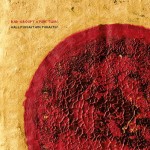
Artist: Bad Groupy & Pink Twins (@)
Title: Hallitusvastane Puhastus
Format: CD + Download
Label: I Shall Sing Until My Land Is Free (@)
Rated:

Title: Hallitusvastane Puhastus
Format: CD + Download
Label: I Shall Sing Until My Land Is Free (@)
Rated:
Some records arrive with a concept. Others arrive like a dent in the wall and dare you to explain how it got there. "Hallitusvastane Puhastus" - the meeting point between Bad Groupy and Pink Twins - belongs firmly to the second category. A single 37-minute piece, recorded until the computer gave up, which is either a romantic anecdote or a subtle warning.
The title alone does half the work: anti-government activity in Finnish, bathroom mold cleaner in Estonian. It’s difficult to decide whether this is conceptual brilliance or a perfectly calibrated joke at the listener’s expense. Either way, it sets the tone. Expect ambiguity. Expect friction. Expect to question your life choices somewhere around minute twelve.
The four minds involved - Kris Kuldkepp, Jeff Surak, Juha VehvilÄinen and Vesa VehvilÄinen - approach sound not as composition but as accumulation. Synthesizers, tapes, pedals, field recordings, and whatever else happened to be within arm’s reach are fed into a process that feels less like collaboration and more like a controlled landslide.
The result is a monolith, but not a static one. It shifts, corrodes, regenerates. Early on, there’s a sense of spatial exploration: fragments flicker in and out, textures scrape against each other, as if the piece is testing its own boundaries. Then, gradually, density takes over. Layers stack, distort, and begin to obscure their own origins. You stop identifying sources and start perceiving mass.
There’s a peculiar psychedelic quality here, though not the comforting, kaleidoscopic kind. This is closer to sensory overload filtered through industrial fatigue. At times, it hints at rhythm, then immediately undermines it. At others, it flirts with drone, only to inject enough instability to prevent any meditative drift. If this is “rock ’n’ roll”, it’s been dismantled, catalogued, and reassembled without instructions.
What makes the piece unexpectedly compelling is its refusal to resolve into a single identity. It doesn’t settle into noise, though it frequently approaches it. It doesn’t commit to structure, though patterns occasionally emerge like temporary scaffolding. The question “is it art or noise?” lingers, but the record seems largely indifferent to the outcome. It exists regardless, which is both admirable and mildly irritating.
There’s also a quiet sense of humor embedded in the excess. Playing until the recording system crashes is the kind of gesture that flirts with cliché in experimental circles, yet here it feels oddly appropriate. The music carries that same threshold energy, as if constantly approaching its own limit without quite collapsing.
Released by I Shall Sing Until My Land Is Free, a label whose name already suggests a certain ideological stubbornness, "Hallitusvastane Puhastus" fits neatly into a lineage of works that treat sound as both material and provocation. It doesn’t guide, it confronts. Not aggressively, but persistently.
For the sake of clarity, this review remains strictly focused on the artistic content of the release and does not endorse or oppose any political stance or campaign associated with the label.
Listening to it is less like following a narrative and more like inhabiting a space that keeps rearranging itself while you’re inside. Doors appear, disappear, lead nowhere. Eventually, you stop looking for an exit and start paying attention to the walls.
Whether it’s a tool for dismantling systems or cleaning imaginary mold is, ultimately, beside the point. It does something more basic and more inconvenient: it forces you to confront how much meaning you expect from sound - and how uneasy it feels when that expectation isn’t met.
The title alone does half the work: anti-government activity in Finnish, bathroom mold cleaner in Estonian. It’s difficult to decide whether this is conceptual brilliance or a perfectly calibrated joke at the listener’s expense. Either way, it sets the tone. Expect ambiguity. Expect friction. Expect to question your life choices somewhere around minute twelve.
The four minds involved - Kris Kuldkepp, Jeff Surak, Juha VehvilÄinen and Vesa VehvilÄinen - approach sound not as composition but as accumulation. Synthesizers, tapes, pedals, field recordings, and whatever else happened to be within arm’s reach are fed into a process that feels less like collaboration and more like a controlled landslide.
The result is a monolith, but not a static one. It shifts, corrodes, regenerates. Early on, there’s a sense of spatial exploration: fragments flicker in and out, textures scrape against each other, as if the piece is testing its own boundaries. Then, gradually, density takes over. Layers stack, distort, and begin to obscure their own origins. You stop identifying sources and start perceiving mass.
There’s a peculiar psychedelic quality here, though not the comforting, kaleidoscopic kind. This is closer to sensory overload filtered through industrial fatigue. At times, it hints at rhythm, then immediately undermines it. At others, it flirts with drone, only to inject enough instability to prevent any meditative drift. If this is “rock ’n’ roll”, it’s been dismantled, catalogued, and reassembled without instructions.
What makes the piece unexpectedly compelling is its refusal to resolve into a single identity. It doesn’t settle into noise, though it frequently approaches it. It doesn’t commit to structure, though patterns occasionally emerge like temporary scaffolding. The question “is it art or noise?” lingers, but the record seems largely indifferent to the outcome. It exists regardless, which is both admirable and mildly irritating.
There’s also a quiet sense of humor embedded in the excess. Playing until the recording system crashes is the kind of gesture that flirts with cliché in experimental circles, yet here it feels oddly appropriate. The music carries that same threshold energy, as if constantly approaching its own limit without quite collapsing.
Released by I Shall Sing Until My Land Is Free, a label whose name already suggests a certain ideological stubbornness, "Hallitusvastane Puhastus" fits neatly into a lineage of works that treat sound as both material and provocation. It doesn’t guide, it confronts. Not aggressively, but persistently.
For the sake of clarity, this review remains strictly focused on the artistic content of the release and does not endorse or oppose any political stance or campaign associated with the label.
Listening to it is less like following a narrative and more like inhabiting a space that keeps rearranging itself while you’re inside. Doors appear, disappear, lead nowhere. Eventually, you stop looking for an exit and start paying attention to the walls.
Whether it’s a tool for dismantling systems or cleaning imaginary mold is, ultimately, beside the point. It does something more basic and more inconvenient: it forces you to confront how much meaning you expect from sound - and how uneasy it feels when that expectation isn’t met.
Comments
Stream
Browse by Genre
Industrial Music / Industrial Metal / Aggro Industrial / Electro Metal
Industrial Noise / Power Noise / Harsh Noise
Synth Pop / Electro Pop / Synth-Electronica
Techno / Trance / Goa / Drum'n'Bass / Jungle / Tribal / Trip-Hop
Ambient / Electronica / Ethereal / Dub / Soundscapes / Abstract
Experimental / Avantgarde / Weird & Wired / Glitch / Noise / Field Recording
Dark / Gothic / Wave / New Wave / Dark Wave / Industrial Gothic
New Music / Downtown / Avantgarde Jazz / New Classical / World