
Austin Williamson + Blanket Swimming: Horizons
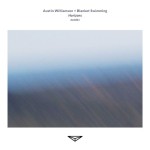
Artist: Austin Williamson + Blanket Swimming
Title: Horizons
Format: Download Only (MP3 + Lossless)
Label: Dragon's Eye Recordings (@)
Rated:

Title: Horizons
Format: Download Only (MP3 + Lossless)
Label: Dragon's Eye Recordings (@)
Rated:
There’s a long tradition of artists “returning to nature”, usually by recording it, processing it, and quietly rebranding it as something more profound than wind doing its job. "Horizons", the collaboration between Austin Williamson and Thea Maloney, risks falling into that well-worn gesture. Then it does something more interesting: it lets the environment push back.
The record begins with coordinates - “39°02'38.7"N 95°12’21.5"W” - which sounds clinical until you realize it’s a way of refusing metaphor. This is not “a prairie”. This is "that" prairie: Rockefeller Prairie, Kansas. You don’t get pastoral nostalgia here. You get grass, wind, friction, distance. The field recordings aren’t decorative; they’re stubbornly literal.
What follows is less a transformation than a negotiation. Williamson’s background in programming and improvisation meets Maloney’s (under the Blanket Swimming moniker) interest in affective and spiritual landscapes, and neither fully yields. Synth lines stretch across the surface like tentative hypotheses, processed guitar tones hover without committing to melody, and beneath it all the field recordings continue their indifferent activity. Birds don’t care about your compositional arc. The album wisely doesn’t try to convince them otherwise.
“Viewing Ourselves As Strangers”, the central and longest piece, unfolds with a patience that borders on confrontational. Layers accumulate, but not in a way that suggests progress. Instead, they thicken the air. Listening becomes less about following a trajectory and more about adjusting your sensitivity, like your ears are being recalibrated in real time. There’s a subtle tension here between immersion and distance, as if the music is inviting you in while simultaneously reminding you that you don’t belong.
“Temporary Utopias” hints at structure, almost offering a shape you could hold onto, then quietly dissolves it. The title feels less aspirational than diagnostic. Any sense of coherence is provisional, contingent on how long you’re willing to stay with it before your attention fractures.
By the time the closing track “Horizons” arrives, the album has settled into a kind of expanded stillness. Not silence, not quite. More like a field of low-level activity where everything is in motion but nothing demands focus. It’s here that the collaboration feels most resolved, not because it reaches a conclusion, but because it stops pretending one is necessary.
Maloney’s broader practice - spanning sound, photography, and intermedia work - leaks into the music in subtle ways. There’s a visual sensibility at play, a sense of framing and depth that makes the listening experience feel spatial rather than purely sonic. Williamson, meanwhile, maintains a compositional restraint that prevents the material from drifting into pure abstraction. Together, they create something that feels less like a statement and more like a condition.
Released by Dragon's Eye Recordings, a label well-versed in these liminal territories, "Horizons" sits comfortably within a lineage of works that treat environment as collaborator rather than subject. But it avoids the more predictable traps of the genre. It doesn’t romanticize. It doesn’t explain. It doesn’t resolve.
It just stays there, wide and patient, while you decide how much of yourself you’re willing to leave in it.
The record begins with coordinates - “39°02'38.7"N 95°12’21.5"W” - which sounds clinical until you realize it’s a way of refusing metaphor. This is not “a prairie”. This is "that" prairie: Rockefeller Prairie, Kansas. You don’t get pastoral nostalgia here. You get grass, wind, friction, distance. The field recordings aren’t decorative; they’re stubbornly literal.
What follows is less a transformation than a negotiation. Williamson’s background in programming and improvisation meets Maloney’s (under the Blanket Swimming moniker) interest in affective and spiritual landscapes, and neither fully yields. Synth lines stretch across the surface like tentative hypotheses, processed guitar tones hover without committing to melody, and beneath it all the field recordings continue their indifferent activity. Birds don’t care about your compositional arc. The album wisely doesn’t try to convince them otherwise.
“Viewing Ourselves As Strangers”, the central and longest piece, unfolds with a patience that borders on confrontational. Layers accumulate, but not in a way that suggests progress. Instead, they thicken the air. Listening becomes less about following a trajectory and more about adjusting your sensitivity, like your ears are being recalibrated in real time. There’s a subtle tension here between immersion and distance, as if the music is inviting you in while simultaneously reminding you that you don’t belong.
“Temporary Utopias” hints at structure, almost offering a shape you could hold onto, then quietly dissolves it. The title feels less aspirational than diagnostic. Any sense of coherence is provisional, contingent on how long you’re willing to stay with it before your attention fractures.
By the time the closing track “Horizons” arrives, the album has settled into a kind of expanded stillness. Not silence, not quite. More like a field of low-level activity where everything is in motion but nothing demands focus. It’s here that the collaboration feels most resolved, not because it reaches a conclusion, but because it stops pretending one is necessary.
Maloney’s broader practice - spanning sound, photography, and intermedia work - leaks into the music in subtle ways. There’s a visual sensibility at play, a sense of framing and depth that makes the listening experience feel spatial rather than purely sonic. Williamson, meanwhile, maintains a compositional restraint that prevents the material from drifting into pure abstraction. Together, they create something that feels less like a statement and more like a condition.
Released by Dragon's Eye Recordings, a label well-versed in these liminal territories, "Horizons" sits comfortably within a lineage of works that treat environment as collaborator rather than subject. But it avoids the more predictable traps of the genre. It doesn’t romanticize. It doesn’t explain. It doesn’t resolve.
It just stays there, wide and patient, while you decide how much of yourself you’re willing to leave in it.
Comments
Stream
Browse by Genre
Industrial Music / Industrial Metal / Aggro Industrial / Electro Metal
Industrial Noise / Power Noise / Harsh Noise
Synth Pop / Electro Pop / Synth-Electronica
Techno / Trance / Goa / Drum'n'Bass / Jungle / Tribal / Trip-Hop
Ambient / Electronica / Ethereal / Dub / Soundscapes / Abstract
Experimental / Avantgarde / Weird & Wired / Glitch / Noise / Field Recording
Dark / Gothic / Wave / New Wave / Dark Wave / Industrial Gothic
New Music / Downtown / Avantgarde Jazz / New Classical / World