
Sunday, October 18, 2026
JL Siegel: Fog
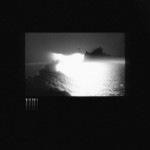


There’s a certain type of record that doesn’t really begin so much as it condenses around you, like weather you failed to notice forming. "Fog" by JL Segel belongs to that category. It doesn’t announce itself. It accumulates.
Behind the alias is Rotem Haguel, a London-based composer who seems to have taken the long route into sound: academic research, modular systems, a slow drift away from anything resembling immediacy. You can hear that patience everywhere. This is not music that wants to impress you. It wants to outlast your attention span and then quietly reshape it.
The four tracks behave less like discrete pieces and more like phases of a single condition. "Grey Into Grey" opens with that familiar ambient trick of pretending nothing is happening while, in fact, everything is already in motion. A fragile ostinato circles like a thought you can’t quite finish, while reverb stretches time into something slightly unreliable. It’s not dramatic, but it is quietly disorienting, like walking into a room and forgetting why you’re there.
"Salt Sting" deepens the atmosphere, thickening the air with a low-end presence that feels less like a drone and more like pressure. The sound design becomes denser, more granular, as if the fog has acquired texture. There’s a faint sense of menace, though not the cinematic kind. More like the suspicion that something is shifting just outside your perceptual range.
Then comes "Icy Shards", which finally breaks the surface tension. Rapid arpeggios cut through the previous murk, not as release but as escalation. It’s the most overtly active moment on the record, but even here, Segel avoids anything resembling catharsis. The movement feels compelled rather than liberated, as if the system itself has accelerated beyond comfort. It’s bright, but it’s a cold brightness, the kind that makes you squint.
By the time "Guiding Still" arrives, you might expect resolution. What you get instead is something softer, more tentative. The piece unfolds with a kind of cautious warmth, as if testing whether stability is even possible. The transitions are subtle, almost polite, and the closing gestures feel deliberately understated. No grand finale, no emotional payoff neatly tied with a bow. Just a suggestion that the fog has thinned enough for orientation to become conceivable.
What makes "Fog" quietly compelling is its restraint. Segel works within a limited palette, but he extracts surprising nuance from it. The modular synthesis isn’t used to show off complexity, but to explore gradations of presence and absence. Sounds emerge, blur, recede. Structures form, then dissolve before they can fully assert themselves. It’s less about composition in the traditional sense and more about managing thresholds: when something becomes audible, when it becomes meaningful, when it slips away again.
There’s also a faint cinematic residue running through the EP, especially in "Guiding Still", but it never fully commits to narrative. If anything, it feels like the soundtrack to a film that refuses to reveal its plot. You’re left with atmosphere, implication, and the uneasy feeling that you’ve missed something important.
Humor, if it exists here, is of the driest possible kind. The record promises guidance but delivers ambiguity. It gestures toward resolution while carefully avoiding it. It’s almost as if Segel is politely reminding you that clarity is overrated, and that maybe the point is to sit inside the blur a little longer than you’d like.
In a landscape crowded with ambient releases that either dissolve into background noise or overcompensate with conceptual weight, "Fog" occupies an awkward, interesting middle ground. It asks for attention but doesn’t beg for it. It offers structure but keeps it just out of reach. It doesn’t try to be profound, which is probably why it occasionally is.
You won’t come out of it with answers. You might not even remember specific moments. But something in your sense of time will feel slightly altered, as if the edges have softened. Which, given the title, is either very intentional or a neat coincidence. Either way, it works.
Behind the alias is Rotem Haguel, a London-based composer who seems to have taken the long route into sound: academic research, modular systems, a slow drift away from anything resembling immediacy. You can hear that patience everywhere. This is not music that wants to impress you. It wants to outlast your attention span and then quietly reshape it.
The four tracks behave less like discrete pieces and more like phases of a single condition. "Grey Into Grey" opens with that familiar ambient trick of pretending nothing is happening while, in fact, everything is already in motion. A fragile ostinato circles like a thought you can’t quite finish, while reverb stretches time into something slightly unreliable. It’s not dramatic, but it is quietly disorienting, like walking into a room and forgetting why you’re there.
"Salt Sting" deepens the atmosphere, thickening the air with a low-end presence that feels less like a drone and more like pressure. The sound design becomes denser, more granular, as if the fog has acquired texture. There’s a faint sense of menace, though not the cinematic kind. More like the suspicion that something is shifting just outside your perceptual range.
Then comes "Icy Shards", which finally breaks the surface tension. Rapid arpeggios cut through the previous murk, not as release but as escalation. It’s the most overtly active moment on the record, but even here, Segel avoids anything resembling catharsis. The movement feels compelled rather than liberated, as if the system itself has accelerated beyond comfort. It’s bright, but it’s a cold brightness, the kind that makes you squint.
By the time "Guiding Still" arrives, you might expect resolution. What you get instead is something softer, more tentative. The piece unfolds with a kind of cautious warmth, as if testing whether stability is even possible. The transitions are subtle, almost polite, and the closing gestures feel deliberately understated. No grand finale, no emotional payoff neatly tied with a bow. Just a suggestion that the fog has thinned enough for orientation to become conceivable.
What makes "Fog" quietly compelling is its restraint. Segel works within a limited palette, but he extracts surprising nuance from it. The modular synthesis isn’t used to show off complexity, but to explore gradations of presence and absence. Sounds emerge, blur, recede. Structures form, then dissolve before they can fully assert themselves. It’s less about composition in the traditional sense and more about managing thresholds: when something becomes audible, when it becomes meaningful, when it slips away again.
There’s also a faint cinematic residue running through the EP, especially in "Guiding Still", but it never fully commits to narrative. If anything, it feels like the soundtrack to a film that refuses to reveal its plot. You’re left with atmosphere, implication, and the uneasy feeling that you’ve missed something important.
Humor, if it exists here, is of the driest possible kind. The record promises guidance but delivers ambiguity. It gestures toward resolution while carefully avoiding it. It’s almost as if Segel is politely reminding you that clarity is overrated, and that maybe the point is to sit inside the blur a little longer than you’d like.
In a landscape crowded with ambient releases that either dissolve into background noise or overcompensate with conceptual weight, "Fog" occupies an awkward, interesting middle ground. It asks for attention but doesn’t beg for it. It offers structure but keeps it just out of reach. It doesn’t try to be profound, which is probably why it occasionally is.
You won’t come out of it with answers. You might not even remember specific moments. But something in your sense of time will feel slightly altered, as if the edges have softened. Which, given the title, is either very intentional or a neat coincidence. Either way, it works.
Comments
Stream
Browse by Genre
Industrial Music / Industrial Metal / Aggro Industrial / Electro Metal
Industrial Noise / Power Noise / Harsh Noise
Synth Pop / Electro Pop / Synth-Electronica
Techno / Trance / Goa / Drum'n'Bass / Jungle / Tribal / Trip-Hop
Ambient / Electronica / Ethereal / Dub / Soundscapes / Abstract
Experimental / Avantgarde / Weird & Wired / Glitch / Noise / Field Recording
Dark / Gothic / Wave / New Wave / Dark Wave / Industrial Gothic
New Music / Downtown / Avantgarde Jazz / New Classical / World