
T.C.O. (aka Mirco Magnani): The Die (special Edition)
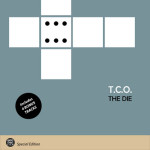
Artist: T.C.O. (aka Mirco Magnani)
Title: The Die (special Edition)
Format: Download Only (MP3 only)
Label: Undogmatisch (@)
Rated:

Title: The Die (special Edition)
Format: Download Only (MP3 only)
Label: Undogmatisch (@)
Rated:
Originally released in 2010 via The Centrifuge and now revived by Undogmatisch, "The Die" sits in that slightly awkward historical pocket where digital production had already matured, but hadn’t yet been flattened by algorithmic sameness. You can hear it immediately: the textures are precise but not over-polished, the structures deliberate but not overly optimized for attention spans that barely exist anymore.
Magnani’s approach to electronic composition here feels almost architectural. Tracks like “PAIR” and “TRILUX” are built from clean, interlocking elements that suggest order without ever settling into predictability. There’s a faint electro pulse running through the record, but it’s constantly being nudged off-center by small disruptions, tonal shifts, rhythmic hesitations. It’s as if the music is testing its own balance, just to prove it doesn’t depend on stability.
“TWO BEASTS” and “OXIGENS” lean into a more kinetic energy, but even at their most propulsive, they resist becoming functional in the usual dancefloor sense. This isn’t music that wants to serve a crowd. It’s more interested in constructing a space and then quietly observing how you move inside it. Not exactly generous, but certainly consistent.
What makes this reissue worth your already overburdened attention is not nostalgia, but perspective. The additional remixes - produced by Magnani himself between 2010 and 2011 - don’t feel like afterthoughts. They act more like parallel drafts, alternate angles on the same set of ideas. You hear a producer circling his own material, testing elasticity, seeing how far a structure can be stretched before it loses coherence. Sometimes it nearly does. That’s part of the appeal.
There’s also a certain restraint throughout the record that feels almost unfashionable now. No excessive layering, no desperate need to fill every frequency. Space is allowed to exist, which in 2026 feels borderline radical. The tracks breathe, pause, reconsider. They don’t rush toward a payoff, which might frustrate anyone expecting immediate gratification. That sounds like a them problem.
Magnani’s broader trajectory - spanning experimental electronics and a steady, somewhat understated presence in the underground - makes "The Die" read less like an isolated statement and more like a foundational document. You can trace later tendencies in minimal electro and abstract techno back to this kind of thinking, even if no one is eager to admit it. Influence is rarely credited where it should be. Convenient, that.
In the end, this special edition doesn’t try to modernize the album. It doesn’t need to. If anything, it highlights how little the core ideas have aged. Precision, tension, and a mild distrust of obvious resolution still hold up. Annoyingly well, in fact.
So here it is again: not louder, not bigger, just quietly insisting on its place. You can ignore it, like most things that don’t shout. It won’t take it personally.
Magnani’s approach to electronic composition here feels almost architectural. Tracks like “PAIR” and “TRILUX” are built from clean, interlocking elements that suggest order without ever settling into predictability. There’s a faint electro pulse running through the record, but it’s constantly being nudged off-center by small disruptions, tonal shifts, rhythmic hesitations. It’s as if the music is testing its own balance, just to prove it doesn’t depend on stability.
“TWO BEASTS” and “OXIGENS” lean into a more kinetic energy, but even at their most propulsive, they resist becoming functional in the usual dancefloor sense. This isn’t music that wants to serve a crowd. It’s more interested in constructing a space and then quietly observing how you move inside it. Not exactly generous, but certainly consistent.
What makes this reissue worth your already overburdened attention is not nostalgia, but perspective. The additional remixes - produced by Magnani himself between 2010 and 2011 - don’t feel like afterthoughts. They act more like parallel drafts, alternate angles on the same set of ideas. You hear a producer circling his own material, testing elasticity, seeing how far a structure can be stretched before it loses coherence. Sometimes it nearly does. That’s part of the appeal.
There’s also a certain restraint throughout the record that feels almost unfashionable now. No excessive layering, no desperate need to fill every frequency. Space is allowed to exist, which in 2026 feels borderline radical. The tracks breathe, pause, reconsider. They don’t rush toward a payoff, which might frustrate anyone expecting immediate gratification. That sounds like a them problem.
Magnani’s broader trajectory - spanning experimental electronics and a steady, somewhat understated presence in the underground - makes "The Die" read less like an isolated statement and more like a foundational document. You can trace later tendencies in minimal electro and abstract techno back to this kind of thinking, even if no one is eager to admit it. Influence is rarely credited where it should be. Convenient, that.
In the end, this special edition doesn’t try to modernize the album. It doesn’t need to. If anything, it highlights how little the core ideas have aged. Precision, tension, and a mild distrust of obvious resolution still hold up. Annoyingly well, in fact.
So here it is again: not louder, not bigger, just quietly insisting on its place. You can ignore it, like most things that don’t shout. It won’t take it personally.
Comments
Stream
Browse by Genre
Industrial Music / Industrial Metal / Aggro Industrial / Electro Metal
Industrial Noise / Power Noise / Harsh Noise
Synth Pop / Electro Pop / Synth-Electronica
Techno / Trance / Goa / Drum'n'Bass / Jungle / Tribal / Trip-Hop
Ambient / Electronica / Ethereal / Dub / Soundscapes / Abstract
Experimental / Avantgarde / Weird & Wired / Glitch / Noise / Field Recording
Dark / Gothic / Wave / New Wave / Dark Wave / Industrial Gothic
New Music / Downtown / Avantgarde Jazz / New Classical / World