
Wednesday, August 26, 2026
Personal System 個人システム: Transcoastal Night Drive
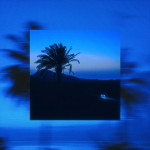
Artist: Personal System 個人システム
Title: Transcoastal Night Drive
Format: Tape + Download
Label: Constellation Tatsu (@)
Rated:

Title: Transcoastal Night Drive
Format: Tape + Download
Label: Constellation Tatsu (@)
Rated:
There is a very specific emotional territory occupied by nighttime driving music. Not “driving music” in the conventional sense, where advertisers imagine attractive people accelerating through mountain roads while emotionally supported by corporate indie rock. No, the real version: empty highways, sodium-vapor lights, distant radio static, the strange loneliness that arrives around 2 a.m. when gas stations begin resembling temporary shelters from existence itself. Transcoastal Night Drive understands that atmosphere with uncanny precision.
Released through Constellation Tatsu, the record by Personal System unfolds less like a conventional album and more like a drifting nocturnal transmission intercepted somewhere between memory and motion. Across seven concise tracks, it constructs an environment suspended between ambient music, vaporwave nostalgia, environmental sound design, and cinematic dream logic. The result feels oddly intimate despite its deliberate distance.
The opening “Last Gas Station Before the Horizon” immediately frames the experience with remarkable economy. Passing cars, distant gulls, low environmental hums: the scene is sketched rather than overstated. One can almost smell fluorescent-lit coffee and overheated asphalt. The concept of the album as an imagined radio broadcast drifting through the drive is especially effective because it transforms the listener into both traveler and receiver, moving physically through space while emotionally tuning into fragments of atmosphere.
This sense of transmission permeates the entire record. “Blurred Streetlights” glows softly with synth textures that feel less composed than remembered. The melodies remain understated, hovering at the edge of consciousness like thoughts that surface briefly before dissolving back into the night. Personal System understands that nostalgia functions most powerfully when incomplete. Too much detail kills the dream. Humanity continues trying to recreate the past in high-definition while memory itself survives primarily through distortion and emotional exaggeration.
Stylistically, the album occupies territory adjacent to vaporwave and late-night ambient traditions, yet it avoids many of the clichés that increasingly burden those genres. There is no ironic overdependence on retro signifiers, no exhausting avalanche of VHS aesthetics desperately trying to manufacture emotion through cultural shorthand. Instead, "Transcoastal Night Drive" approaches nostalgia more subtly, as atmospheric condition rather than aesthetic costume.
“In the Midnight Breeze” becomes one of the album’s emotional centerpieces. The track stretches into gentle rhythmic drift, balancing motion and stillness beautifully. Synth pads shimmer softly beneath understated melodic gestures while the arrangement maintains an almost tidal pacing. Listening feels less like following a composition than watching landscapes pass through a windshield without needing to name them.
“The Gentle Movement of Palm Leaves” introduces one of the album’s most evocative titles, and fortunately the music fulfills its promise. The track carries a humid softness, its textures swaying delicately without collapsing into decorative ambience. There is something deeply geographical about these compositions, though the locations remain intentionally vague. Coastal roads, fading motels, distant neon reflections: not real places exactly, but emotional cartographies assembled from collective memory and cinematic residue.
“Silver Moon ” perhaps best captures the album’s balancing act between serenity and melancholy. The melodies drift with quiet patience while subtle harmonic shifts introduce emotional ambiguity beneath the surface calm. One senses solitude throughout the record, but not despair. More the reflective loneliness of transit itself, that peculiar state where movement temporarily suspends ordinary identity. Long nighttime drives have always functioned as accidental philosophy sessions for exhausted humans trapped alone with their thoughts and overpriced gasoline.
The production deserves particular praise for its restraint. Personal System avoids over-layering or excessive polish, allowing the spaces between sounds to remain active. This openness gives the album its dreamlike permeability. Environmental textures and melodic fragments coexist naturally rather than competing for attention.
“Echoes Along the Coast” continues the slow drift inward, feeling almost like a memory of previous tracks rather than a distinct new statement. That circularity works beautifully within the album’s conceptual structure. Time behaves differently during long nocturnal travel. Minutes stretch, locations blur, songs repeat emotionally even when they technically change.
Then comes “Peaceful Blue”, the closing arrival at dawn. The track does not offer triumphant resolution or cinematic closure. Instead, it settles gently into stillness, capturing the fragile emotional neutrality of early morning after extended motion. The deep blue before sunrise has always carried a peculiar psychological quality: exhaustion mixed with possibility, melancholy softened by light beginning to return. The album ends not with answers, but with quiet continuation.
There are perhaps echoes here of artists associated with ambient drift and liminal electronic nostalgia, from Brian Eno to certain strands of late-night vaporwave and environmental electronic music, but "Transcoastal Night Drive" ultimately succeeds because it avoids becoming trapped inside genre self-awareness. It trusts atmosphere enough to let small gestures resonate fully.
Most importantly, the album understands that travel itself is rarely about destination. The emotional reality of driving through the night lies in suspension: between places, between memories, between versions of oneself. Personal System captures that beautifully across these modest but carefully shaped compositions.
A small record, then, but one capable of subtly altering the emotional temperature of a room. Or perhaps more accurately, of turning any room temporarily into the inside of a moving car somewhere beneath an endless coastal sky.
Released through Constellation Tatsu, the record by Personal System unfolds less like a conventional album and more like a drifting nocturnal transmission intercepted somewhere between memory and motion. Across seven concise tracks, it constructs an environment suspended between ambient music, vaporwave nostalgia, environmental sound design, and cinematic dream logic. The result feels oddly intimate despite its deliberate distance.
The opening “Last Gas Station Before the Horizon” immediately frames the experience with remarkable economy. Passing cars, distant gulls, low environmental hums: the scene is sketched rather than overstated. One can almost smell fluorescent-lit coffee and overheated asphalt. The concept of the album as an imagined radio broadcast drifting through the drive is especially effective because it transforms the listener into both traveler and receiver, moving physically through space while emotionally tuning into fragments of atmosphere.
This sense of transmission permeates the entire record. “Blurred Streetlights” glows softly with synth textures that feel less composed than remembered. The melodies remain understated, hovering at the edge of consciousness like thoughts that surface briefly before dissolving back into the night. Personal System understands that nostalgia functions most powerfully when incomplete. Too much detail kills the dream. Humanity continues trying to recreate the past in high-definition while memory itself survives primarily through distortion and emotional exaggeration.
Stylistically, the album occupies territory adjacent to vaporwave and late-night ambient traditions, yet it avoids many of the clichés that increasingly burden those genres. There is no ironic overdependence on retro signifiers, no exhausting avalanche of VHS aesthetics desperately trying to manufacture emotion through cultural shorthand. Instead, "Transcoastal Night Drive" approaches nostalgia more subtly, as atmospheric condition rather than aesthetic costume.
“In the Midnight Breeze” becomes one of the album’s emotional centerpieces. The track stretches into gentle rhythmic drift, balancing motion and stillness beautifully. Synth pads shimmer softly beneath understated melodic gestures while the arrangement maintains an almost tidal pacing. Listening feels less like following a composition than watching landscapes pass through a windshield without needing to name them.
“The Gentle Movement of Palm Leaves” introduces one of the album’s most evocative titles, and fortunately the music fulfills its promise. The track carries a humid softness, its textures swaying delicately without collapsing into decorative ambience. There is something deeply geographical about these compositions, though the locations remain intentionally vague. Coastal roads, fading motels, distant neon reflections: not real places exactly, but emotional cartographies assembled from collective memory and cinematic residue.
“Silver Moon ” perhaps best captures the album’s balancing act between serenity and melancholy. The melodies drift with quiet patience while subtle harmonic shifts introduce emotional ambiguity beneath the surface calm. One senses solitude throughout the record, but not despair. More the reflective loneliness of transit itself, that peculiar state where movement temporarily suspends ordinary identity. Long nighttime drives have always functioned as accidental philosophy sessions for exhausted humans trapped alone with their thoughts and overpriced gasoline.
The production deserves particular praise for its restraint. Personal System avoids over-layering or excessive polish, allowing the spaces between sounds to remain active. This openness gives the album its dreamlike permeability. Environmental textures and melodic fragments coexist naturally rather than competing for attention.
“Echoes Along the Coast” continues the slow drift inward, feeling almost like a memory of previous tracks rather than a distinct new statement. That circularity works beautifully within the album’s conceptual structure. Time behaves differently during long nocturnal travel. Minutes stretch, locations blur, songs repeat emotionally even when they technically change.
Then comes “Peaceful Blue”, the closing arrival at dawn. The track does not offer triumphant resolution or cinematic closure. Instead, it settles gently into stillness, capturing the fragile emotional neutrality of early morning after extended motion. The deep blue before sunrise has always carried a peculiar psychological quality: exhaustion mixed with possibility, melancholy softened by light beginning to return. The album ends not with answers, but with quiet continuation.
There are perhaps echoes here of artists associated with ambient drift and liminal electronic nostalgia, from Brian Eno to certain strands of late-night vaporwave and environmental electronic music, but "Transcoastal Night Drive" ultimately succeeds because it avoids becoming trapped inside genre self-awareness. It trusts atmosphere enough to let small gestures resonate fully.
Most importantly, the album understands that travel itself is rarely about destination. The emotional reality of driving through the night lies in suspension: between places, between memories, between versions of oneself. Personal System captures that beautifully across these modest but carefully shaped compositions.
A small record, then, but one capable of subtly altering the emotional temperature of a room. Or perhaps more accurately, of turning any room temporarily into the inside of a moving car somewhere beneath an endless coastal sky.
Comments
Stream
Browse by Genre
Industrial Music / Industrial Metal / Aggro Industrial / Electro Metal
Industrial Noise / Power Noise / Harsh Noise
Synth Pop / Electro Pop / Synth-Electronica
Techno / Trance / Goa / Drum'n'Bass / Jungle / Tribal / Trip-Hop
Ambient / Electronica / Ethereal / Dub / Soundscapes / Abstract
Experimental / Avantgarde / Weird & Wired / Glitch / Noise / Field Recording
Dark / Gothic / Wave / New Wave / Dark Wave / Industrial Gothic
New Music / Downtown / Avantgarde Jazz / New Classical / World