
Tuesday, September 1, 2026
Kit Grill: And?ya
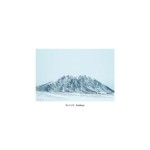


There is a peculiar category of ambient records that do not really describe a landscape. They attempt to become one. Most fail and end up sounding like expensive screensavers for people who own three different brands of herbal tea and use the word “curated” as a lifestyle philosophy. "Andøya" avoids that trap almost entirely.
On his latest release, Kit Grill retreats to the Norwegian Arctic island that gives the album its title and returns with something that feels less like a collection of compositions than a weather system documented from the inside. The London-based composer has spent years moving between ambient music, minimal electronics, post-punk textures and modern classical restraint, gradually refining a language obsessed with atmosphere and spatial perception. Here, that fascination reaches an almost geological scale.
The twelve pieces unfold like fragments of a diary written by someone whose main conversation partner for three weeks was wind. Not metaphorical wind. Actual wind. The kind that reminds humans they are basically anxious mammals wrapped in technical fabrics.
“Cottongrass” opens with luminous arpeggiations that seem suspended between dawn and memory. It carries a fragile glow, as if light itself were cautiously testing whether it should return. “Tundra” follows with distant resonances and submerged drones that suggest vast frozen surfaces stretching beyond the limits of perception. Grill demonstrates remarkable patience throughout the record. Nothing is rushed. Nothing seeks immediate gratification. The music understands something social media forgot years ago: attention can deepen instead of merely accelerating.
What makes "Andøya" particularly catchy is its refusal to romanticise isolation. Many contemporary ambient records treat solitude as a wellness product. Grill instead presents it as something stranger and more ambiguous. Tracks such as “Cold Blow” and “Desolation” carry genuine unease beneath their beauty. The drones feel immense rather than comforting, and the silence surrounding the sounds often seems more important than the sounds themselves. You are not being invited into nature. Nature is politely reminding you that it existed long before your passwords and subscription plans.
The shorter piano miniatures, “Ascending” and “First Light”, provide crucial moments of intimacy. Their simplicity recalls the delicate emotional economy of artists such as Ryuichi Sakamoto or the late Harold Budd, yet Grill never lapses into imitation. These pieces function like brief human footprints in an otherwise overwhelming terrain.
Elsewhere, “Voices” and “Metamorphosis” introduce spectral choral textures that hover between sacred architecture and environmental resonance. They evoke abandoned churches, distant radio signals, and the peculiar psychological state produced by extended exposure to snow-covered horizons. The Arctic becomes not merely a setting but an acoustic condition.
Part of the album’s success stems from Grill’s multidisciplinary sensibility. As both musician and visual artist, he has long demonstrated an ability to think spatially, treating sound almost as a physical material. His work on Primary Colours Records and his long-running presence on NTS Radio have consistently revealed an artist more interested in constructing environments than delivering songs.
The closing sequence of “Adrift”, “White Fields”, and “Last Light” is especially strong. Here the record achieves a rare balance between documentation and transformation. The music clearly originates from a specific place and experience, yet it gradually becomes something more universal: an exploration of scale, perception, memory, and the unsettling realization that true silence is never actually silent.
If there is a criticism to make, it is that "Andøya" occasionally risks becoming almost too successful at depicting emptiness. Certain passages drift so deeply into stasis that listeners seeking stronger narrative development may find themselves floating without coordinates. Then again, that may be exactly the point. The Arctic is not obligated to provide entertainment.
Ultimately, "Andøya" stands among Kit Grill’s most focused and affecting works. It captures the paradox of isolation with unusual precision: the further one moves away from people, the more sharply one encounters oneself. Across these glacial drones, distant echoes, and fragile melodic traces, Grill transforms a personal residency into a meditation on presence, scale, and vulnerability. The result is not simply ambient music. It is a record that listens back.
A cold, beautiful, occasionally intimidating companion for long nights, empty roads, and moments when the world feels both impossibly vast and strangely close. Much like the Arctic itself.
On his latest release, Kit Grill retreats to the Norwegian Arctic island that gives the album its title and returns with something that feels less like a collection of compositions than a weather system documented from the inside. The London-based composer has spent years moving between ambient music, minimal electronics, post-punk textures and modern classical restraint, gradually refining a language obsessed with atmosphere and spatial perception. Here, that fascination reaches an almost geological scale.
The twelve pieces unfold like fragments of a diary written by someone whose main conversation partner for three weeks was wind. Not metaphorical wind. Actual wind. The kind that reminds humans they are basically anxious mammals wrapped in technical fabrics.
“Cottongrass” opens with luminous arpeggiations that seem suspended between dawn and memory. It carries a fragile glow, as if light itself were cautiously testing whether it should return. “Tundra” follows with distant resonances and submerged drones that suggest vast frozen surfaces stretching beyond the limits of perception. Grill demonstrates remarkable patience throughout the record. Nothing is rushed. Nothing seeks immediate gratification. The music understands something social media forgot years ago: attention can deepen instead of merely accelerating.
What makes "Andøya" particularly catchy is its refusal to romanticise isolation. Many contemporary ambient records treat solitude as a wellness product. Grill instead presents it as something stranger and more ambiguous. Tracks such as “Cold Blow” and “Desolation” carry genuine unease beneath their beauty. The drones feel immense rather than comforting, and the silence surrounding the sounds often seems more important than the sounds themselves. You are not being invited into nature. Nature is politely reminding you that it existed long before your passwords and subscription plans.
The shorter piano miniatures, “Ascending” and “First Light”, provide crucial moments of intimacy. Their simplicity recalls the delicate emotional economy of artists such as Ryuichi Sakamoto or the late Harold Budd, yet Grill never lapses into imitation. These pieces function like brief human footprints in an otherwise overwhelming terrain.
Elsewhere, “Voices” and “Metamorphosis” introduce spectral choral textures that hover between sacred architecture and environmental resonance. They evoke abandoned churches, distant radio signals, and the peculiar psychological state produced by extended exposure to snow-covered horizons. The Arctic becomes not merely a setting but an acoustic condition.
Part of the album’s success stems from Grill’s multidisciplinary sensibility. As both musician and visual artist, he has long demonstrated an ability to think spatially, treating sound almost as a physical material. His work on Primary Colours Records and his long-running presence on NTS Radio have consistently revealed an artist more interested in constructing environments than delivering songs.
The closing sequence of “Adrift”, “White Fields”, and “Last Light” is especially strong. Here the record achieves a rare balance between documentation and transformation. The music clearly originates from a specific place and experience, yet it gradually becomes something more universal: an exploration of scale, perception, memory, and the unsettling realization that true silence is never actually silent.
If there is a criticism to make, it is that "Andøya" occasionally risks becoming almost too successful at depicting emptiness. Certain passages drift so deeply into stasis that listeners seeking stronger narrative development may find themselves floating without coordinates. Then again, that may be exactly the point. The Arctic is not obligated to provide entertainment.
Ultimately, "Andøya" stands among Kit Grill’s most focused and affecting works. It captures the paradox of isolation with unusual precision: the further one moves away from people, the more sharply one encounters oneself. Across these glacial drones, distant echoes, and fragile melodic traces, Grill transforms a personal residency into a meditation on presence, scale, and vulnerability. The result is not simply ambient music. It is a record that listens back.
A cold, beautiful, occasionally intimidating companion for long nights, empty roads, and moments when the world feels both impossibly vast and strangely close. Much like the Arctic itself.
Comments
Stream
Browse by Genre
Industrial Music / Industrial Metal / Aggro Industrial / Electro Metal
Industrial Noise / Power Noise / Harsh Noise
Synth Pop / Electro Pop / Synth-Electronica
Techno / Trance / Goa / Drum'n'Bass / Jungle / Tribal / Trip-Hop
Ambient / Electronica / Ethereal / Dub / Soundscapes / Abstract
Experimental / Avantgarde / Weird & Wired / Glitch / Noise / Field Recording
Dark / Gothic / Wave / New Wave / Dark Wave / Industrial Gothic
New Music / Downtown / Avantgarde Jazz / New Classical / World