
One Leg One Eye: ...And Take The Black Worm With Me
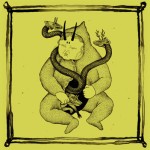
Artist: One Leg One Eye
Title: ...And Take The Black Worm With Me
Format: CD + Download
Label: Cold Spring (@)
Rated:
Title: ...And Take The Black Worm With Me
Format: CD + Download
Label: Cold Spring (@)
Rated:
Irish folk music has spent the last decade wandering into stranger territories, but few records sound as though they were unearthed from beneath the floorboards of an abandoned chapel during a thunderstorm. "...And Take The Black Worm With Me", the remarkable solo work of Ian Lynch under his One Leg One Eye moniker, feels less like an album than a prolonged séance conducted with rusted instruments, decaying memories, and whatever spirits still linger in Dublin's forgotten industrial spaces.
Lynch is already known as a founding member of Lankum, a band that helped drag traditional Irish music away from tourist-pub nostalgia and into darker, more unsettling territory. Yet even listeners familiar with Lankum’s fascination for drone, repetition, and sonic abrasion may find themselves startled by the singular bleakness of this work. Critics frequently highlighted its ability to merge traditional song forms with immense walls of drone and blackened atmospherics, creating something simultaneously ancient and disturbingly contemporary.
The album opens with "Glistening, She Emerges", and immediately any expectation of conventional folk music is buried beneath layers of hurdy-gurdy resonance, uilleann pipe overtones, tape manipulations, and subterranean frequencies. The effect resembles entering a cave where someone has been singing continuously for centuries. Not singing for entertainment, mind you. Singing because stopping would awaken something unpleasant.
What makes "...And Take The Black Worm With Me" so compelling is its refusal to separate beauty from dread. Lynch understands that many old folk songs were never particularly interested in comforting anyone. Death, exile, ghosts, poverty, madness: these themes were not aesthetic accessories but daily realities. Rather than modernising traditional music, Lynch strips it back to its psychological core. Songs such as "Bold And Undaunted Youth" and "I'd Rather Be Tending My Sheep" feel suspended outside linear time, their melodies emerging through thick layers of echo and distortion like messages transmitted from a collapsing century.
The production by John Murphy deserves particular mention. Every drone seems alive. Every harmonic interaction vibrates with microscopic movement. The shruti box, concertina, field recordings, and tape textures form a continuously shifting environment where no sound remains stable for long. Even silence feels occupied. One gets the impression that the room itself is listening.
There is also something deeply physical about the album. Much contemporary drone music often ends up resembling architectural renderings: impressive structures that leave little emotional residue. Lynch's work is different. The frequencies feel bodily. They press against the chest. They resonate in the stomach. They occasionally produce the sensation that the building around you has developed opinions.
The contributions from Laurie Sue Shanaman and Ruth Clinton deepen the record's spectral character. Clinton's organ work in particular introduces a liturgical dimension that never fully resolves into either sacred or profane territory. The music exists somewhere between church, ruin, and dream.
What is perhaps most impressive is how personal the album feels despite its monumental scale. The field recordings captured in abandoned spaces, including the warehouse where Lynch's father once worked, infuse the music with a sense of inherited memory. The album becomes a dialogue between family history, Irish folklore, urban decay, and spiritual excavation. Several reviews noted how these environments seep directly into the atmosphere of the record, making place itself feel like an active participant.
The newly expanded Cold Spring edition, which adds the exclusive "Sympathetic Invertebrate Ritual", only reinforces the album's strange coherence. The title alone sounds like an occult ceremony accidentally approved by a local council committee. Yet within the context of this record, it feels perfectly natural.
If much contemporary folk seeks authenticity through preservation, "...And Take The Black Worm With Me" seeks it through transformation. Lynch treats tradition not as a museum object but as a living, mutating organism capable of absorbing drone music, black metal aesthetics, environmental sound, and existential unease without losing its essential character.
The result is one of those rare albums that feels simultaneously prehistoric and futuristic. It sounds like forgotten folklore being transmitted through damaged machinery. Like a ballad sung by a ghost operating heavy industrial equipment after the end of the world. And somehow, against all reasonable expectations, it is profoundly moving.
A harrowing, immersive, and strangely beautiful work that reminds us that beneath every folk tradition lies a darkness older than any nation, patiently waiting to sing again.
Lynch is already known as a founding member of Lankum, a band that helped drag traditional Irish music away from tourist-pub nostalgia and into darker, more unsettling territory. Yet even listeners familiar with Lankum’s fascination for drone, repetition, and sonic abrasion may find themselves startled by the singular bleakness of this work. Critics frequently highlighted its ability to merge traditional song forms with immense walls of drone and blackened atmospherics, creating something simultaneously ancient and disturbingly contemporary.
The album opens with "Glistening, She Emerges", and immediately any expectation of conventional folk music is buried beneath layers of hurdy-gurdy resonance, uilleann pipe overtones, tape manipulations, and subterranean frequencies. The effect resembles entering a cave where someone has been singing continuously for centuries. Not singing for entertainment, mind you. Singing because stopping would awaken something unpleasant.
What makes "...And Take The Black Worm With Me" so compelling is its refusal to separate beauty from dread. Lynch understands that many old folk songs were never particularly interested in comforting anyone. Death, exile, ghosts, poverty, madness: these themes were not aesthetic accessories but daily realities. Rather than modernising traditional music, Lynch strips it back to its psychological core. Songs such as "Bold And Undaunted Youth" and "I'd Rather Be Tending My Sheep" feel suspended outside linear time, their melodies emerging through thick layers of echo and distortion like messages transmitted from a collapsing century.
The production by John Murphy deserves particular mention. Every drone seems alive. Every harmonic interaction vibrates with microscopic movement. The shruti box, concertina, field recordings, and tape textures form a continuously shifting environment where no sound remains stable for long. Even silence feels occupied. One gets the impression that the room itself is listening.
There is also something deeply physical about the album. Much contemporary drone music often ends up resembling architectural renderings: impressive structures that leave little emotional residue. Lynch's work is different. The frequencies feel bodily. They press against the chest. They resonate in the stomach. They occasionally produce the sensation that the building around you has developed opinions.
The contributions from Laurie Sue Shanaman and Ruth Clinton deepen the record's spectral character. Clinton's organ work in particular introduces a liturgical dimension that never fully resolves into either sacred or profane territory. The music exists somewhere between church, ruin, and dream.
What is perhaps most impressive is how personal the album feels despite its monumental scale. The field recordings captured in abandoned spaces, including the warehouse where Lynch's father once worked, infuse the music with a sense of inherited memory. The album becomes a dialogue between family history, Irish folklore, urban decay, and spiritual excavation. Several reviews noted how these environments seep directly into the atmosphere of the record, making place itself feel like an active participant.
The newly expanded Cold Spring edition, which adds the exclusive "Sympathetic Invertebrate Ritual", only reinforces the album's strange coherence. The title alone sounds like an occult ceremony accidentally approved by a local council committee. Yet within the context of this record, it feels perfectly natural.
If much contemporary folk seeks authenticity through preservation, "...And Take The Black Worm With Me" seeks it through transformation. Lynch treats tradition not as a museum object but as a living, mutating organism capable of absorbing drone music, black metal aesthetics, environmental sound, and existential unease without losing its essential character.
The result is one of those rare albums that feels simultaneously prehistoric and futuristic. It sounds like forgotten folklore being transmitted through damaged machinery. Like a ballad sung by a ghost operating heavy industrial equipment after the end of the world. And somehow, against all reasonable expectations, it is profoundly moving.
A harrowing, immersive, and strangely beautiful work that reminds us that beneath every folk tradition lies a darkness older than any nation, patiently waiting to sing again.
Comments
Stream
Browse by Genre
Industrial Music / Industrial Metal / Aggro Industrial / Electro Metal
Industrial Noise / Power Noise / Harsh Noise
Synth Pop / Electro Pop / Synth-Electronica
Techno / Trance / Goa / Drum'n'Bass / Jungle / Tribal / Trip-Hop
Ambient / Electronica / Ethereal / Dub / Soundscapes / Abstract
Experimental / Avantgarde / Weird & Wired / Glitch / Noise / Field Recording
Dark / Gothic / Wave / New Wave / Dark Wave / Industrial Gothic
New Music / Downtown / Avantgarde Jazz / New Classical / World